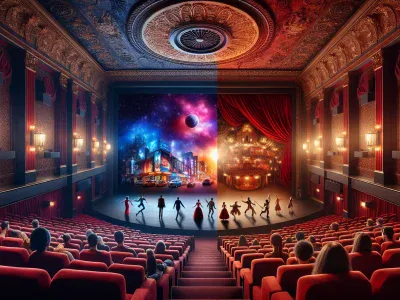
In the realm of visual storytelling, comprehending the intricate components that construct a narrative is a vital step toward mastering the art of cinematic expression. Understanding the distinction between a “frame” and a “scene” is essential for analyzing and creating impactful visual media. These terms, while fundamental, embody distinct roles in storytelling and have specific implications in both creative and theoretical contexts. Let us investigate into their differences and discover how they shape the language of visual media.
Understanding Frames in Visual Media
Definition and Characteristics of a Frame
A “frame” is the singular image displayed on the screen at any moment within a visual medium, such as film or animation. It can be compared to the static photographs in a flipbook, each contributing to the illusion of motion when viewed sequentially. Frames serve as the basic units of visual production, brimming with visual details like composition, lighting, and focus, made to captivate the viewer’s eye.
Importance of Frames in Visual Storytelling
Frames are pivotal in shaping the visual narrative. The deliberate selection and arrangement of framing influence the audience’s perception and emotional connection to the story. A well-composed frame can evoke suspense, highlight relevant elements, or guide the viewer’s focus, becoming a powerful storytelling device.
Exploring Scenes in Cinematic Narratives
Definition and Structure of a Scene
A “scene” encompasses a sequence of actions or events occurring within a single location or timeframe. It is designed to convey a specific narrative moment or series of moments, utilizing the collaborative efforts of performances, direction, dialog, and mise-en-scene.
The Role of Scenes in Advancing the Plot
Scenes are the building blocks of a film’s storyline. They introduce characters, develop plots, and reveal essential conflicts or resolutions. Each scene is often carefully paced to maintain the audience’s attention while transitioning between pivotal story moments.
Comparative Analysis of Frames and Scenes
Key Differences in Concept and Usage
While a frame is an individual visual image, a scene is a collection of frames that collectively represent a cohesive section of the narrative. In essence, you may consider a frame as a singular word, whereas a scene forms a paragraph.
Examples Illustrating Frame and Scene Variations
For instance, consider a scene of two characters conversing in a park. The cinematic narrative constructs this scene through multiple frames: close-ups highlighting facial expressions, wide shots illustrating the setting, and medium shots capturing interactions. Each frame works as a fragment of storytelling within the encompassing scene.
Applications in Creative and Academic Contexts
Teaching the Distinction Between Frames and Scenes
Educators employ side-by-side comparisons of frames and scenes to provide clarity. This technique enhances students’ comprehension of visual storytelling depth and complexity, linking abstract theories with tangible examples.
Incorporating Concepts Into Creative Projects
Artists and filmmakers use these concepts to refine their craft. Understanding the synergy between frames and scenes empowers creators to intentionally construct visuals that resonate effectively with their audience.
To provide the best experiences, we use technologies like cookies to store and/or access device information. Consenting to these technologies will allow us to process data such as browsing behaviour or unique IDs on this site. Not consenting or withdrawing consent, may adversely affect certain features and functions.
Functional
Always active
The technical storage or access is strictly necessary for the legitimate purpose of enabling the use of a specific service explicitly requested by the subscriber or user, or for the sole purpose of carrying out the transmission of a communication over an electronic communications network.
Preferences
The technical storage or access is necessary for the legitimate purpose of storing preferences that are not requested by the subscriber or user.
Statistics
The technical storage or access that is used exclusively for statistical purposes.The technical storage or access that is used exclusively for anonymous statistical purposes. Without a subpoena, voluntary compliance on the part of your Internet Service Provider, or additional records from a third party, information stored or retrieved for this purpose alone cannot usually be used to identify you.
Marketing
The technical storage or access is required to create user profiles to send advertising, or to track the user on a website or across several websites for similar marketing purposes.