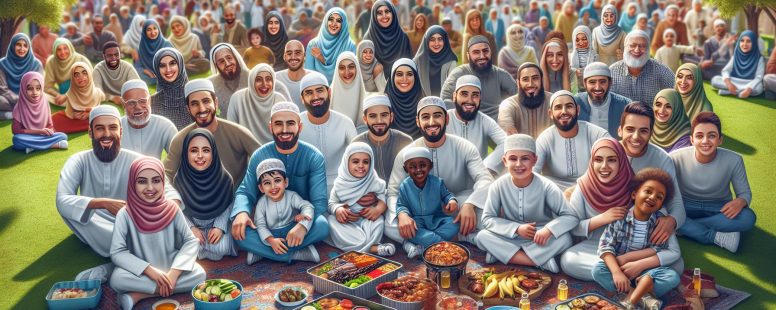
Picture a time of joy, celebration, and togetherness that fills the air with warmth and gratitude. For Muslims around the world, Eid al-Fitr and Eid al-Adha are two such moments, each carrying its own unique essence and traditions. But what truly sets these two festive occasions apart?
While both Eids mark significant milestones in Islamic culture, they stem from different stories, values, and practices. One celebrates the end of fasting after a month of spiritual reflection; the other honors sacrifice and unwavering faith. Understanding their differences not only deepens your appreciation for these holidays but also offers insight into the rich tapestry of Islamic heritage.
Understanding The Difference Between Eid Al-Fitr And Eid Al-Adha
Eid al-Fitr and Eid al-Adha, though both significant Islamic holidays, serve different purposes and carry distinct meanings. Celebrating the completion of Ramadan, Eid al-Fitr focuses on gratitude and self-discipline after a month of fasting. In contrast, Eid al-Adha commemorates Prophet Ibrahim’s willingness to sacrifice his son as an act of obedience to Allah.
Timing And Duration
Eid al-Fitr occurs at the end of Ramadan, the ninth month in the Islamic lunar calendar. It begins with the sighting of the crescent moon and lasts one day. Meanwhile, Eid al-Adha takes place during Dhul-Hijjah, specifically on the 10th day following Hajj’s conclusion. Spanning four days, it aligns with rituals performed during pilgrimage.
Religious Significance
Eid al-Fitr emphasizes personal growth through fasting (sawm), charity (zakat), and spiritual renewal. Its focus lies in reinforcing discipline practiced throughout Ramadan while fostering community relationships through shared meals and acts of kindness. On other hand, Eid al-Adha centers around submission to God’s will by honoring Prophet Ibrahim’s ultimate test of faith involving sacrifice.
Rituals And Practices
On Eid al-Fitr morning prayers are followed by giving zakat-ul-fitr—charity ensuring every Muslim can partake in festivities regardless their financial status. Families gather for feasts featuring dishes like sheer khurma or baklava depending on cultural backgrounds.
What Is Eid Al-Fitr?
Eid al-Fitr, known as the “Festival of Breaking the Fast,” marks the end of Ramadan, a month dedicated to fasting, prayer, and self-reflection. It celebrates spiritual renewal and gratitude after a period of personal growth.
Significance Of Eid Al-Fitr
Eid al-Fitr holds deep religious and cultural importance for Muslims worldwide. It’s seen as a time to thank Allah for granting strength during Ramadan. The holiday promotes unity among communities by emphasizing shared values like generosity and compassion.
This celebration is not just about ending the fast; it’s about reflecting on lessons learned during Ramadan. Fasting teaches patience and empathy for those less fortunate. By observing these principles, you strengthen your connection with faith while fostering social responsibility.
Traditions And Practices During Eid Al-Fitr
On the morning of Eid al-Fitr, you perform special prayers called Salat al-Eid in congregation at mosques or open spaces. These prayers include sermons that remind you of gratitude and moral duties.
Charity plays an essential role through zakat-ul-fitr (a mandatory donation given before prayers). Zakat ensures underprivileged individuals can join festivities without financial burden. For example, families often distribute food or money directly to those in need.
Festivities involve gatherings with loved ones where traditional dishes are served based on regional culinary customs—such as seviyan (sweet vermicelli) in South Asia or ma’amoul (date-filled cookies) in Arab countries. Children receive gifts or Eidi from elders—a gesture symbolizing love and blessings.
Decorating homes with lights, wearing new clothes, and exchanging greetings further reflect joy during this occasion. While traditions vary across cultures, their shared essence lies in spreading happiness within communities globally.
What Is Eid Al-Adha?
Eid al-Adha, often called the “Festival of Sacrifice,” commemorates Prophet Ibrahim’s devotion and submission to Allah. It represents faith, obedience, and the spirit of giving. Celebrated by Muslims worldwide, it aligns with the conclusion of Hajj.
Significance Of Eid Al-Adha
Eid al-Adha holds profound religious importance in Islamic culture. The story behind this event originates from the Quranic account of Prophet Ibrahim (Abraham) preparing to sacrifice his son Ismail (Ishmael) as an act of complete obedience to God. But, Allah replaced Ismail with a ram at the last moment, rewarding Ibrahim’s unwavering faith.
This festival honors values like selflessness and trust in divine wisdom. For those performing Hajj, it marks one of its key rituals—the animal sacrifice known as Qurbani or Udhiyah—symbolizing personal dedication to God’s will.
Traditions And Practices During Eid Al-Adha
Muslims observe several practices during this holiday that reinforce its spiritual significance:
Morning Prayers: You begin celebrations by attending Salat al-Eid at mosques or community grounds.
Animal Sacrifice: Families who can afford it perform Qurbani by sacrificing livestock such as goats, sheep, cows, or camels. The meat is divided into three parts—one for family use, another for relatives/friends, and the third for those in need.
Charity And Sharing: Acts of generosity dominate this occasion; distributing meat ensures inclusivity so everyone partakes in festive meals.
Feasting With Loved Ones: Traditional dishes vary across cultures but often include special preparations using sacrificial meat.
Hajj Connection: Pilgrims participating in Hajj engage deeply with communal prayers and sacrifices during Dhul-Hijjah.
Through these customs rooted in historical context and religious teachings you see how communities bond over shared beliefs while fostering empathy towards others.
Key Differences Between Eid Al-Fitr And Eid Al-Adha
Both Eid al-Fitr and Eid al-Adha hold immense significance in Islamic culture, yet they differ in their religious essence, timing, and associated practices.
Religious Importance
Eid al-Fitr emphasizes personal reflection and spiritual renewal. It marks the completion of Ramadan’s fasting period, symbolizing gratitude for Allah’s blessings and self-discipline achieved during the holy month. This festival underscores values like empathy for others’ struggles and reinforces generosity through mandatory charity (zakat-ul-fitr).
Eid al-Adha centers on faith and devotion to Allah. Commemorating Prophet Ibrahim’s willingness to sacrifice his son as an act of obedience, it represents submission to God’s will. The practice of Qurbani (animal sacrifice) reflects commitment while promoting community welfare by distributing meat among family members, friends, and those in need.
Time Of Celebration
Eid al-Fitr occurs immediately after Ramadan ends. It’s celebrated on the first day of Shawwal based on lunar calendar observations. Since Islamic months are shorter than Gregorian ones, its date shifts annually by approximately 10–12 days.
Eid al-Adha aligns with Hajj rituals during Dhul-Hijjah, specifically beginning on the 10th day of this sacred month. Unlike Eid al-Fitr’s one-day celebration, it spans four days globally.
Customs And Rituals
On Eid al-Fitr: Muslims perform Salat al-Eid prayers early morning before engaging in festive activities like feasts or family gatherings adorned with traditional dishes such as sheer khurma or samosas across cultures like South Asia or Middle Eastern regions. Homes are decorated; children receive gifts called “Eidi,” fostering joyous moments.
Conclusion
Both Eid al-Fitr and Eid al-Adha hold profound spiritual and cultural significance, each offering unique lessons and values. These celebrations not only deepen your connection to faith but also foster unity, compassion, and generosity within communities.
By understanding the distinct traditions and meanings behind these festivals, you can appreciate their role in promoting gratitude, devotion, and shared humanity. Each Eid reminds you of the importance of giving back, reflecting on your blessings, and strengthening bonds with loved ones.
To provide the best experiences, we use technologies like cookies to store and/or access device information. Consenting to these technologies will allow us to process data such as browsing behaviour or unique IDs on this site. Not consenting or withdrawing consent, may adversely affect certain features and functions.
Functional
Always active
The technical storage or access is strictly necessary for the legitimate purpose of enabling the use of a specific service explicitly requested by the subscriber or user, or for the sole purpose of carrying out the transmission of a communication over an electronic communications network.
Preferences
The technical storage or access is necessary for the legitimate purpose of storing preferences that are not requested by the subscriber or user.
Statistics
The technical storage or access that is used exclusively for statistical purposes.The technical storage or access that is used exclusively for anonymous statistical purposes. Without a subpoena, voluntary compliance on the part of your Internet Service Provider, or additional records from a third party, information stored or retrieved for this purpose alone cannot usually be used to identify you.
Marketing
The technical storage or access is required to create user profiles to send advertising, or to track the user on a website or across several websites for similar marketing purposes.