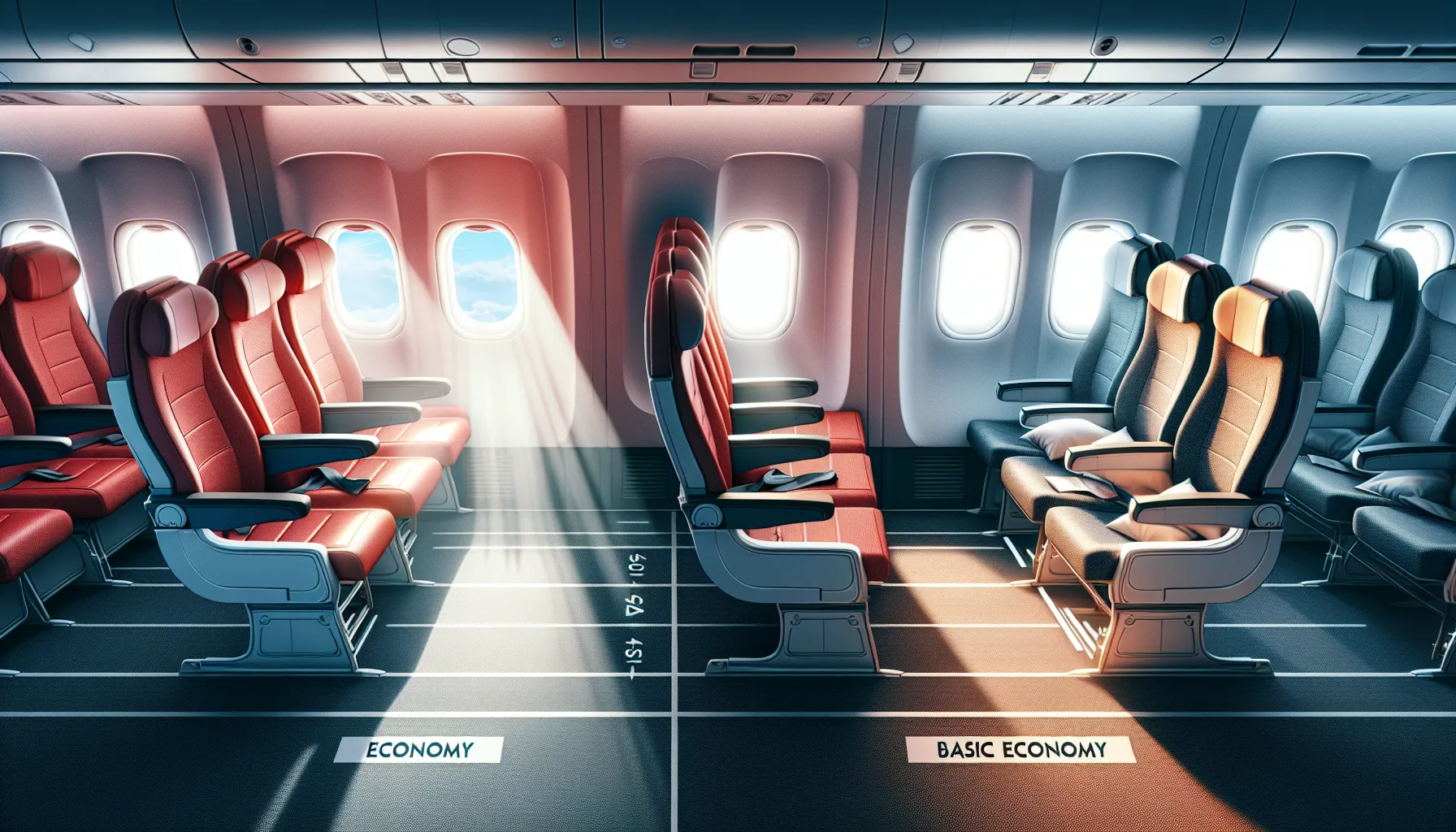
When booking flights, you’re faced with various fare options, each presenting unique features and restrictions. Among these, ‘Economy’ and ‘Basic Economy’ are common fare categories offered by airlines, often causing a dilemma for travelers striving to balance budget with comfort. Understanding their distinctions is essential for making an well-informed choice, ensuring your travel fits your preferences and priorities.
Overview of Economy and Basic Economy Classes
Key Features of Economy Class
Economy Class, often referred to as standard economy, serves as the primary class offered by airlines, balancing affordability and essential amenities. Typically, this class features spacious seating arrangements compared to Basic Economy, with options allowing passengers a small degree of customization, such as selecting preferred seating locations when booking.
Seat Selection and Comfort Options
In Economy Class, travelers normally have the option to select their seats either at the time of booking or check-in, providing flexibility to accommodate preferences like aisle or window seats. Also, seating is moderately comfortable, offering sufficient legroom, especially suitable for shorter flights.
Amenities and In-Flight Services Provided
Economy passengers enjoy standard in-flight services, including complimentary snacks or meals, beverage service, and access to onboard entertainment. Airlines aim to provide a satisfactory experience within this class, ensuring basic traveler needs are met.
Key Features of Basic Economy Class
Basic Economy presents a budget-friendly fare tier, designed for travelers prioritizing lower costs over flexibility. With minimal amenities and restrictions applied to seating and service alterations, this category suits those conducting short trips or traveling light.
Restrictions on Seat Choices and Changes
Unlike Economy, Basic Economy often comes with constraints such as no options for advanced seat selection and inflexibility to modify tickets past the purchase time. Travelers are assigned seats, frequently upon check-in.
Limited Amenities and Additional Costs
To maintain lower pricing, Basic Economy tickets exclude services standard in other classes, like checked baggage or meal allowances. Such exclusions necessitate passengers to pay separately for these additions, potentially impacting the total value.
Comparative Analysis: Economy vs. Basic Economy
Cost Differences and Value for Money
When evaluating ticket options, Basic Economy consistently emerges as the lower-priced alternative. But, purchasing essential services as add-ons might result in the overall cost nearing that of standard Economy. Evaluating your specific travel needs will determine whether Basic Economy’s limitations justify its upfront savings.
Best Choice Based on Passenger Needs
Choosing between these two classes depends on individual priorities. If you value seat selection, added services, and flexibility, Economy Class is an optimal choice. Conversely, for shorter trips or budget-focused travel, Basic Economy fares provide sufficient practicality at a reduced price.
Tips for Choosing the Right Fare Type
Understanding Airline Policies and Conditions
Before booking, familiarize yourself with the airline’s fare policies. Compare inclusions, exclusions, and flexibility associated with Economy and Basic Economy tickets to avoid potential misunderstandings.
Ensuring a Comfortable Travel Experience
Consider factors such as trip duration, baggage requirements, and personal comfort needs. Implementing well-informed choice-making ensures your travel is stress-free and aligns with expectations.
To provide the best experiences, we use technologies like cookies to store and/or access device information. Consenting to these technologies will allow us to process data such as browsing behaviour or unique IDs on this site. Not consenting or withdrawing consent, may adversely affect certain features and functions.
Functional
Always active
The technical storage or access is strictly necessary for the legitimate purpose of enabling the use of a specific service explicitly requested by the subscriber or user, or for the sole purpose of carrying out the transmission of a communication over an electronic communications network.
Preferences
The technical storage or access is necessary for the legitimate purpose of storing preferences that are not requested by the subscriber or user.
Statistics
The technical storage or access that is used exclusively for statistical purposes.The technical storage or access that is used exclusively for anonymous statistical purposes. Without a subpoena, voluntary compliance on the part of your Internet Service Provider, or additional records from a third party, information stored or retrieved for this purpose alone cannot usually be used to identify you.
Marketing
The technical storage or access is required to create user profiles to send advertising, or to track the user on a website or across several websites for similar marketing purposes.