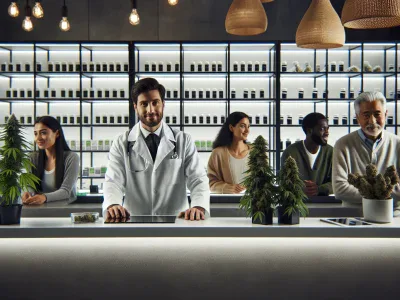
Picture yourself walking through a lush field as the sun warms your skin and a gentle breeze carries the earthy scent of hemp and cannabis. You might wonder—what really sets these two plants apart and why do their extracts spark so much curiosity? The answer lies in two tiny compounds that pack a powerful punch: CBD and THC.
You’ve probably seen oils, gummies, and creams promising calm or euphoria, but the real magic happens beneath the surface. CBD and THC shape your experience in ways that might surprise you—offering benefits that go far beyond the buzz. From soothing aches to sharpening focus, these cannabinoids hold secrets that could change how you think about wellness. Let’s unravel the mystery and discover how these plant-based powerhouses work their wonders.
What Are CBD and THC?
CBD and THC come from cannabis plants and interact with your body’s endocannabinoid system. When you explore CBD for calm or THC for a shift in mood, you’re tapping into unique chemical messengers.
Overview of CBD (Cannabidiol)
CBD, short for cannabidiol, exists as a non-psychoactive compound found in hemp and cannabis. You won’t get “high” from using CBD products like tinctures, gummies, or body creams. According to a 2020 review in Frontiers in Pharmacology, most people reported reduced anxiety and better sleep when they used CBD. Scientists extracted CBD for epilepsy research in the 1940s, but it’s now common in wellness markets. Some people, like athletes or busy parents, use it to ease everyday discomfort or help manage focus. It works by modulating receptors like CB1 and CB2 but never causes euphoria. You might try a CBD balm after a workout, expecting sore muscles to recover faster. With CBD, your mental state stays clear, as the World Health Organization (WHO) said it shows no evidence for abuse or dependence potential.
Overview of THC (Tetrahydrocannabinol)
THC, or tetrahydrocannabinol, is the principal psychoactive entity in cannabis. If you eat a THC-infused edible or inhale vapor, you might notice your senses sharpen or time seem to slow—a classic “high.” Unlike CBD, THC binds directly to CB1 receptors in your brain, altering perception, mood, and even appetite. Some people say movies become more vivid or music more moving with THC. Medical states like Colorado and California allow THC for conditions like pain, nausea, and muscle spasticity, as detailed by the National Academies of Sciences, Engineering, and Medicine. You could compare THC to caffeine’s effect on alertness, but for mood and sensation. But, use it carefully, because too much can sometimes trigger anxiety or short-term memory gaps. For many, though, THC means relief or rekindled creativity—a complex companion in the world of cannabinoids.
Chemical Structure and Source
Peek inside the world of plant molecules, and you’ll find CBD (cannabidiol) and THC (tetrahydrocannabinol) shaping the story of hemp and cannabis. Both compounds flaunt a near-identical chemical formula—C₂₁H₃₀O₂—yet the arrangement of their atoms spins completely diverse tales in your body. Picture two keys forged from the same metal, but each bends just enough to fit only certain locks.
CBD’s structure bends the molecule in a way that it can’t bind tightly with CB1 receptors; instead, it gently nudges your endocannabinoid system, encouraging internal balance without lighting up your mind. That’s why, when you try a hemp-derived topical, you’ll never feel your perception melt, no matter how much cream you slather. why you can walk into a café and sip a CBD latte, but not a THC one beside your morning newspaper? Chemical architecture is the hidden rule-maker.
THC, on the other hand, wears a slightly different chemical hat—its atoms align in a way that lets it dock directly with CB1 brain receptors, flipping switches associated with mood, memory, and sensation. That extra atom ring is like a pin code for your brain’s sensation bank. Some report THC’s euphoric buzz feels like a mental roller coaster, while others compare it to a flood of creativity. Remember that scene from a 1970s movie where a character giggles at the wallpaper for no reason? THC is the main culprit, but it can, in high doses, scatter your thoughts or turn excitement into anxiety.
Plants, like hemp and cannabis, host both cannabinoids, but hemp operates under strict rules—federal law in the United States states it must have less than 0.3% THC by dry weight (U.S. Farm Bill 2018), making it the go-to source for legal CBD products. Cannabis plants bred for recreational use can carry THC levels up to 30%, crafting strains that range from mellow to mind-altering. When you pick up a bottle of full-spectrum oil at the store, you’re witnessing the work of selective genetics and human cultivation, designed to highlight either calm, clear-headed CBD or the high-spirited euphoria of THC.
Here’s a quick comparison for reference:
Compound
Molecular Formula
Psychoactive?
Common Source
Legal THC Threshold (US)
CBD
C₂₁H₃₀O₂
No
Hemp (cannabis sativa <0.3% THC)
<0.3% THC
THC
C₂₁H₃₀O₂
Yes
Cannabis (marijuana)
>0.3% THC
Ever ask yourself why a CBD-infused sparkling water won’t send you searching the stars, while a strong edible might? Molecular geometry and legal oversight draw that bold line, helping you choose your own adventure—calm balance, or kaleidoscopic highs—every time you reach for a plant-derived wellness product.
Certain experts (Abrams, et al., JAMA, 2020) advise that you consider the plant’s ancestry and your intent before trying any cannabinoid for the first time. If you’ve ever tried both and felt different, you wasn’t imagining things—the molecular nuances become the architects of your experience.
Psychoactive Effects
CBD stays on the sidelines of your mind, letting you watch thoughts parade by without stepping into the commotion. You might walk into a room, take a dose of CBD oil, and while the world remains crisp and focused, anxiety’s shadow fades quietly. People report feeling “clear-headed” when using hemp-derived CBD gummies or tinctures—one parent claimed, “I could help my kids with math assignments, no swirling thoughts, no giggles or confusion.” Research published in Neurotherapeutics (2015) found that CBD signals serotonin receptors, promoting calmness without intoxication. You aren’t left wondering, “Am I acting strange?” Instead, you’re dialed in, alert, but less tense.
THC, by contrast, strides boldly through the neural circuits, shifting perception’s lens and coloring reality with novel tints. Picture watching a sunset after vaping THC-rich cannabis: some laugh harder, music sounds richer, food tastes like it’s been painted with flavor. This is no quiet whisper—THC hijacks the CB1 receptors (see: Journal of Neuroscience, 2012), directly altering time sense and memory. Ever wondered why your friend giggles endlessly at a joke after an edible, even when it weren’t funny? That’s THC’s handiwork—unnerving for some, delightful for others. If you’re curious, ask yourself: would you rather dissolve social anxiety at a party (CBD) or lean into euphoria and creativity with your playlist blaring (THC)?
People sometimes overlook the quirky downside: while CBD rarely disrupts function, high-THC use sometimes brings confusion or paranoia, especially in sensitive users. A 2020 review in Cannabis and Cannabinoid Research highlighted that about 20% of regular THC users report memory lapses or mild anxiety after high doses—though others find relief from chronic pain or depression. Everyone’s wiring dances differently with these molecules.
If you pause and peek at legal dispensaries, staff often advise: “Start with low THC, steady with CBD for daily focus; reserve high THC for evenings or creative bursts.” This guidance mirrors centuries-old herbal traditions and new clinical protocols. How will your neurons react? Only trying reveals your personal psychoactive story.
Compound
Main Psychoactive Effect
Common Use Example
Reported Downsides
CBD
Non-psychoactive, calming
Daytime anxiety aid
Rare, mild drowsiness
THC
Euphoria, altered senses/mood
Recreational uplift
Paranoia, confusion, memory issues
Medical Benefits and Uses
CBD and THC, though sharing a botanical family, travel very different roads in how they interact with your body and mind. If you’ve ever wondered why your friend swears by CBD oil for recovering after tough gym sessions, while others tout THC gummies for easing creative blocks or chronic aches, you’re in the right place to untangle these intertwined threads.
Therapeutic Applications of CBD
CBD, the non-psychoactive cousin in the cannabis conversation, has captured attention in clinics and kitchens alike. Researchers at the World Health Organization (2018) highlighted that cannabidiol, or CBD, lacks abuse potential and carries a broad safety profile—remarkably, even at high doses. You’ll see people turning to CBD for reducing anxiety—picture a student calming her racing heart before exams—or promoting more restful sleep when insomnia bites.
Children with Dravet syndrome or Lennox-Gastaut syndrome, rare seizure disorders, have seen dramatic improvements when conventional drugs failed—Epidiolex, an FDA-approved medication, contains purified CBD (FDA, 2018). Topicals infused with CBD target joint pain; case in point, older adults rubbing a CBD cream on knees before long walks in city parks or after gardening. Some even explore its pores-deep anti-inflammatory effects for skin conditions like acne or eczema—think of a teenager hoping for clear skin before school photos.
Pet owners using CBD treats on anxious dogs during thunderstorms have sparked debate among veterinarians, but anecdotal praise continues growing. CBD’s low risk of dependency makes it appealing for people seeking a gentle, plant-based option for daily focus without psychoactive haze.
Therapeutic Applications of THC
THC, the psychoactive storyteller of cannabis, infuses narratives with color and complexity. Medical dispensaries in states like California and Colorado dispense THC-based products to cancer patients hunched over from chemotherapy-induced nausea—witnessing appetite return and smiles flicker back after bites of infused chocolate or measured drops under the tongue.
Multiple sclerosis patients, wrestling with muscle spasticity, recount feeling less “locked up” after dosing with THC—Sativex spray, a combination of THC and CBD, gets a nod from the National MS Society for this reason. Chronic pain sufferers, from old athletic injuries to neuropathic aches following surgeries, may find THC more potent than over-the-counter remedies—a New England Journal of Medicine review (2017) found moderate to significant improvement in neuropathic pain with THC-containing medicines.
Yet, with THC, there rides a balancing act. Some users recount unwanted anxiety or memory fuzziness, especially at high doses or with products of unknown origin. Conversely, others find their creativity unlocked; artists painting murals in vibrant city corners or musicians composing new melodies in evening sessions.
What will THC or CBD unlock for you? Might it be pain relief, clearer focus, or a fleeting sense of joy? Your endocannabinoid system, that internal tuning fork, plays each compound’s effects like a different song—sometimes in harmony, sometimes a dissonant chord. Reliable sources and medical oversight, combined with patient curiosity, remain your best guides as you navigate the ever-growing map of cannabinoid wellness.
Legal Status and Regulations
When you stroll through the aisles of a wellness store in Colorado, glass bottles labeled “CBD Oil” gleam under soft lights, while a travel blogger in Texas wonders why her bag of THC edibles got her flagged at the airport. Legal boundaries stringently separate CBD from THC across the United States, but the confusion grows deeper once you cross state lines or open an international map.
CBD, derived mostly from hemp with less than 0.3% THC, enjoys federal legality in the U.S. thanks to the 2018 Farm Bill (FDA, 2023). You can order CBD tinctures or gummies online almost everywhere, yet some states—like Idaho or South Dakota—strictly prohibits even trace amounts of THC, which means hemp-derived CBD wears shackles of local law. Anecdotes swirl on online forums about travelers losing CBD bottles during routine traffic stops because police officers discovered THC traces above the “legal-threshold.” Have you ever double-checked the label on your pet’s calming oil?
THC tells a wilder story. It dances across the American legal landscape with a swagger unique to controversial compounds. In states such as California or Washington, THC-filled chocolates and vapes stock dispensary shelves as easily as aspirin fills medicine cabinets—medical marijuana cards in hand or with simply an ID proving you’re 21. By contrast, travel into Iowa or Nebraska, the same treat becomes an illicit risk, with fines or even jail time looming for those who don’t read the law’s fine print. This patchwork invites questions—does a product’s legality turn on mere geography?
The FDA, perhaps like an indecisive referee, hasn’t approved most over-the-counter CBD products, leaving the field open for brands to shine or stumble. Some health claims sound mesmerizing—“CBD for glowing skin!,” “Full-spectrum calm in a bottle!”—yet scientific studies, like a 2020 review in Mayo Clinic Proceedings, emphasize gaps in regulation and quality assurance. Do you trust slick packaging, or do you yearns for a third-party lab analysis before buying?
Globally, the story twist again. In Canada and Uruguay, recreational cannabis—THC and CBD both—enjoys federal acceptance, while much of Europe hesitates, limiting THC to 0.2% or forbidding cannabis outright. In Japan, CBD isolates skirt legality while full-spectrum oils stay banned. Travelers trade tips on Reddit: “Declare your CBD at customs,” “Use isolates, not full-spectrum, in Singapore.”
If you’re navigating this maze, keep three entities in mind: the Controlled Substances Act, state medical marijuana programs and the World Health Organization’s critical review of CBD’s safety profile (WHO, 2018). Regulatory frameworks changes rapidly; yesterday’s “gray area” may become tomorrow’s green light or red flag.
Would you risk surfing these legal tides to find relief, or do the ever-shifting rules prompt you to pause? Your answer may shape your wellness routine more directly than any cannabinoid chemical formula ever could.
Side Effects and Safety Considerations
Exploring side effects and safety considerations, you quickly find CBD and THC revealing as two faces of the same cannabis coin, yet their profiles feels worlds apart. Your friend, let’s call her Maya, tries a few drops of a CBD tincture before sleep—she claims her dreams get calmer, her mornings less groggy. But another friend, Jake, bakes THC-rich brownies for a backyard BBQ and ends up laughing for hours, only to feel worried and hungry at midnight. Humans are all a chemical experiment, even if you don’t realize it yet.
CBD Side Effects
Reviewing clinical trials, CBD generally rates as well-tolerated in doses up to 1500 mg daily for weeks (Bergamaschi et al., 2011). Mild side effects include dry mouth, reduced appetite, or sleepiness—think less risk than a cup of coffee late at night. Some report loose stool, particularly with high doses or oils. Feeling extra drowsy after combining CBD with sedative drugs? That’s not just coincidence—your nervous system processes signals like a highway, and traffic can slow when you combine too many calming agents.
THC Side Effects
With THC, psychoactive reactions arrive front and center. You might notice changes as soon as 10–20 minutes after inhalation. Mild euphoria morphs into red eyes, faster heartbeat, or dry mouth—a reminder that your body’s balancing act gets thrown off by CB1 receptor overactivation. Larger amounts may cause confusion, short-term memory loss, or paranoia. Did you ever try watching a suspense movie after a THC edible, only to get consumed by plot twists? That’s not just you: the mind exaggerates every whisper into a roar.
Safety for Special Populations
Pregnant or breastfeeding? Most experts like the American College of Obstetricians and Gynecologists (ACOG) suggest steering clear—both CBD and THC cross the placenta and may affect fetal development. Older adults might be more sensitive to THC-induced dizziness or fall risk; a fall in the kitchen could change everything. Children prescribed cannabinoid medications for epilepsy—think Epidiolex, an FDA-approved CBD drug—are closely monitored because even “safe” cannabinoids act differently for kids.
Drug Interactions and Individual Responses
CBD and THC both interact with liver enzymes (especially CYP3A4 and CYP2C19), so if you’re on blood thinners like warfarin or psychiatric medications, your doctor needs to know. Grapefruit warnings on medication bottles? CBD can mimic grapefruit juice’s effect on drug metabolism, amping up the concentration and risk of side effects. Some users metabolize cannabinoids quickly, others slow; sometimes your first edible feels like a gentle nudge, sometimes a wild ride.
Safety Table
Compound
Common Side Effects
High-Risk Groups
Notable Drug Interactions
Notable Warnings
CBD
Sleepiness, nausea, dry mouth
Pregnant people, children
Antiepileptics, blood thinners
Interacts with liver enzymes, drowsiness
THC
Euphoria, anxiety, fast heartbeat
Older adults, those with anxiety
Psychiatric meds, sedatives
Psychoactive reactions, addiction risk
Practical Safety Questions
Could a microdose of CBD keep your stress in check during finals week, but an edible with 10 mg THC sends you into a three-hour nap instead? Are you driving home from a family dinner or planning to hike alone after a dose—do you know how THC will affect your perception? When buying gummies, how confident are you about the third-party testing lab—did they even test for contaminants, or did they just slap a label?
If you value a clear mind, CBD’s gentle profile sounds appealing—but even “natural” products require cautious optimism. When your curiosity brings you to THC, start low, go slow, and trust the signals your own body sends back.
Conclusion
Choosing between CBD and THC depends on your wellness goals and comfort with psychoactive effects. As you explore these compounds, pay close attention to how your body responds and always prioritize quality by seeking out lab-tested products.
If you’re new to cannabinoids, start low and go slow. Consulting a healthcare professional can help you navigate potential interactions and ensure a safe experience. With the right approach, you can make informed decisions that support your health and lifestyle.
Published: July 25, 2025 at 8:47 am by Ellie B, Site owner & Publisher
To provide the best experiences, we use technologies like cookies to store and/or access device information. Consenting to these technologies will allow us to process data such as browsing behaviour or unique IDs on this site. Not consenting or withdrawing consent, may adversely affect certain features and functions.
Functional
Always active
The technical storage or access is strictly necessary for the legitimate purpose of enabling the use of a specific service explicitly requested by the subscriber or user, or for the sole purpose of carrying out the transmission of a communication over an electronic communications network.
Preferences
The technical storage or access is necessary for the legitimate purpose of storing preferences that are not requested by the subscriber or user.
Statistics
The technical storage or access that is used exclusively for statistical purposes.The technical storage or access that is used exclusively for anonymous statistical purposes. Without a subpoena, voluntary compliance on the part of your Internet Service Provider, or additional records from a third party, information stored or retrieved for this purpose alone cannot usually be used to identify you.
Marketing
The technical storage or access is required to create user profiles to send advertising, or to track the user on a website or across several websites for similar marketing purposes.