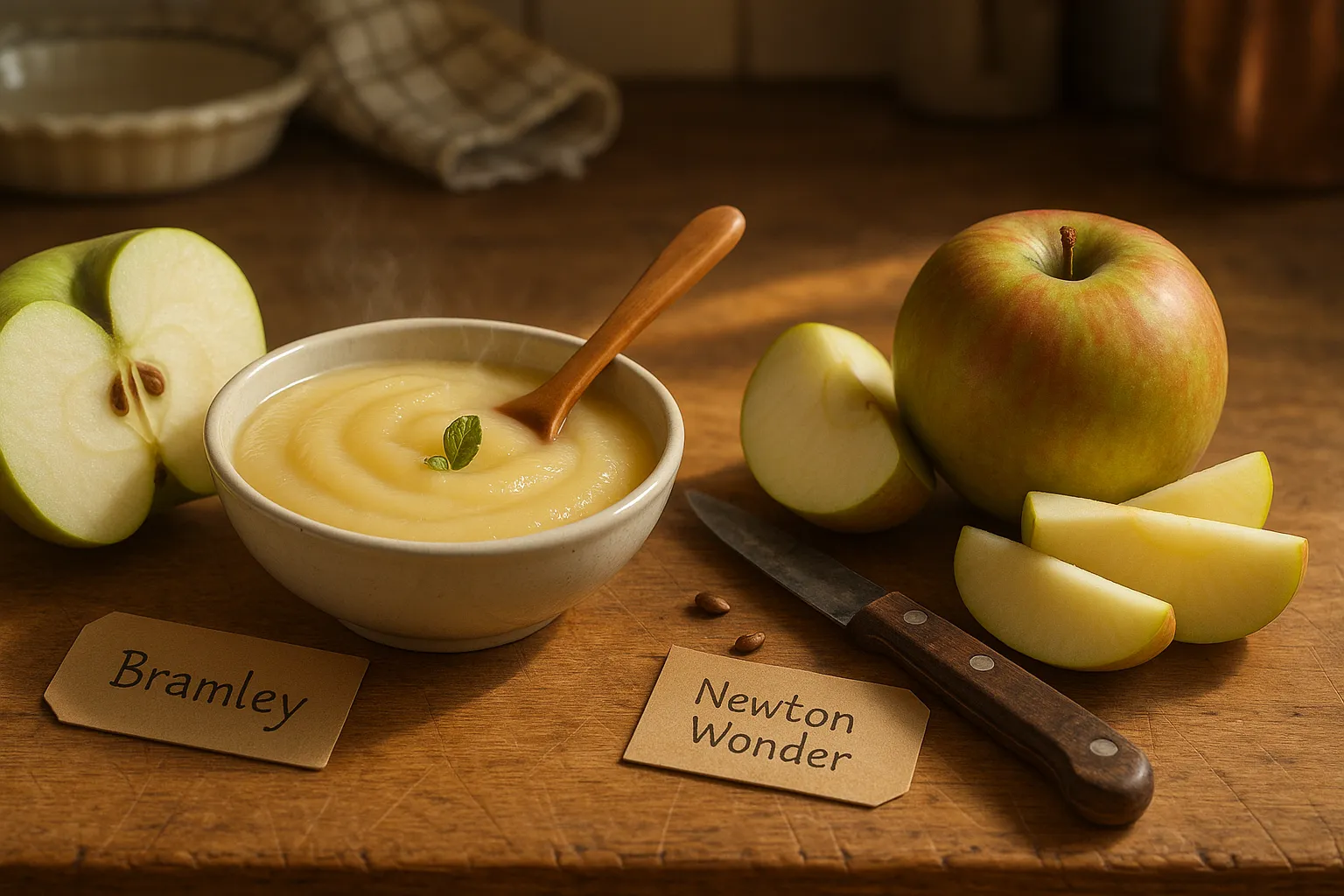
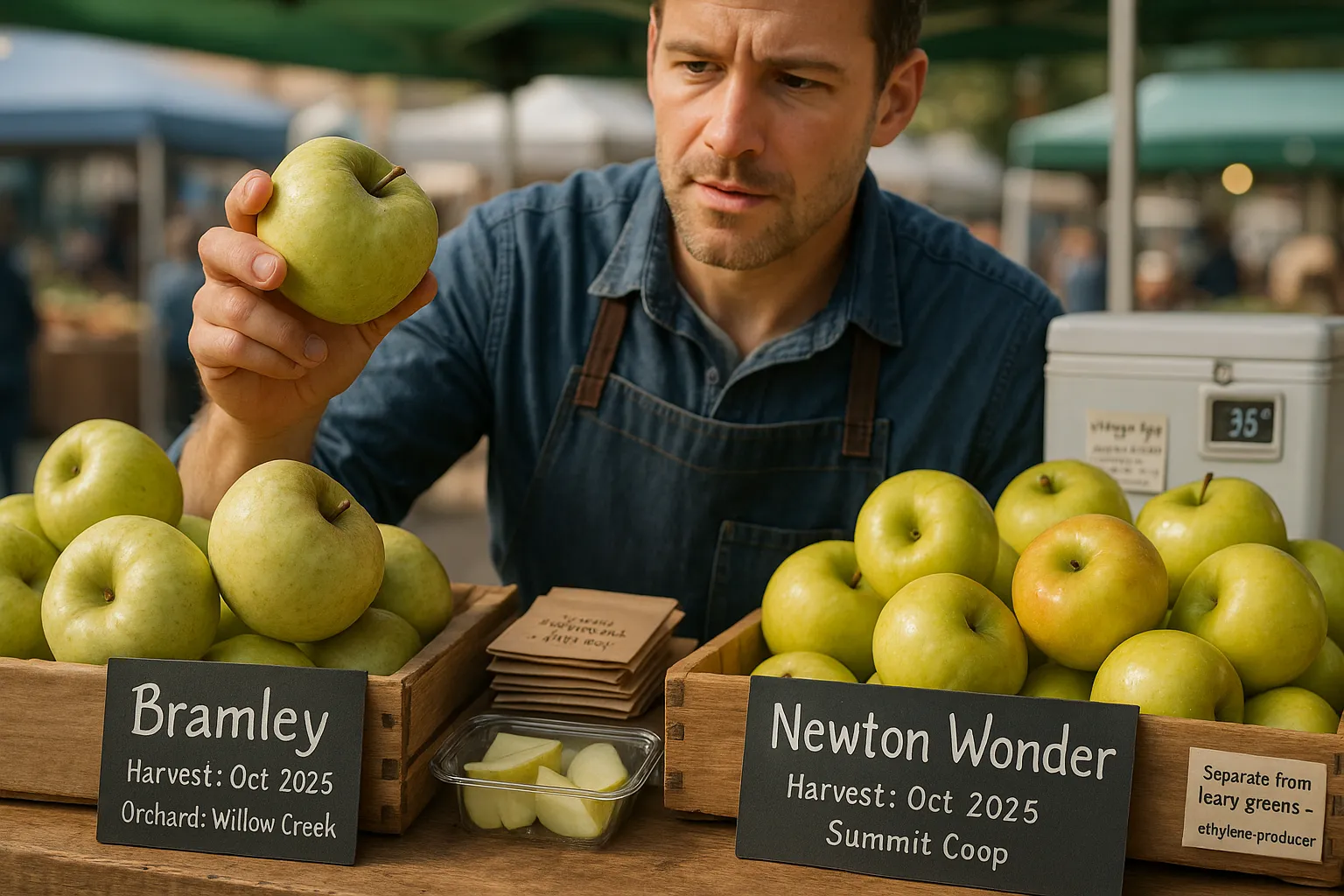
You can tell a great apple by how it smells in the kitchen before you even slice it. Bramley vs. Newton Wonder isn’t just a debate among gardeners, it shapes how your pie bubbles, how your roast caramelizes, and how your applesauce tastes on a rainy afternoon. One apple breaks down into silken sauce: the other holds shape and offers a bright edge. This article gives you clear, practical comparisons so you can pick the apple that fits your cooking, storage habits, and garden.
Quick Comparison Snapshot
Fact: Bramley is the go-to for smooth applesauce: Newton Wonder is better when you want body and bite.
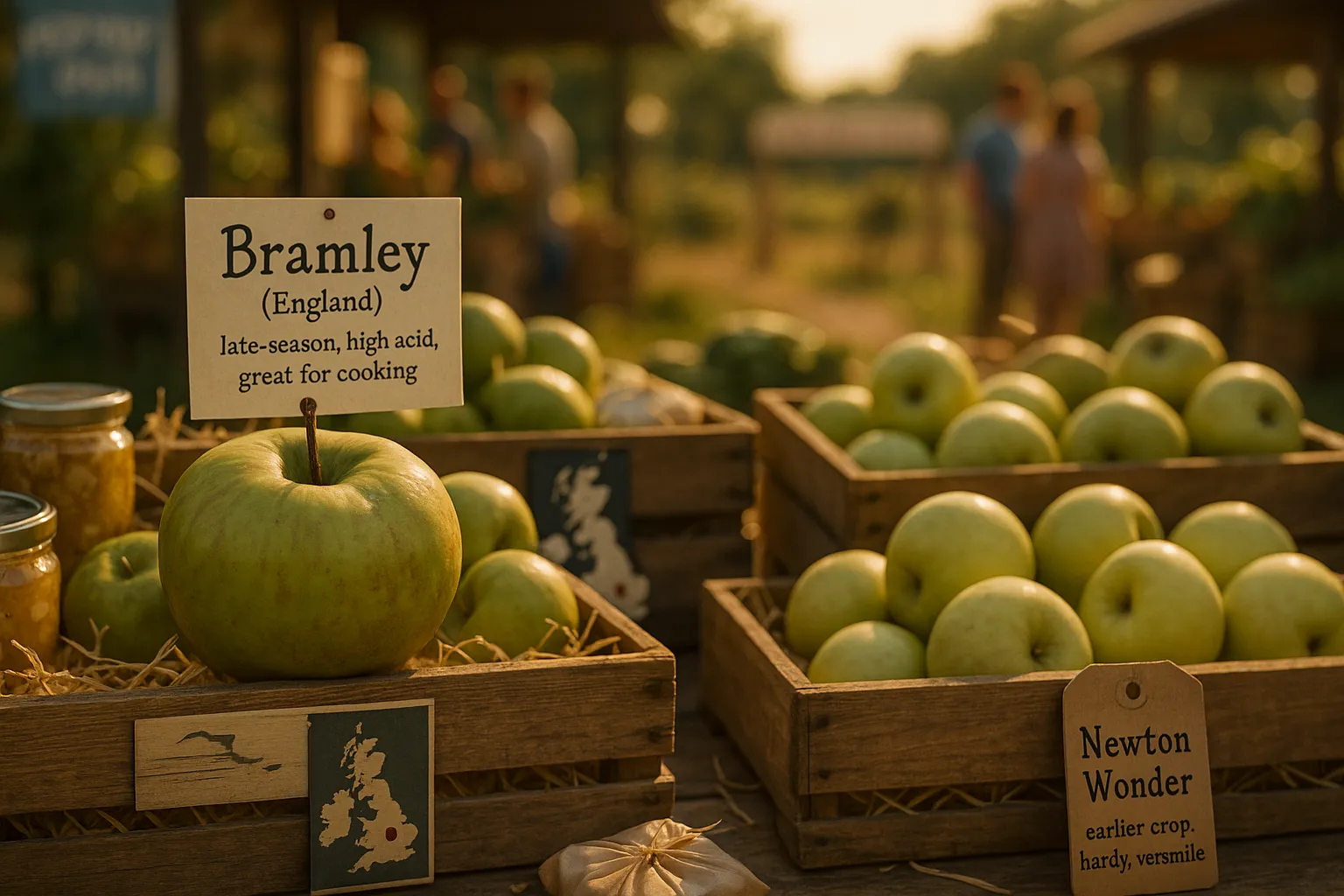
Bramley
Origin: English cooking apple, long-used in kitchens.
Best for: Sauces, crumbles, long-cooked desserts.
Texture: Breaks down into creamy puree.
Flavor: Tart with a fresh apple aroma.
Shelf life: Good when stored cool and dry.
Newton Wonder
Origin: Traditional English cooking/dual-purpose apple.
Best for: Pies that need shape, roasting, and frying.
Texture: Holds pieces and provides structure.
Flavor: Tangy with undernotes of sugar.
Shelf life: Reasonable: stores well if unbruised.
Quick verdict: If you want silky sauce and tang, choose Bramley. If you want defined slices or a rustic bake that keeps texture, choose Newton Wonder.
This snapshot sets the stage. Below you’ll find a deeper look at history, cooking behavior, and real-world tips so you end up with the result you want.
Origins, History, And Availability
Origins And Background
Fact: Bramley originated in England in the early 19th century and quickly became the kitchen standard. Bramley (often called Bramley’s Seedling) first grew near Nottinghamshire and it rose to fame because it combined high acid with firm flesh that cooked down well. Newton Wonder arrived later as a hardy, reliable tree valued for large fruit and multi-use cooking qualities. Both are named English varieties and both became staples on market stalls and home orchards across Britain.
These named entities, Bramley, Newton Wonder, and English orchard traditions, show why these apples carry strong local recognition. Bramley earned protected status for many growers and appears on many recipe lists from BBC Good Food to local producers. Newton Wonder appears in older horticultural catalogs and in community orchards where durability matters.
Seasonality And Where To Find Them
Fact: Bramley tends to be a late-season apple: Newton Wonder is available slightly earlier in many regions.
Bramley ripens later in the season and you’ll find peak harvest from late summer into autumn depending on your climate. Many farmers’ markets and farm shops stock Bramley fresh in autumn and as a preserved product year-round (frozen slices, canned compote). Supermarkets in the UK often carry Bramley products in autumn and winter.
Newton Wonder often crops earlier than Bramley and can be easier to find fresh in early autumn. You’ll locate Newton Wonder at local markets, orchard pick-your-own operations, and sometimes at heritage fruit suppliers. If you live outside the UK, look for imports or local cultivars with similar descriptions: firm flesh, tangy flavor, and good cooking performance.
Practical note: availability varies by region and year. Ask orchard managers for harvest dates, and if you’re buying outside harvest season consider frozen or jarred Bramley apples for consistent results.
Taste, Texture, And Cooking Performance
Flavor Profile: Tartness, Sweetness, And Aromatics
Fact: Bramley leans more tart: Newton Wonder balances tartness with a subtle sweetness.
Bramley gives a pronounced acidity that brightens sauces and cuts through sugar in desserts. It offers green-apple aromatics with a cutting tang that stands up to spices like cinnamon and star anise. Newton Wonder shows a milder tartness and a warm, almost caramel suggestion when cooked slowly. You can taste floral top notes in Newton Wonder that pair well with butter and brown sugar.
When you choose an apple, think of flavor as an active ingredient. Bramley will assert itself in a compote: Newton Wonder will play nicely with other fruits without overpowering them.
Texture And How Each Breaks Down When Cooked
Fact: Bramley breaks down to soft puree: Newton Wonder keeps structure and firms when heated.
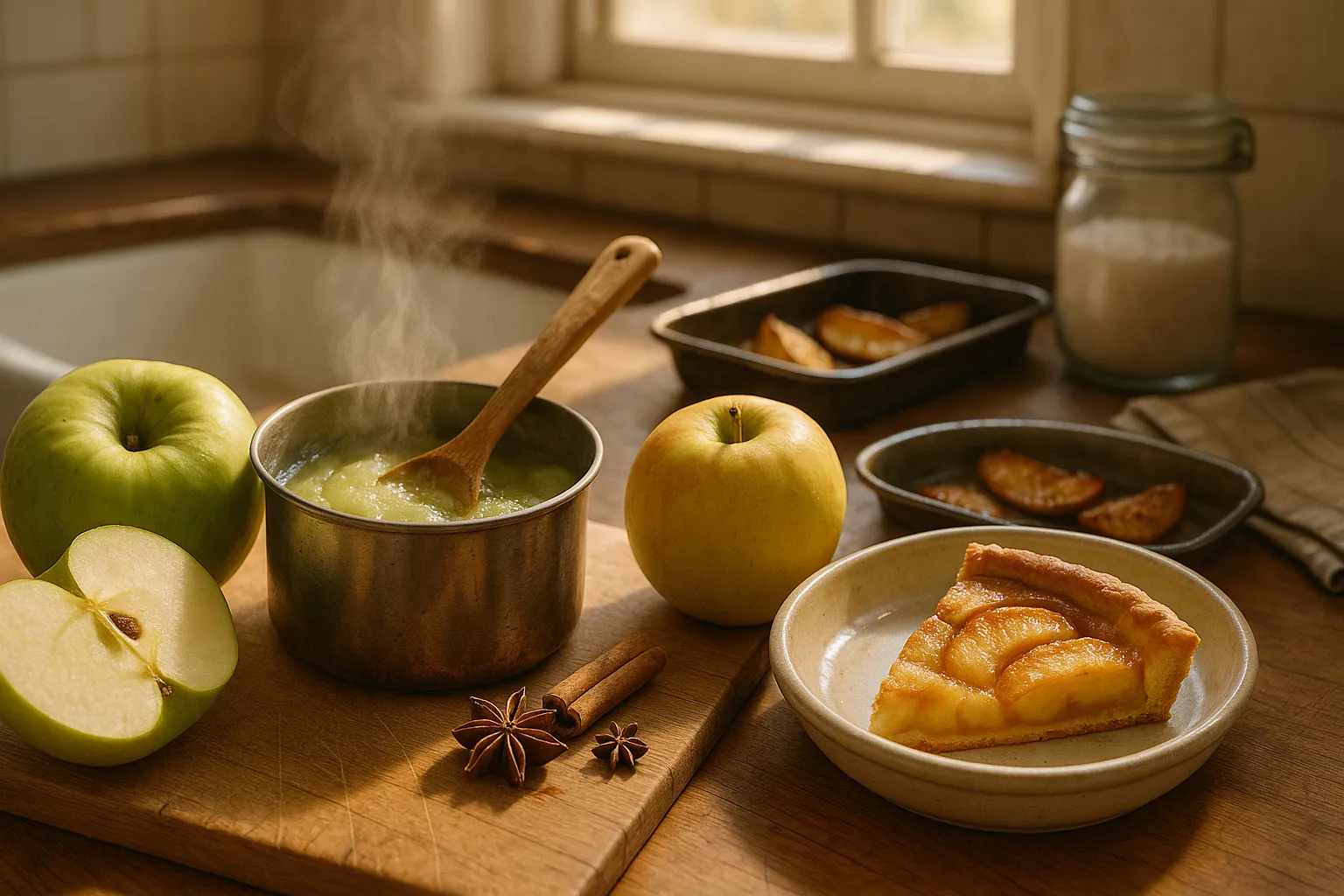
Bramley’s cellular structure collapses under heat. If you simmer Bramley with a splash of water and a bit of sugar, you get a smooth, glossy sauce in 15–25 minutes. Newton Wonder’s cell walls are stronger. When you bake Newton Wonder in a pie, the slices keep their shape and the filling stays chunky. That structural difference changes the mouthfeel: Bramley gives silk, Newton Wonder gives chew and body.
Cooking Behavior: Sauce, Pie, Roasting, And Frying
Fact: Use Bramley for smooth sauces and Newton Wonder for recipes that need shape.
Sauce: Bramley is king. It needs little help and gives consistent, spoonable results.
Pie: Newton Wonder often wins if you prefer visible apple slices and a rustic bite. Bramley works in pies too if you like a cohesive, saucy filling.
Roasting: Newton Wonder tolerates high heat and caramelizes into defined wedges. Bramley will soften quickly and meld with other roast vegetables.
Frying and Sautéing: Choose Newton Wonder for pan-fried apple slices that hold texture. Bramley will dissolve and is best if you want a cooked puree to glaze pork or poultry.
Practical experiment: Try the same recipe with both apples side-by-side, one will give you a cleaner, chunked result: the other will provide a soft, integrated one.
Practical Uses And Best Recipes
Best Uses For Bramley
Fact: Bramley excels in long-cooked preparations where breakdown is desired.
Applesauce and compote: Bramley yields silky, lightly tart sauce with minimal sugar.
Jam and chutney: Its acidity balances sugar and vinegar.
Smoothies and baby food: Purées quickly and blends into uniform texture.
Slow braises: Bramley integrates into stews, adding acidity that cuts fatty meats.
Anecdote: A baker friend swaps Bramley for commercial apple fillings in her mince pies, she says customers notice the fresh tang and come back for more.
Best Uses For Newton Wonder
Fact: Newton Wonder suits dishes that rely on visible apple pieces and textural contrast.
Classic apple pie with visible slices and slight bite.
Roasted apple wedges with pork, where texture matters.
Skillet frying with butter and a sprinkle of demerara sugar for topping pancakes.
Salads with firm apple cubes for crunch in autumn salads.
Real-life tip: In a local cooking class I taught, participants preferred Newton Wonder in tarts because the fruit kept definition under the glaze.
Recipe Ideas And Quick Tips
Fact: Small technique changes adjust results significantly.
To force Bramley toward more texture: cook briefly, then chill: the fruit firms as it cools.
To coax Newton Wonder into a softer filling: pre-simmer with water and a splash of lemon juice before assembling a pie.
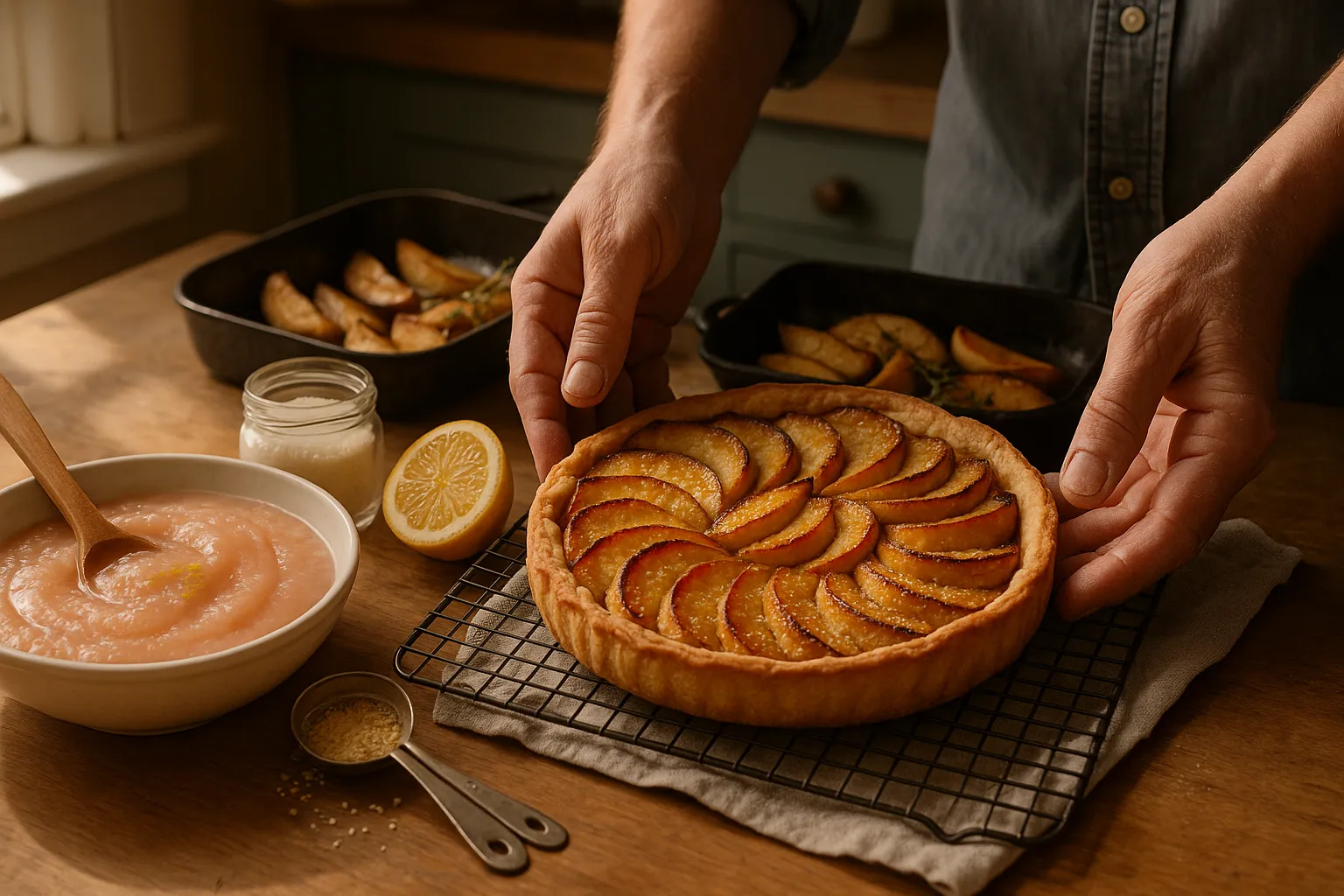
Recipe idea: Rustic Bramley Compote, Peel and quarter 1 kg Bramley, add 100 g sugar, 50 ml water, cook 20 minutes, mash, finish with grated lemon zest.
Recipe idea: Newton Wonder Roast Wedges, Core and slice Newton Wonder, toss with butter, thyme, and salt: roast at 400°F (200°C) for 25–30 minutes until browned at edges.
Safety tip: Always test a small batch when you swap apples in a recipe: sugar and cooking time often need small adjustments.
Storage, Shelf Life, And Buying Tips
How To Choose Quality Fruit At Market
Fact: Choose firm, unbruised apples with fresh stems and tight skin.
Look for apples with no soft spots or punctures. Bramley sometimes shows surface russeting, that’s fine and normal. Smell the fruit: a fresh tang indicates good flavor. Ask vendors about the harvest date and storage conditions. Named suppliers such as local orchards or farmers’ cooperatives often label Bramley and Newton Wonder .
Storage Methods And Expected Shelf Life
Fact: Stored cool and dry, Bramley and Newton Wonder keep for weeks to months depending on conditions.
Short term: Keep apples in a fruit bowl away from direct sunlight for up to two weeks.
Long term: Store at 32–40°F (0–4°C) in high-humidity conditions: wrapped in paper in a single layer can reduce bruising.
Freezing: Both apples freeze well when sliced and blanched or pre-cooked: Bramley keeps top quality as a puree.
Warning: Apples emit ethylene gas which speeds ripening. Store apples away from leafy greens and root vegetables you want to keep long. If you need apples to last, refrigerate and inspect weekly for soft spots.
Growing Considerations And Home Orchard Tips
Tree Characteristics, Pollination, And Disease Resistance
Fact: Bramley trees tend to be vigorous and large: Newton Wonder trees are known for hardiness and reliable cropping.
Bramley trees can reach substantial size and produce large yields: they need space and regular pruning to keep the canopy manageable. Bramley requires pollination from other apple varieties to set a full crop. Newton Wonder often shows strong cold tolerance and sets good crops with standard pollinators.
Disease notes: Both varieties face common apple pests and diseases, apple scab, fire blight, and codling moth can affect them. Local extension services such as the Royal Horticultural Society or county cooperative extensions list region-specific management practices.
Practical Tips For Home Growers
Fact: Prune for air and light: thin fruit for larger, better-quality apples.
Prune in late winter to keep structure open.
Thin small fruitlets early in summer to prevent biennial bearing and to improve size.
Mulch and water seedlings during dry spells for steady growth.
Choose rootstocks that match your space: dwarf rootstocks limit size, standard rootstocks give larger trees and higher yields.
Vulnerable moment: I once planted Bramley on a tight suburban plot without pruning: the haul was enormous but many branches broke under weight. Lesson learned, invest in support and prune young wood.
Practical sourcing: Buy certified disease-free nursery stock from reputable suppliers to avoid introducing pests to your garden.
Which Apple Should You Choose—Decision Guide
Match Your Cooking Style To The Apple
Fact: Pick Bramley if you want smooth, tangy cooked apples: pick Newton Wonder if you want texture and visible fruit.
You make sauces, baby food, or custardy puddings: Bramley.
You bake pies, roast with meats, or want apple slices in salads: Newton Wonder.
You often store apples long-term and want consistent sauce: Bramley preserves well.
You grow in a small garden and need a compact tree that keeps shape: consider rootstock choices for Newton Wonder and Bramley, but Newton Wonder can be better if you want early yields.
Quick Buy/Use Recommendations
Fact: Match storage and recipe to the variety for best results.
Buy Bramley in autumn for bulk cooking and freezing. Use for sauces and braises.
Buy Newton Wonder for weekend baking and quick roasting.
If unsure, buy both: use Bramley for puree and Newton Wonder for tarts, you’ll cover most recipes.
Practical CTA: Try a side-by-side test this season. Make a small batch of applesauce with Bramley and a small apple tart with Newton Wonder. Compare texture, sweetness and how they change after a day in the fridge. You’ll know quickly which apple suits your kitchen and your taste.
Note: Local availability varies: check farmers’ markets and heritage orchards for the freshest picks, and don’t forget frozen Bramley if you need consistent sauce year-round.
To provide the best experiences, we use technologies like cookies to store and/or access device information. Consenting to these technologies will allow us to process data such as browsing behaviour or unique IDs on this site. Not consenting or withdrawing consent, may adversely affect certain features and functions.
Functional
Always active
The technical storage or access is strictly necessary for the legitimate purpose of enabling the use of a specific service explicitly requested by the subscriber or user, or for the sole purpose of carrying out the transmission of a communication over an electronic communications network.
Preferences
The technical storage or access is necessary for the legitimate purpose of storing preferences that are not requested by the subscriber or user.
Statistics
The technical storage or access that is used exclusively for statistical purposes.The technical storage or access that is used exclusively for anonymous statistical purposes. Without a subpoena, voluntary compliance on the part of your Internet Service Provider, or additional records from a third party, information stored or retrieved for this purpose alone cannot usually be used to identify you.
Marketing
The technical storage or access is required to create user profiles to send advertising, or to track the user on a website or across several websites for similar marketing purposes.