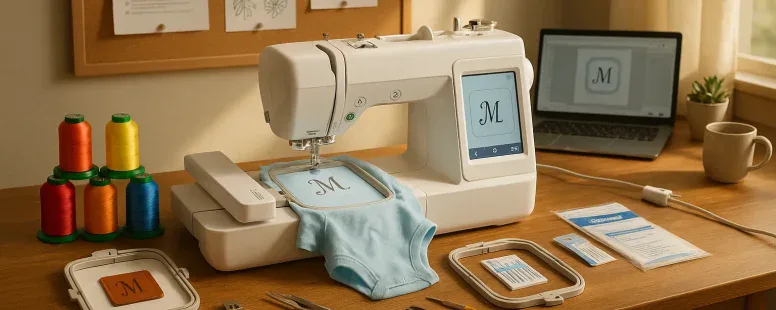
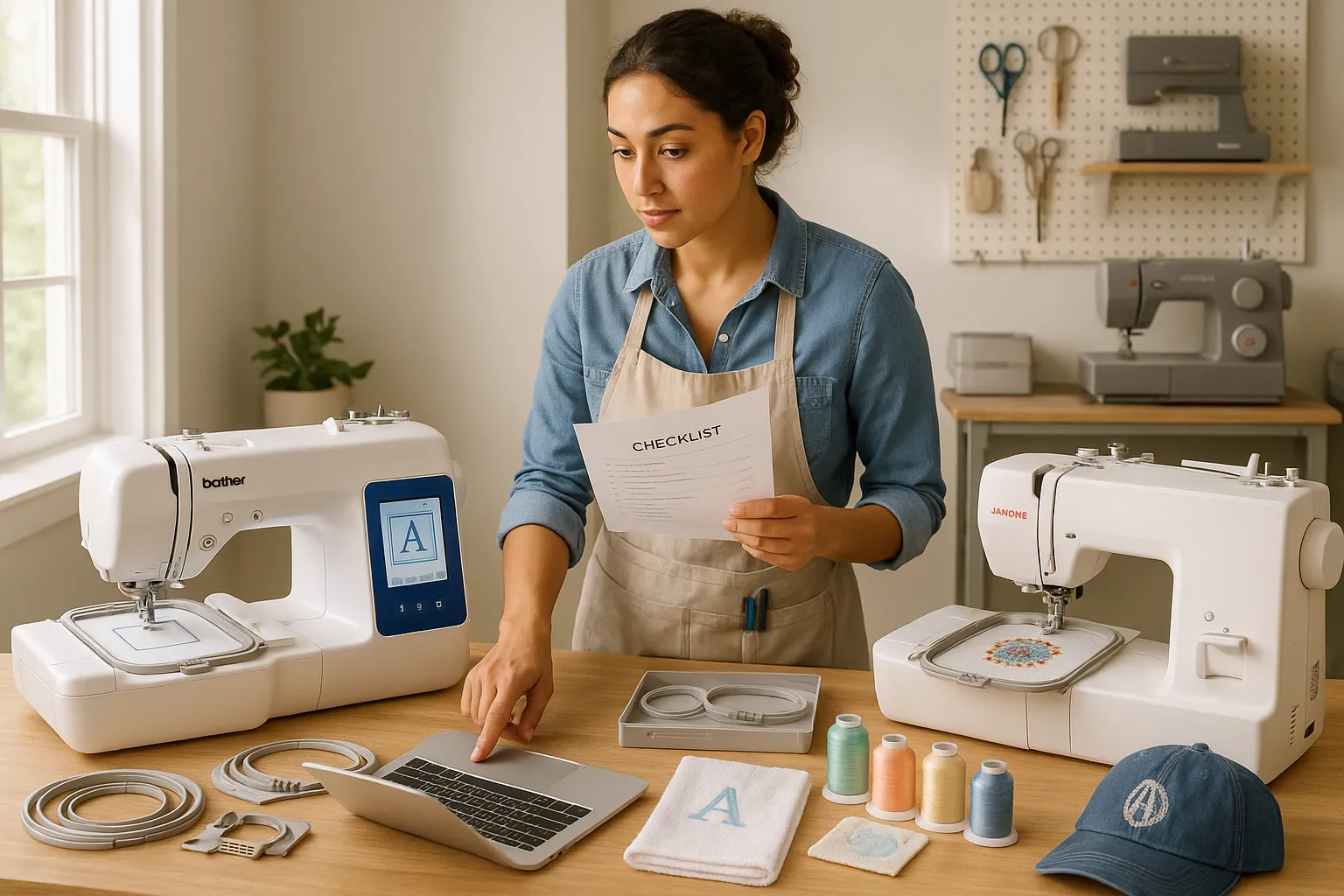
You can learn embroidery without buying a pro-level machine. The right beginner embroidery machine will make your first stitches smooth, reduce frustration, and help you advance fast. Picture the crisp click of a well-threaded needle, the gentle hum as a design forms, and the pride when a patch, tote, or baby onesie looks store-bought. Beyond hobby joy, many starter machines let you sell small runs or personalize gifts, benefits beginners often overlook.
This guide gives clear, practical advice so you pick a machine that fits your space, budget, and goals. You’ll get exact features to prioritize, real product categories by use case, step-by-step first-time setup, and honest maintenance tips. Read on to find the best beginners embroidery machine that suits how you want to create.
How To Choose The Right Machine For Your First Embroidery Projects
Start with your main goal: what you want to make. If you plan to monogram towels and hats, choose a machine with small- and medium-sized hoops and good cap embroidery support. If you want patches and larger designs, pick bigger hoop capacity and stable motors.
Consider three concrete constraints next: space, budget, and time. Space determines if you need a compact or portable model. Budget narrows brand and feature sets. Time affects whether you need faster stitch speeds or simpler workflows. State your priorities before you shop.
Ask yourself these practical questions:
Do you want sewing plus embroidery, or only embroidery? Combo machines add versatility but can cost more.
Will you learn from a laptop or prefer on-screen editing? If you want to tweak designs on the machine, choose a model with a clear touchscreen and basic editing tools.
Are you likely to upgrade within a year? If yes, prioritize machines with good brand support and firmware updates.
Named entities to consider: Brother, Janome, Singer, Bernina. Brother machines often target beginners with wide dealer networks. Janome offers durable motors and precise stitching. Singer gives low-cost entry points. Bernina sits at higher price points but has excellent build quality.
Short checklist before purchase:
Hoop sizes available
On-machine editing and connectivity
Warranty and local service
Starter accessories included
These facts help you narrow options quickly and avoid buyer’s remorse.
Essential Features To Look For
A clear feature set saves time. Start here: hoop options, built-in designs and editing, stitch quality and motor, and ease of use. Each feature directly affects your learning curve and results.
Hoop Sizes And Frame Options
Hoop size determines the maximum design you can stitch in one run. Most beginner machines include a 4×4 or 5×7 inch hoop. A 4×4 hoop is fine for monograms and small logos. A 5×7 hoop gives more flexibility for larger patches and small apparel.
Cap embroidery needs a specialized cap hoop. If you plan custom hats, confirm cap-capability. Frame options also include magnetic hoops and embroidery-only frames: magnetic hoops speed up setup but add cost.
Built-In Designs, Connectivity, And Editing Tools
Beginner machines should include a library of built-in designs and fonts. Look for at least 100 designs and several font styles. USB or Wi‑Fi lets you import new designs. On-screen editing that can rotate, mirror, and resize designs prevents frequent computer edits.
Named entities: PES and DST are common file formats. Confirm the machine reads at least one of these, or has conversion software.
Stitch Quality, Speed, And Motor Power
Stitch quality comes from needle timing, feed system, and motor smoothness. A good beginner machine delivers even tension and consistent stitch density at 400–800 stitches per minute. Faster machines cut time but may challenge novices with thread breaks. Choose a balanced motor, 600–700 SPM is a common sweet spot.
Ease Of Use: Controls, Screen, And Learning Curve
You want intuitive controls. A color touchscreen helps you preview designs and adjust placement. Physical knobs for tension and quick-release bobbins make daily tasks easier. Also check manual clarity, online tutorials, and community forums for the model, those resources speed learning.
These features shape how quickly you get to polished results. Start by prioritizing hoop size and ease of use, then match connectivity and speed to your budget.
Top Beginner Embroidery Machines To Consider (By Use Case)
Below are clear recommendations grouped by common beginner goals. Each group opens with the primary use-case and best match.
Compact Combo Machines (Sew + Embroidery), Best For Multiuse Beginners
Fact: Combo machines let you sew garments and add embroidery without buying two devices. Models like the Brother SE series and Janome Memory Craft combos give strong value. They include 4×4 and 5×7 hoops, basic built-in designs, and sewing functions. Choose these if you want to alternate between repairs, garments, and personalization.
Standalone Beginner Embroidery Machines, Best For Focused Embroidery Work
Fact: Standalone machines offer better hoop stability and embroidery-specific controls. Machines such as the Brother PE series or a low-end Baby Lock embroidery-only model give cleaner stitches and larger hoops. Choose these if embroidery becomes your main hobby fast.
Budget-Friendly Options, Best Value For New Hobbyists
Fact: You can start well under $500. Singer’s entry models and some Brother SE variants offer decent embroidery features for tight budgets. Expect smaller hoops and fewer built-in designs, but these models teach fundamentals with low risk.
Feature-Rich Entry Models, Best For Growing Skills
Fact: Mid-level beginner machines add larger hoops, Wi‑Fi, and better editing screens. Janome Horizon and higher-tier Brother machines fit here. They cost more, but they offer room to grow and often include robust warranties and support.
Portable And Lightweight Machines, Best For Small Spaces Or Classes
Fact: If you take classes or have limited space, choose a lightweight combo under 20 pounds. Portable Brother and Singer machines are easy to carry and usually come with carrying cases. They sacrifice some features but keep core functionality.
Match the machine to the way you’ll use it most. Buying for occasional monograms is different from buying to launch a small custom-goods side business.
Setup, First-Time Calibration, And Basic Workflow
A smooth first setup reduces quit-rate. Start with unboxing, then workspace setup, hooping, and running a test design.
Unboxing And Workspace Setup
Fact: A stable, well-lit table and a powered surge protector prevent many early problems. Clear a workspace twice the machine width to support fabric. Keep a small trash bin for thread trimmings.
Steps:
Remove packing and check accessory list.
Place machine on a flat surface and attach the embroidery arm.
Update firmware if the manufacturer offers an easy USB update.
Hooping Fabric, Threading, And Test Stitches
Fact: Proper hooping prevents puckering and misalignment. Use a stabilizer sized slightly larger than the hoop.
Steps:
Place stabilizer behind fabric and tension fabric lightly in the hoop.
Thread needle and bobbin per manual: test tension on scrap.
Run a low-density test design to confirm tension and thread path.
Importing Designs And Running Your First Project
Fact: USB import and simple on-screen positioning get you stitching within an hour.
Steps:
Choose a preloaded or downloaded PES/DST file.
Insert USB or use Wi‑Fi to transfer the design.
Place the hoop on machine, align the start point, and start at reduced speed.
Run the first full design slowly. Stop and check after each color change. This builds confidence and helps you learn machine cues.
Common Maintenance, Troubleshooting, And Longevity Tips
Good maintenance keeps machines working for years. Clean monthly and treat problems early.
Routine Cleaning And Lubrication Basics
Fact: Lint and dust cause timing drift and thread breaks. Clean bobbin areas and rotary hook weekly if you sew often.
Steps:
Unplug before cleaning.
Use the provided brush and a lint-free cloth.
Apply a drop of manufacturer-recommended oil to the hook area every 50 hours of use: do not over-oil.
Dealing With Thread Breaks, Tension Issues, And Misalignment
Fact: Thread breaks most often come from improper threading, damaged thread, or incorrect tension.
Troubleshoot:
Re-thread top and bobbin following manual steps in order.
Replace old thread and use embroidery-grade thread (e.g., Madeira, Isacord).
Adjust tension in small increments: run test swatches after each change.
For misalignment, check hoop tightness and file a test grid design: small shifts indicate hoop or frame problems.
When To Seek Professional Service Or Parts Replacement
Fact: Seek pro service when timing issues, consistent skipped stitches, or electrical faults appear.
Indicators for service:
The machine skips consistent stitch groups even after cleaning.
Strange grinding noises or erratic motor behavior.
Broken gears or damaged embroidery arm parts.
Keep a list of local authorized dealers for your brand. Warranty repairs often go faster when you use authorized service centers.
Budgeting, Accessories, And Where To Buy Safely
Budget realistically: machines vary widely in price and ongoing costs. Account for accessories and consumables before you buy.
Must-Have Accessories For Beginners (Hoops, Needles, Threads, Stabilizers)
Fact: A small accessory kit saves time and prevents mistakes.
To provide the best experiences, we use technologies like cookies to store and/or access device information. Consenting to these technologies will allow us to process data such as browsing behaviour or unique IDs on this site. Not consenting or withdrawing consent, may adversely affect certain features and functions.
Functional
Always active
The technical storage or access is strictly necessary for the legitimate purpose of enabling the use of a specific service explicitly requested by the subscriber or user, or for the sole purpose of carrying out the transmission of a communication over an electronic communications network.
Preferences
The technical storage or access is necessary for the legitimate purpose of storing preferences that are not requested by the subscriber or user.
Statistics
The technical storage or access that is used exclusively for statistical purposes.The technical storage or access that is used exclusively for anonymous statistical purposes. Without a subpoena, voluntary compliance on the part of your Internet Service Provider, or additional records from a third party, information stored or retrieved for this purpose alone cannot usually be used to identify you.
Marketing
The technical storage or access is required to create user profiles to send advertising, or to track the user on a website or across several websites for similar marketing purposes.