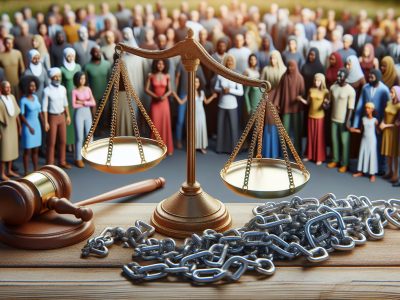
Picture a world where justice doesn’t rely solely on bars and cells but instead focuses on healing, growth, and accountability. Traditional imprisonment often fuels cycles of harm, leaving individuals and communities fractured. But what if there were solutions that not only addressed crime but also rebuilt lives and strengthened society?
Alternatives to imprisonment are reshaping how we view justice. From restorative practices that foster dialogue between offenders and victims to community-based programs emphasizing rehabilitation over punishment, these approaches offer hope for real change. They’re not just about reducing prison populations—they’re about creating pathways to redemption while making communities safer.
Could the key to a more compassionate and effective justice system lie in these innovative strategies? By exploring these alternatives, you’ll uncover powerful ways society can balance accountability with humanity—offering second chances without compromising safety or fairness.
Understanding The Need For Alternatives To Imprisonment
Overreliance on imprisonment often disrupts communities and fails to address the root causes of criminal behavior. Incarceration separates individuals from families, limits economic potential, and stigmatizes those reentering society, creating cycles of disadvantage.
High recidivism rates highlight the inefficiency of traditional imprisonment. According to the Bureau of Justice Statistics, over 67% of released prisoners in the US are rearrested within three years. These numbers show that prisons frequently fail to rehabilitate offenders or reduce crime.
Societal costs extend beyond financial burdens. Imprisonment strains public resources—annual incarceration costs per inmate can exceed $30,000 in some states like California—and contributes to overcrowded facilities. By contrast, alternative measures such as probation or diversion programs cost significantly less while addressing behavioral issues more effectively.
Justice systems focusing solely on punishment often overlook victims’ needs for closure and healing. Restorative justice models promote accountability by fostering dialogue between offenders and victims. This approach encourages mutual understanding and reduces repeat offenses through human connection rather than punitive isolation.
Alternatives also allow tailored interventions addressing specific challenges offenders face. Programs targeting substance abuse, mental health conditions, or education gaps provide opportunities for personal growth while enhancing public safety outcomes.
Ignoring these viable alternatives perpetuates systemic inequalities disproportionately affecting marginalized groups including racial minorities who face higher incarceration rates due to structural biases within legal frameworks.
Providing options besides prison fosters a justice system prioritizing fairness and rehabilitation over retribution alone.
Restorative Justice Programs
Restorative justice programs focus on repairing harm caused by criminal behavior through dialogue, accountability, and community involvement. These programs aim to rebuild trust and foster understanding between offenders and victims.
Benefits Of Restorative Justice
Empathy increases when offenders directly engage with the impact of their actions. Restorative practices like victim-offender mediation allow participants to express feelings, seek answers, and discuss reparations. Emotional closure becomes achievable for victims while offenders comprehend the consequences of their actions.
Recidivism rates decrease through restorative justice initiatives. Data from the Center for Justice & Reconciliation shows that participation in such programs reduces repeat offenses compared to traditional incarceration models. Accountability promotes behavioral change by encouraging individuals to accept responsibility.
Community cohesion strengthens as these programs involve stakeholders beyond just the offender and victim. Family members, facilitators, or even community representatives contribute to solutions fostering collective healing.
Cost savings arise because restorative approaches often require fewer resources than imprisonment. With lower administrative expenses and reduced reliance on correctional facilities, governments can allocate funds more effectively.
Success Stories And Case Studies
A notable example comes from New Zealand’s Youth Court system, where family group conferencing has successfully replaced many custodial sentences for juvenile offenders. Offenders meet with victims and families to discuss reparations or resolutions tailored to specific incidents.
In Canada’s Hollow Water First Nation program, a community-based model integrates indigenous cultural practices with restorative principles. Recidivism within this initiative remains significantly lower than national averages due its holistic approach addressing root causes like addiction or trauma.
Local U.S.-based examples include schools adopting restorative circles instead of punitive measures such as suspensions or expulsions after conflicts occur among students—reducing repeat misbehavior substantially over time.
Community Service
Community service serves as a constructive alternative to imprisonment, emphasizing accountability and societal contribution. By engaging offenders in meaningful tasks that benefit society, it addresses harm while promoting personal reform.
How Community Service Works
Community service involves assigning offenders unpaid work benefiting public spaces or non-profit organizations. Tasks include cleaning parks, assisting food banks, or repairing community facilities. Courts tailor assignments based on the offense and offender’s skills to ensure relevance.
Judicial systems oversee the process to track compliance and outcomes. Monitoring agencies document hours completed and evaluate offenders’ contributions. Non-compliance may lead to stricter penalties, maintaining accountability within the justice framework.
Its Impact On Rehabilitation
Community service fosters rehabilitation by encouraging responsibility through tangible actions that directly benefit others. Individuals experience firsthand how their efforts improve lives, creating a sense of purpose absent in incarceration.
Studies suggest community-based programs lower recidivism rates compared to prison sentences (Source: Bureau of Justice Statistics). Offenders develop new skills during assignments—like teamwork or problem-solving—which aid reintegration into society. For example, participating in environmental restoration projects enhances both vocational skills and environmental awareness.
Communities also gain from these initiatives through improved resources and reduced stigma around rehabilitated individuals. Emphasizing restorative measures over punitive ones strengthens social cohesion by addressing root causes of crime rather than merely punishing behaviors.
Probation And Parole
Probation and parole represent structured alternatives to incarceration, focusing on supervision and reintegration. These strategies emphasize accountability while avoiding prolonged imprisonment.
Differences Between Probation And Parole
Probation is a sentencing option allowing offenders to remain in the community under court-ordered conditions instead of serving time in prison. It’s typically granted before or without incarceration. Courts impose terms like regular check-ins with probation officers, curfews, mandatory counseling, or avoiding certain activities.
Parole applies after partial completion of a prison sentence, permitting release into the community under supervised conditions. Parole boards assess factors such as behavior during incarceration and potential risk to society before granting parole. For example, an individual convicted of theft might receive probation if deemed low-risk but could be eligible for parole if they show rehabilitation progress while incarcerated.
While both involve oversight, probation functions as an alternative punishment from the start; parole serves as conditional freedom following imprisonment.
Success Rates In Reducing Recidivism
Data shows that supervised programs effectively lower recidivism rates compared to traditional prison sentences. According to the Bureau of Justice Statistics (BJS), individuals on probation had rearrest rates approximately 20% lower than those released outright from prison over three years. Structured support systems reduce repeat offenses by addressing behavioral patterns through resources like therapy or employment training.
Parole programs also demonstrate positive outcomes when support services are accessible and tailored. A study published by Pew Charitable Trusts highlighted states implementing evidence-based practices saw declines in reoffending among parolees due too enhanced monitoring combined with rehabilitative measures.
Electronic Monitoring
Electronic monitoring offers a modern alternative to imprisonment, using technology to supervise offenders within the community. It’s designed to promote accountability while reducing incarceration rates.
Advantages Of Electronic Monitoring
Electronic monitoring provides cost-effective supervision compared to traditional imprisonment. A 2022 report by Pew Charitable Trusts indicated that electronic monitoring costs approximately $10 per day per individual, significantly less than the average daily cost of incarceration, which exceeds $100 in many states.
This method allows offenders to maintain employment and family connections, supporting reintegration into society. For example, individuals wearing GPS ankle bracelets can work regular jobs or attend school while adhering to court-imposed restrictions. This structure fosters stability and reduces the likelihood of reoffending.
The system also enhances public safety by providing real-time location tracking for high-risk offenders (e.g., domestic abusers). Authorities receive alerts if monitored individuals violate geographic boundaries like exclusion zones near victims’ residences.
Studies suggest that electronic monitoring effectively lowers recidivism rates when combined with rehabilitative programs. According to the National Institute of Justice (NIJ), participants in such programs show up to a 31% reduction in rearrest rates compared to those solely incarcerated.
Challenges And Controversies
Even though its benefits, electronic monitoring raises ethical and practical concerns. Critics argue it shifts correctional costs onto offenders, as some jurisdictions require participants to pay device fees ranging from $5-$15 daily—creating financial burdens for low-income individuals.
Privacy infringement is another contentious issue. Wearing GPS trackers means constant surveillance, which some see as an overreach violating personal freedoms. The American Civil Liberties Union (ACLU) has highlighted cases where excessive data collection led to misuse or breaches of privacy rights.
Technical failures can undermine reliability; malfunctioning devices may falsely alert authorities or fail during critical moments. Reports from Human Rights Watch reveal instances where unreliable equipment caused undue stress for compliant participants facing wrongful accusations.
Rehabilitation And Education Programs
Rehabilitation and education programs focus on addressing the underlying causes of criminal behavior through structured skill development and learning opportunities. These initiatives aim to equip offenders with tools for personal growth, reducing reoffending rates.
Focus On Skill-Building And Education
Skill-building and educational programs provide offenders with practical abilities that support reintegration into society. Vocational training, such as carpentry or culinary arts, offers hands-on experiences directly linked to employment opportunities. For example, inmates participating in vocational programs have a 43% lower chance of recidivism compared to those who don’t receive similar training (RAND Corporation).
Academic education also plays a critical role in rehabilitation. GED preparation courses and higher education classes help offenders attain qualifications that improve job prospects post-release. Literacy programs address basic educational gaps prevalent among incarcerated populations; around 70% of US prisoners lack proficient reading skills (National Center for Education Statistics).
Programs integrating cognitive-behavioral therapy teach problem-solving techniques and emotional regulation alongside academic or professional training. This holistic approach enhances decision-making skills while fostering accountability.
Long-Term Benefits For Society
Societal benefits from rehabilitation-focused strategies extend beyond reduced recidivism rates. Educated individuals contribute positively to local economies by securing stable employment, paying taxes, and decreasing dependency on public assistance systems.
Communities experience enhanced safety when rehabilitated individuals successfully reintegrate without returning to crime. Families benefit emotionally and financially when former offenders become productive members of society rather than enduring prolonged incarceration cycles.
Cost-effectiveness is another significant advantage; providing educational services during incarceration costs less than repeated imprisonment due to reoffending. A study by the Washington State Institute for Public Policy found that every dollar invested in correctional education saves nearly $5 in future incarceration costs.
Rehabilitation not only transforms individual lives but fosters societal progress by breaking cycles of poverty and crime while promoting equity within justice systems focused on fairness over punishment alone.
Conclusion
Exploring alternatives to imprisonment opens the door to a justice system that prioritizes accountability, rehabilitation, and community well-being. These approaches address the root causes of crime while reducing recidivism and creating opportunities for personal growth.
By shifting away from punitive measures and embracing restorative practices, you can support a more compassionate and cost-effective model of justice. This transformation not only strengthens communities but also fosters long-term safety and healing for everyone involved.
To provide the best experiences, we use technologies like cookies to store and/or access device information. Consenting to these technologies will allow us to process data such as browsing behaviour or unique IDs on this site. Not consenting or withdrawing consent, may adversely affect certain features and functions.
Functional
Always active
The technical storage or access is strictly necessary for the legitimate purpose of enabling the use of a specific service explicitly requested by the subscriber or user, or for the sole purpose of carrying out the transmission of a communication over an electronic communications network.
Preferences
The technical storage or access is necessary for the legitimate purpose of storing preferences that are not requested by the subscriber or user.
Statistics
The technical storage or access that is used exclusively for statistical purposes.The technical storage or access that is used exclusively for anonymous statistical purposes. Without a subpoena, voluntary compliance on the part of your Internet Service Provider, or additional records from a third party, information stored or retrieved for this purpose alone cannot usually be used to identify you.
Marketing
The technical storage or access is required to create user profiles to send advertising, or to track the user on a website or across several websites for similar marketing purposes.