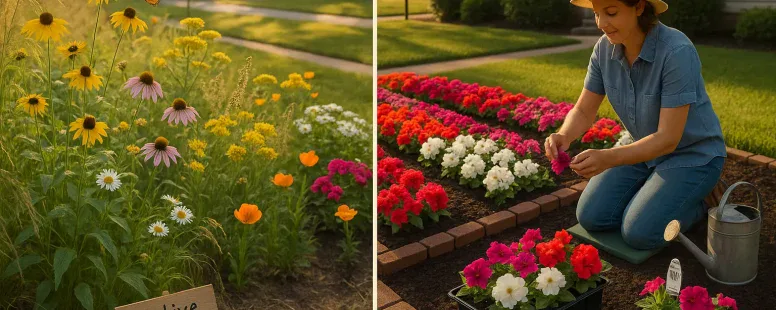
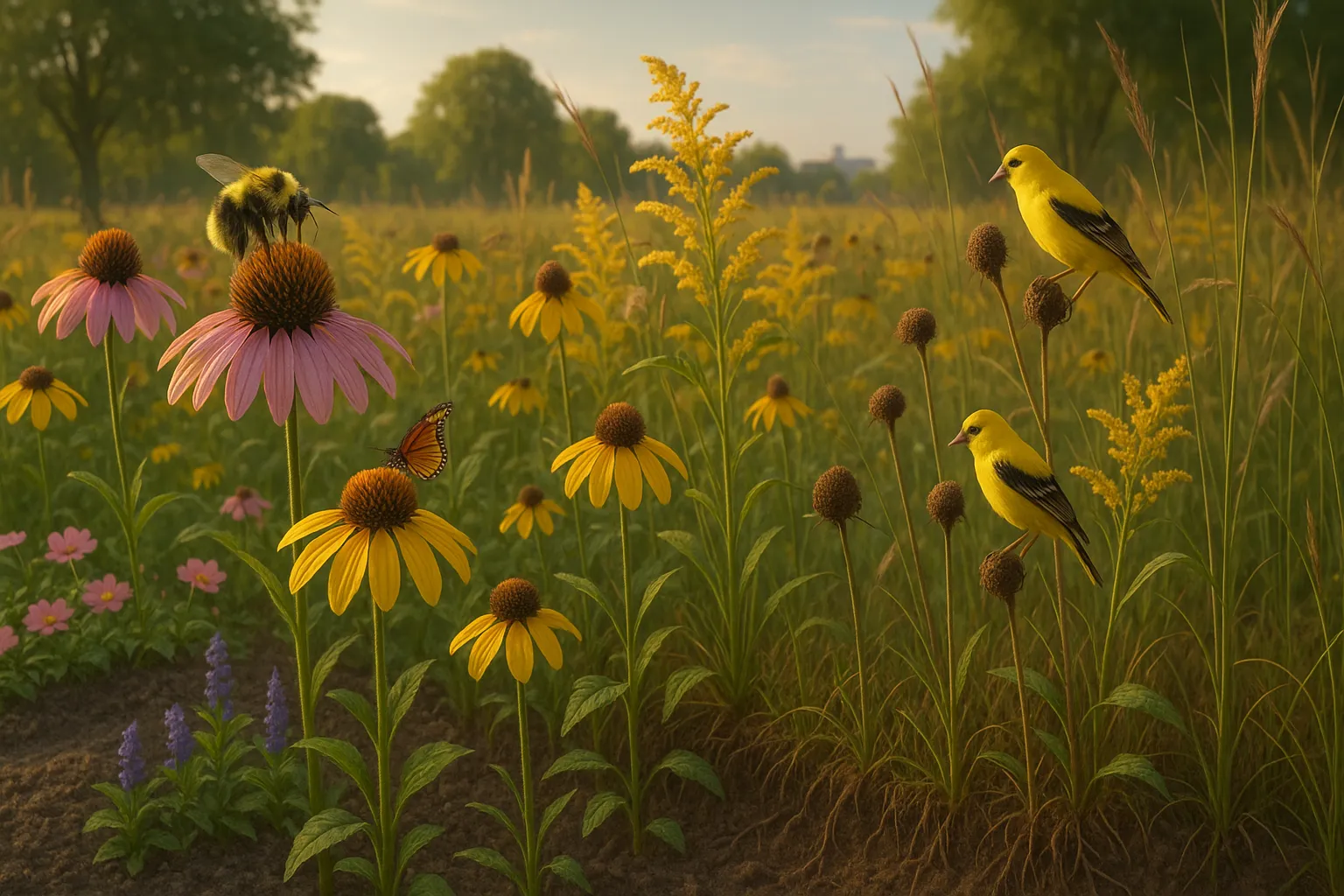
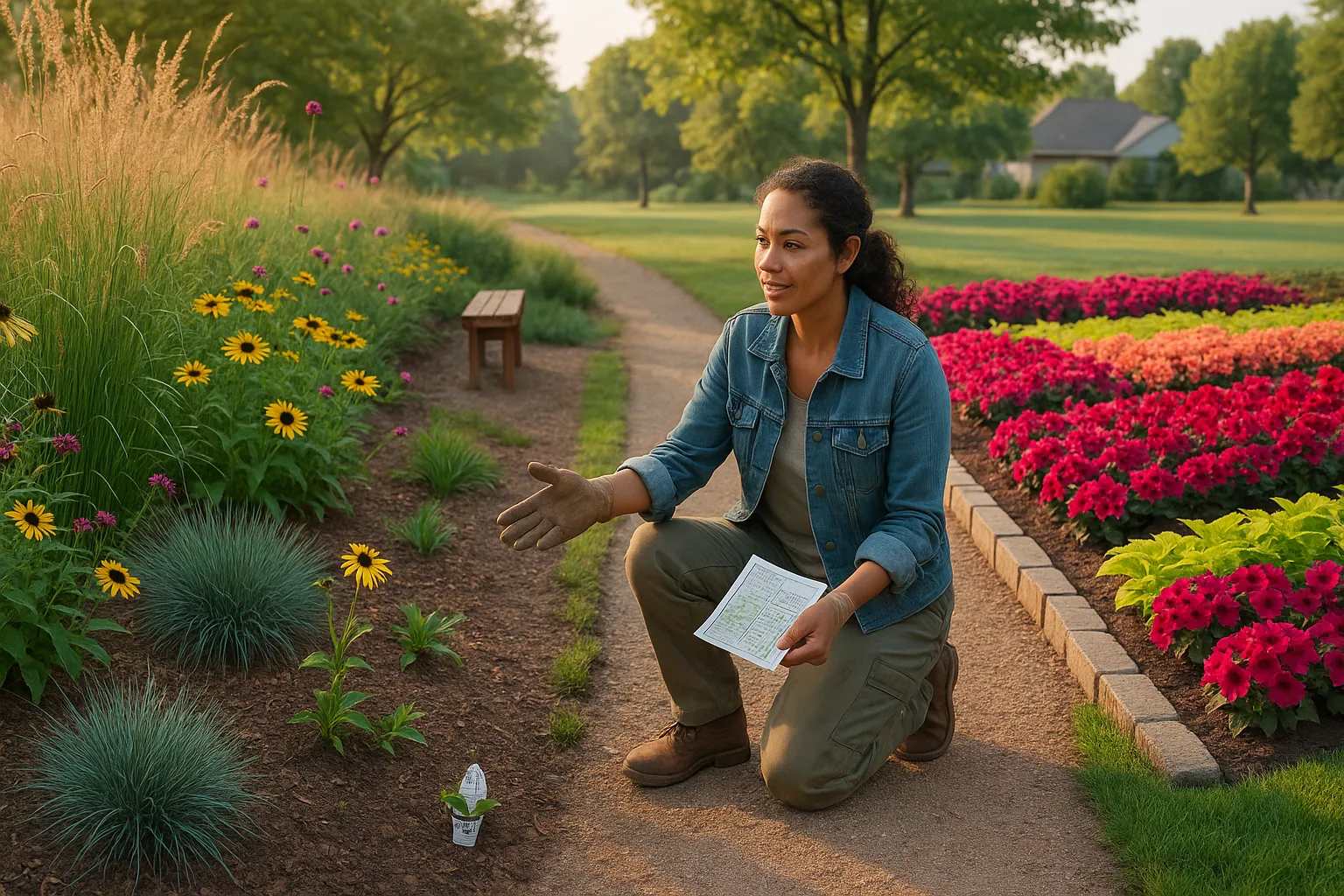
You can feel a wildflower meadow before you see it: the hum of bees, a warm blur of color that moves with the breeze. Annual bedding, by contrast, hits you like a precise painting, bold blocks of repeating color arranged on a grid. Both bring beauty and purpose, but they ask different things of you and your space. This article compares wildflower meadow vs. annual bedding so you can decide which fits your goals, schedule, and ethics. Expect clear trade-offs, practical steps, and ideas for testing each approach in a small corner of your garden.
Side‑By‑Side Comparison: Key Differences At A Glance
Fact: Wildflower meadows and annual bedding deliver different outcomes in cost, maintenance, biodiversity, and style. Below are the practical differences you need to know before you commit.
Cost And Time Investment
Wildflower meadows often cost less in seed per square foot but require planning and patience. You pay modestly for a meadow seed mix (often $2–$6 per sq ft for a good mix) and then invest time in site prep and first-year weeding. Annual bedding demands higher recurring costs: ready-made trays from garden centers (think Petunia, Begonia, Impatiens from brands like Burpee or Proven Winners) and new plant purchases each spring. Annuals cost more over five years, but they give immediate payoff if you want quick curb appeal.
Maintenance And Upkeep
Meadows need low-to-moderate ongoing care after establishment: periodic weeding, an annual cut, and spot-renewal. Annual bedding requires weekly deadheading, regular feeding, and more watering through summer. If you prefer hands-on seasonal gardening, annual beds reward you with control: if you want a lower-maintenance, longer-term solution, a meadow wins.
Biodiversity And Environmental Impact
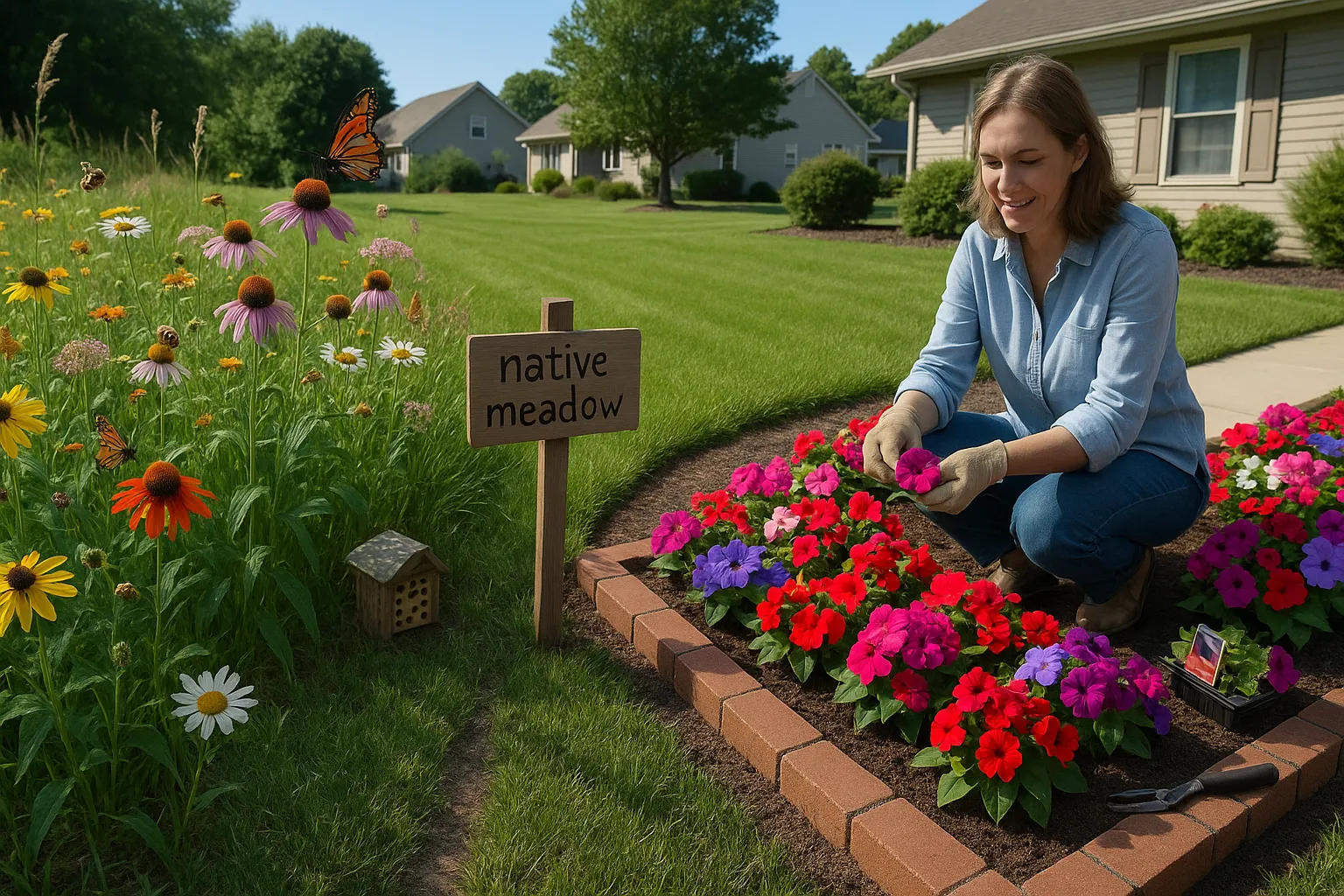
Meadows support far more species. Studies from the Xerces Society and Royal Horticultural Society (RHS) show native wildflowers increase pollinator visits and nesting habitat for solitary bees and butterflies. Annual bedding, especially if it uses hybrid cultivars, often provides less nectar and pollen, and may rely on peat-based composts and regular chemical inputs. Choose native meadow mixes to maximize benefits for wildlife.
Visual Style, Seasonal Interest, And Flexibility
Annuals offer predictable, intense color through the growing season and let you change palettes each year. Meadows provide wilder, changing textures and seasonal progression: early spring bulbs and perennials, a July peak, then late-season seedheads. Meadow color and structure evolve, some gardeners love that: others prefer the tidy predictability of annual bedding.
Establishment, Timeline, And Longevity
Fact: Establishment timeline differs sharply, annual bedding is instant, meadows are patient projects.
Site Preparation And Soil Requirements
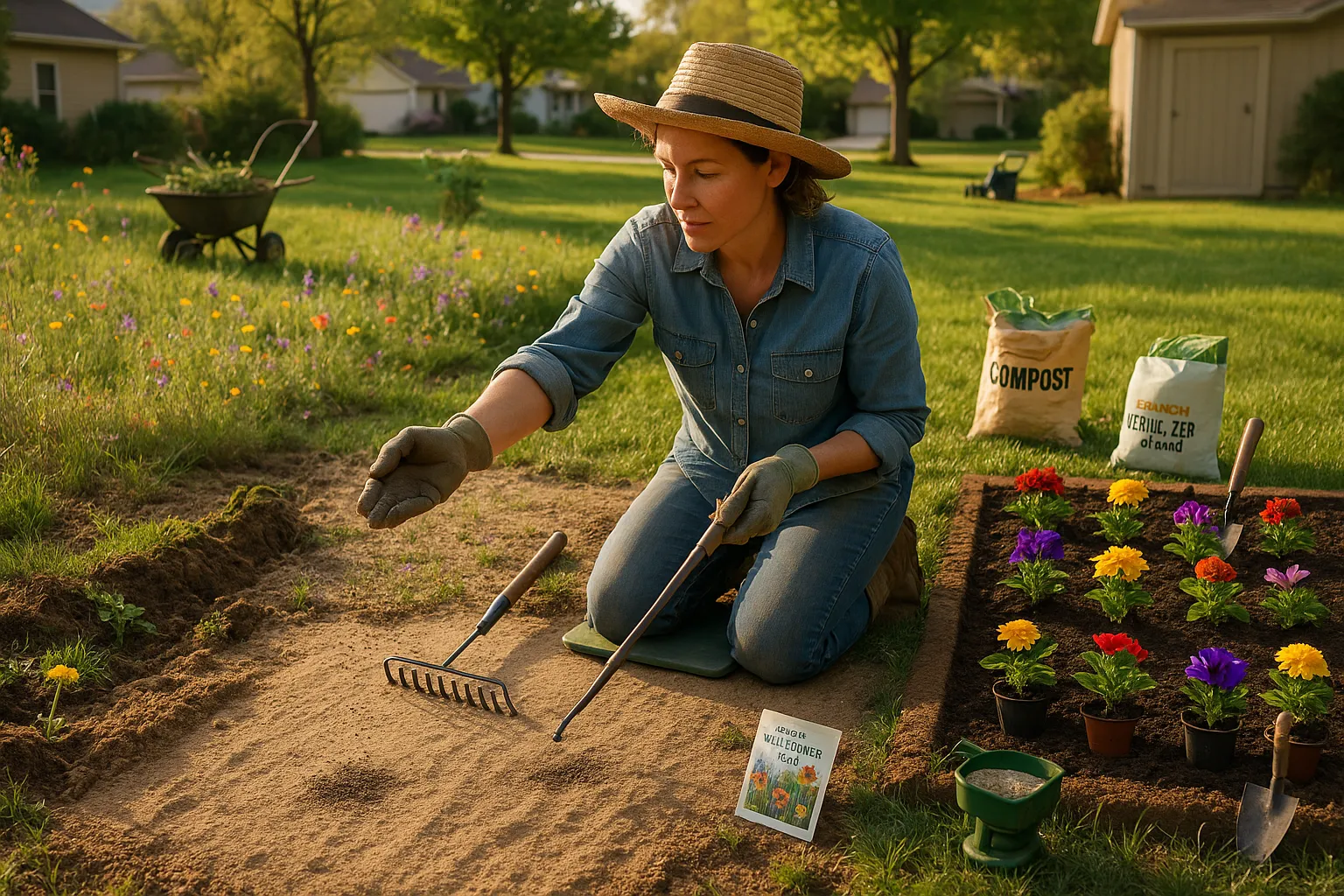
Meadows need a firm, mostly weed-free seedbed. You clear turf or remove aggressive weeds, then rake to create a fine surface. Meadows prefer leaner soils, rich, high-nitrogen soil favors grasses and weeds over wildflowers. For annual bedding, soil preparation focuses on enrichment: adding compost and a balanced fertilizer to create a fertile planting medium.
Seeding, Planting, And First‑Year Expectations
If you seed a meadow in autumn or early spring, expect modest blooms in year one and a fuller display in year two. Annual bedding gives instant cover: you plant plugs or potted annuals and get full impact within weeks. Be realistic, meadows often show a patchy first season and need vigilance against invasive weeds.
Long‑Term Management And Renewal Cycles
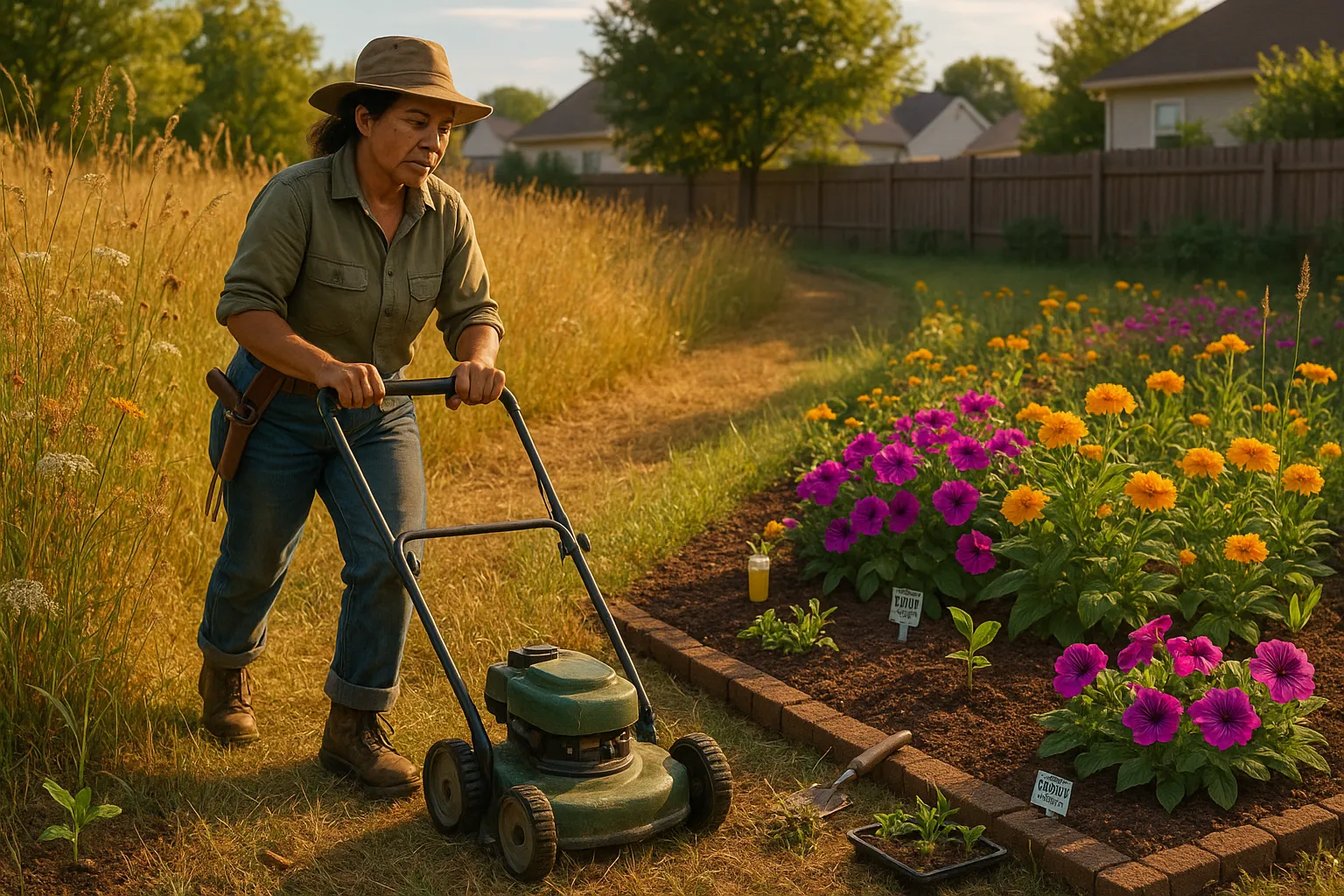
Meadows last for several years with simple annual maintenance: a late-summer or autumn cut and the removal of cuttings every 1–3 years to avoid nutrient build-up. Some meadows will need overseeding after 3–5 years. Annual bedding requires replanting each year and seasonal refreshes, which can be labor and cost intensive but lets you change design quickly.
Fact: Practical maintenance tasks differ in frequency and type, meadows favor seasonal work, annuals require routine hands-on care.
Watering, Feeding, And Weed Control
Meadows need regular watering only during establishment (first 6–12 weeks). Once set, many meadow species tolerate dry conditions. Annual beds demand consistent watering, especially in heat spells. Feeding is rare for meadows and common for annuals: annuals benefit from regular liquid feedings. For weed control, meadows need early removal of aggressive species: annuals require continual weed-pulling within beds to keep the display clean.
Mowing, Deadheading, And Seasonal Care
Meadows get a single major cut each year, often in late summer or autumn. That cut encourages reseeding and keeps woody plants down. Annuals need frequent deadheading to prolong bloom, plus winter lift-and-store or replace in cold zones. If you like a low-frequency routine, meadow mowing once a year will suit you.
Pest And Disease Considerations
Meadows generally host fewer serious disease outbreaks because of species diversity: but slugs can damage seedlings. Annual bedding can suffer from fungal diseases (like botrytis) and pest outbreaks in dense plantings. Integrated approaches work: plant resistant cultivars (Proven Winners lists disease-resistant annuals), improve air circulation, and monitor regularly.
Environmental Benefits And Wildlife Support
Fact: Wildflower meadows provide substantially more ecological value than typical annual bedding displays.
Pollinators, Birds, And Beneficial Insects
Meadows feed pollinators across seasons and support specialist bees, butterflies, and hoverflies. Native species such as Echinacea, Rudbeckia, and Solidago are nectar-rich. Meadows also offer seed and shelter for birds in autumn and winter. Annual bedding can help pollinators if you choose pollinator-friendly annuals (Cosmos, Salvia farinacea), but many bedding cultivars are nectar-poor.
Soil Health, Carbon Storage, And Runoff Reduction
Meadow plantings build soil structure and increase organic matter over time, which stores carbon and reduces surface runoff. Deep-rooted perennials and grasses improve infiltration. Annual bedding, with seasonal soil disturbance and more frequent compost or peat use, usually contributes less to long-term soil health. For municipalities and larger landscapes, meadows can cut maintenance emissions by reducing mowing frequency: this has been documented in several urban pilot programs.
Design, Aesthetics, And Seasonal Programming
Fact: Design choices shape how each approach performs visually and functionally.
Compositional Approaches For A Meadow
Design meadows by combining structural grasses (Panicum, Festuca) with flowering perennials (Rudbeckia, Knautia) and native forbs. Use drifts and irregular shapes: that mimics natural patterns and looks more convincing than a rigid grid. Consider height layers: low perennials at paths, taller species toward the back. Add named entities like the RHS Plant Finder to check cultivar suitability.
Designing Annual Bedding Displays For Impact
Annual bedding thrives on repetition, color blocking, and crisp edges. Use mass plantings of a single cultivar for maximum impact: mix in contrasting foliage for texture. Plan a planting map before buying plugs, this saves money and creates stronger compositions. Brands like Proven Winners and Ball Horticultural Supply provide cultivar ratings that help you choose long-blooming, resilient annuals.
Combining Both Approaches In One Garden
You can combine: use meadow strips as backdrops and annual beds for focal points. Or plant a small wildflower patch near a seating area and frame it with formal annual borders. This hybrid approach gives biodiversity benefits while keeping areas for seasonal experimentation.
Cost, Practical Considerations, And Accessibility
Fact: Cost and access factors often determine which option suits you best.
Upfront Versus Ongoing Costs
Upfront meadow costs are seed and prep time: ongoing costs are low. Annual bedding has lower upfront labor but higher recurring plant purchases and inputs. Over a five-year horizon, meadows usually cost less. If budget matters, start with a small meadow trial.
Space, Access, And Physical Ability Factors
Meadows suit larger or less-accessible areas where frequent upkeep is hard. Annual bedding suits small, visible spaces where you want tight control. Consider physical ability: annual beds require repetitive tasks like planting and deadheading: meadows require an initial intensive effort followed by lighter seasonal tasks.
Local Climate, Regulations, And HOA Considerations
Check local regulations, some HOAs restrict tall meadow plantings. In arid climates, meadow mixes with native drought-tolerant species (e.g., California poppy, Eriogonum) outperform thirsty annuals. Cities like Portland and London have incentives and guidance for meadow plantings: local extension services and the Xerces Society offer region-specific seed mixes and advice.
How To Choose: A Practical Decision Checklist
Fact: Your goals, horizon, and daily habits should drive the choice between a wildflower meadow and annual bedding.
Goals, Time Horizon, And Desired Outcomes
State your primary goal: is it wildlife support, immediate curb appeal, or seasonal experimentation? If you want long-term habitat and low recurring cost, choose a meadow. If you want instant color and annual design changes, choose annual bedding. Think in seasons: are you planning for next year or five years from now?
Step‑By‑Step Decision Flowchart (Questions To Ask)
How quickly do you want display? If now, pick annuals. If patient, pick meadow.
How much weekly care can you do? If you can commit to weekly deadheading, annuals fit: if not, meadow fits better.
Do you need to support pollinators or reduce maintenance costs? If yes, favor meadow.
Does your HOA or local code allow tall plantings? If no, use short meadow mixes or annual bedding.
Next Steps: Trial Options, Small Experiments, And Resources
Start small. Plant a 50–100 sq ft meadow strip or a raised-bed collection of annuals. Track time and costs for one season. For guidance, consult the Xerces Society for pollinator mixes and your local extension for soil tests. Try both, one in front yard, one in back, and compare. You’ll learn fast which fits your life and you garden needs.
To provide the best experiences, we use technologies like cookies to store and/or access device information. Consenting to these technologies will allow us to process data such as browsing behaviour or unique IDs on this site. Not consenting or withdrawing consent, may adversely affect certain features and functions.
Functional
Always active
The technical storage or access is strictly necessary for the legitimate purpose of enabling the use of a specific service explicitly requested by the subscriber or user, or for the sole purpose of carrying out the transmission of a communication over an electronic communications network.
Preferences
The technical storage or access is necessary for the legitimate purpose of storing preferences that are not requested by the subscriber or user.
Statistics
The technical storage or access that is used exclusively for statistical purposes.The technical storage or access that is used exclusively for anonymous statistical purposes. Without a subpoena, voluntary compliance on the part of your Internet Service Provider, or additional records from a third party, information stored or retrieved for this purpose alone cannot usually be used to identify you.
Marketing
The technical storage or access is required to create user profiles to send advertising, or to track the user on a website or across several websites for similar marketing purposes.