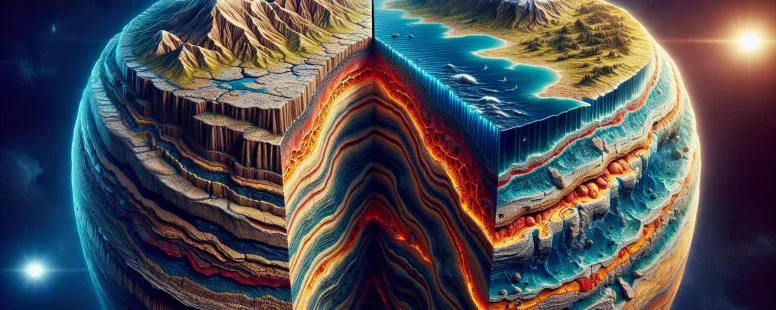
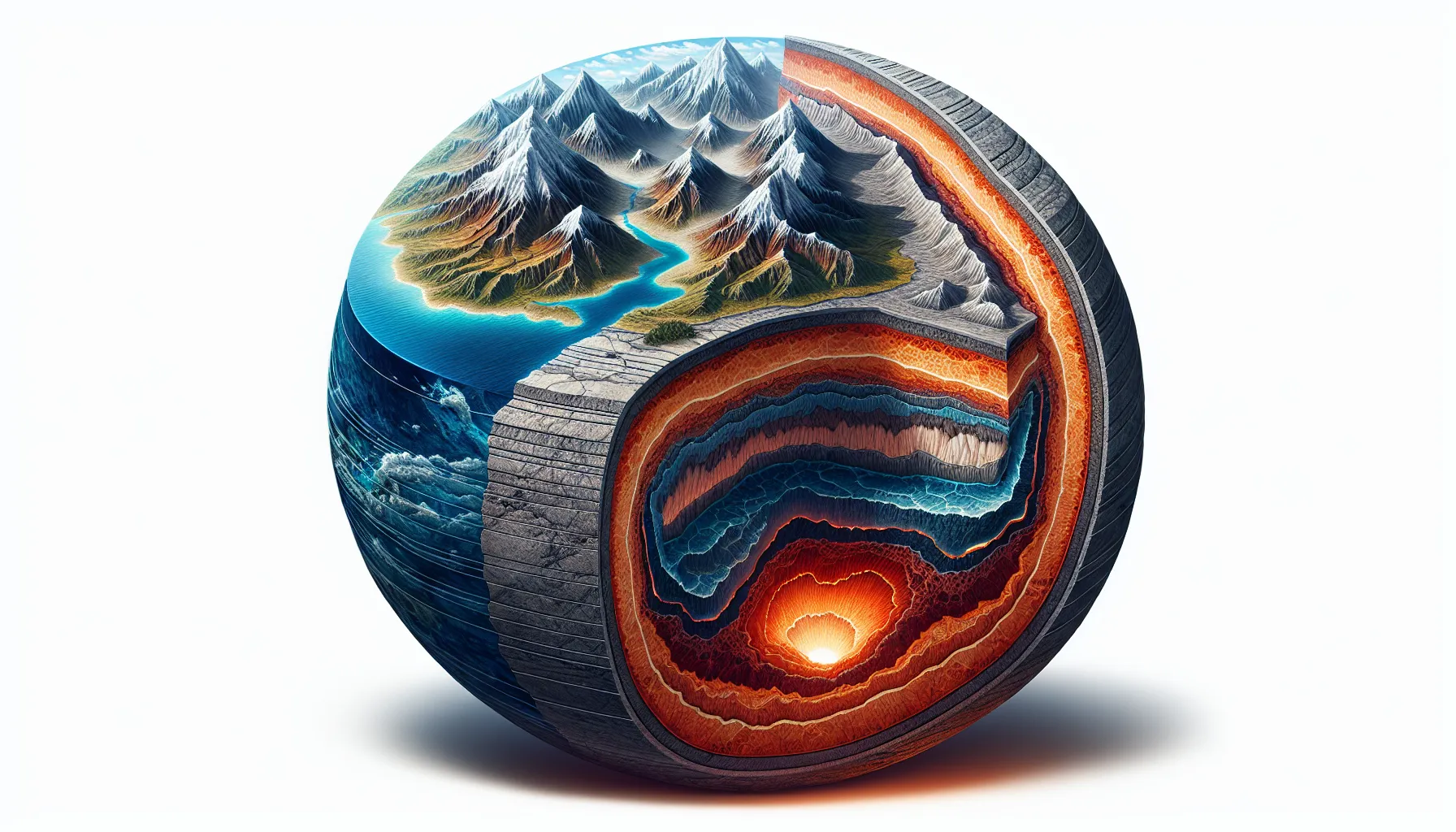
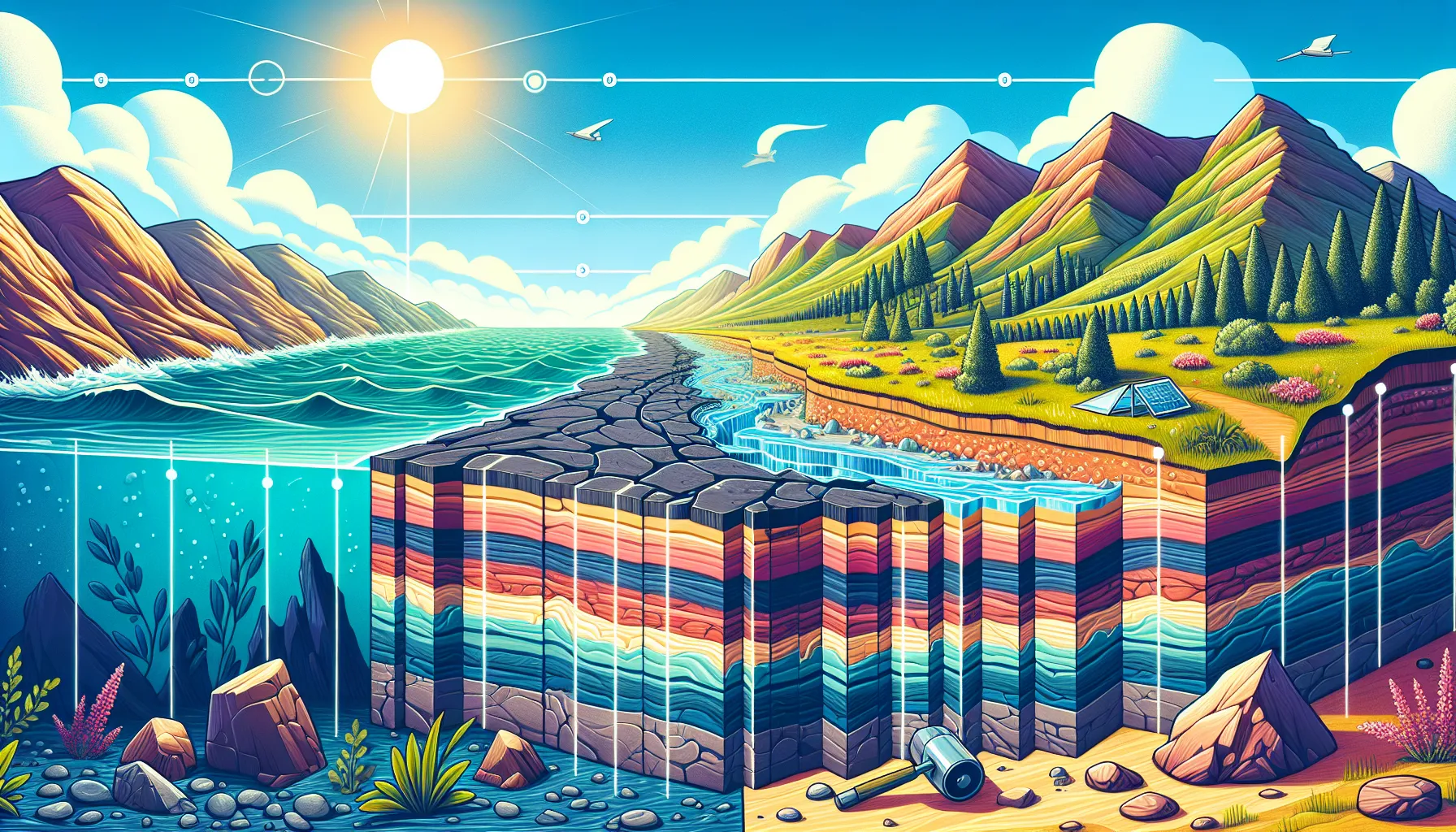
Earth’s geology holds vast mysteries, one of the most captivating being its dual crusts: the oceanic crust beneath the oceans and the continental crust forming the land masses. Each type possesses distinct features that narrate stories of Earth’s past, but among these two, which is older? Exploring their compositions, formation processes, and ages provides insights into Earth’s dynamic system.
Understanding Earth’s Crust: An Overview
The Composition and Formation of the Earth’s Crust
Earth’s crust, the thin outermost layer of our planet, is divided into oceanic and continental forms. Comprising of tectonic plates, it undergoes constant motion and renewal. This layer forms a dynamic interface between the Earth’s interior and its surface environment, facilitating the planet’s habitability.
Continental crust is primarily composed of felsic rocks like granite, offering lower density yet greater thickness. Oceanic crust, alternatively, is mainly basaltic, denser but thinner. These compositional differences stem from distinct formations through volcanic and tectonic processes.
Oceanic Crust: Characteristics and Process of Formation
Creation at Mid-Ocean Ridges
Oceanic crust originates at mid-ocean ridges, locations where tectonic plates diverge. Magma rises from the mantle, cools, and solidifies to create new basaltic oceanic crust.
Continuous Recycling Through Subduction
Over time, oceanic crust is recycled via subduction, descending back into the mantle at convergent plate boundaries. This process explains its relatively younger age as it constantly renews.
Continental Crust: Distinct Properties and Formation Process
The Role of Major Tectonic Events
Continental crust forms through complex tectonic events, including continental collisions and magmatic activity, accumulating diverse rock types over billions of years.
Determining the Age of Crust Deformations
Understanding the age of continental formations involves studying ancient rocks preserved in shields, indicating ages exceeding three billion years.
Comparative Analysis of Ages: Oceanic vs. Continental Crust
Techniques for Determining Crustal Ages
Scientists employ radioisotopic dating to ascertain the ages of crustal segments with remarkable precision.
Historical Studies and Discoveries in Geology
Geological investigations have revealed that oceanic crust, with a maximum age of around 200 million years, is significantly younger compared to sections of continental crust, which date back over 4 billion years.
Published: January 31, 2026 at 6:28 pm by Ellie B, Site owner & Publisher
To provide the best experiences, we use technologies like cookies to store and/or access device information. Consenting to these technologies will allow us to process data such as browsing behaviour or unique IDs on this site. Not consenting or withdrawing consent, may adversely affect certain features and functions.
Functional
Always active
The technical storage or access is strictly necessary for the legitimate purpose of enabling the use of a specific service explicitly requested by the subscriber or user, or for the sole purpose of carrying out the transmission of a communication over an electronic communications network.
Preferences
The technical storage or access is necessary for the legitimate purpose of storing preferences that are not requested by the subscriber or user.
Statistics
The technical storage or access that is used exclusively for statistical purposes.The technical storage or access that is used exclusively for anonymous statistical purposes. Without a subpoena, voluntary compliance on the part of your Internet Service Provider, or additional records from a third party, information stored or retrieved for this purpose alone cannot usually be used to identify you.
Marketing
The technical storage or access is required to create user profiles to send advertising, or to track the user on a website or across several websites for similar marketing purposes.