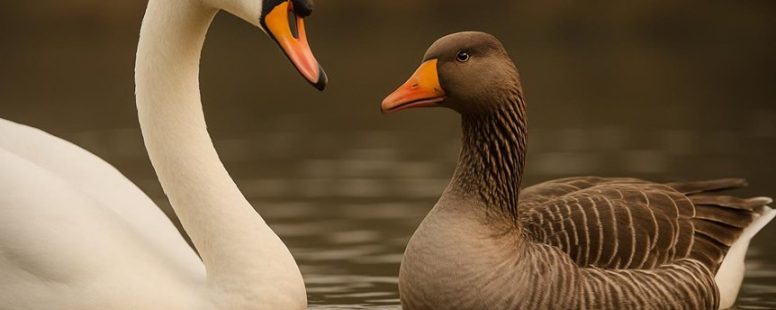
In the quiet dance of nature’s pond, swans and geese often blur into a single memory—until you notice the subtle, almost secret differences that set them apart. Their graceful shapes and melodious calls hide a world of unique traits waiting to be discovered.
Imagine spotting a regal swan’s smooth glide, contrasted with a lively goose’s spirited honking—each bird telling its own story. Unraveling these distinctions not only deepens your appreciation but also reveals surprising benefits, like better birdwatching and understanding local ecosystems.
Dive into their world, and see these elegant creatures in a whole new light.
Quick Ways to Tell Swans From Geese
The easiest way to tell a swan from a goose is by looking at their size and neck length. Swans are larger and have longer, more graceful necks. Geese are smaller and have shorter necks.
Color is also helpful. Most swans are bright white, but some species may be black or have mixed colors. Geese usually have gray or brown feathers. If you see a bird with a long neck and bright white feathers, it is probably a swan. If it’s smaller with a shorter neck and gray or brown feathers, it’s likely a goose.
Diet can give clues too. Swans mainly eat aquatic plants. Geese eat grasses, grains, and sometimes insects. So if the bird is by the water eating plants, it might be a swan. If it’s on the ground grazing, it could be a goose.
Sometimes, size and color aren’t enough. For example, some swan species are darker or smaller. Also, geese can be quite varied in color. So, it’s good to look at several features at once.
Keep in mind, both birds can look similar, especially from far away. Always check their size, neck length, color, and what they are eating to be more sure about which one you are seeing.
Physical Differences: Size, Neck, and Plumage
Swans and geese are different in size, neck length, and feathers. Swans are usually bigger than geese and have longer necks that stretch high above their bodies. Geese are smaller and have shorter necks that are more compact.
When looking at their feathers, swans generally have bright white and clean-looking plumage. Geese, on the other hand, often have darker or mottled feathers that can look rougher or dirtier. For example, a swan’s feathers might look like fresh snow, while a goose’s feathers can be more like gray or brown patches.
Some people say that size and neck length help you tell them apart quickly. But be careful. Not all swans are huge, and some geese can look quite similar. Also, the color of their feathers can change a little depending on the season or age.
Knowing these differences can help you spot them on a pond or lake. But remember, sometimes it’s tricky because some geese are larger and have longer necks, and some swans are smaller. So, it’s good to look at all the clues together.
Size and Body Shape
Swans and geese are often mixed up, but their size and body shape make it easy to tell them apart. Swans are larger with long, graceful necks and slim bodies. Their size and shape give them an elegant look, like a ballerina on water. Geese are smaller and stockier, with a thicker body that looks more solid. They often have darker or mixed feather colors, but some geese are white too.
Beak shapes are different too. Swans have long, thin beaks that are good for eating aquatic plants. Geese have shorter, wider beaks that help them eat a variety of foods. These differences in size, body shape, and beak help us tell swans from geese, even if their feather colors seem similar at first.
Knowing these features can help you spot the right bird when you see them in parks or lakes. Some people might mistake a large goose for a small swan, but paying attention to their body shape and beak makes it clear which is which.
Neck Length and Plumage
The easiest way to tell a swan from a goose is by looking at their necks and feathers. Swans have long necks that make them look elegant and graceful. Their necks are much longer than those of geese. Geese have shorter, sturdier necks that look more practical.
Their feathers also help tell them apart. Swans usually have shiny, white feathers that catch the light and look smooth. Geese often have duller feathers that are less shiny and come in different colors. If you see a bird with a shiny white body and a long neck, it is probably a swan. If it has shorter neck and duller feathers, it is likely a goose.
Another clue is the shape of their beaks. Swans have long, curved beaks that are good for filtering water. Geese have shorter, stronger beaks that help them eat grass and grains.
Some people find it easy to tell these birds apart just by looking at their necks and feathers. But keep in mind, in some situations, it can be harder. For example, young swans, called cygnets, look more like geese. Also, different types of geese and swans can have similar colors and sizes.
Behavioral Traits: How They Move and Interact
Swans and geese move in very different ways, and their movements tell us a lot about how they behave. Swans glide smoothly with their heads held high, which shows they are confident and calm. They move with gentle, flowing strokes that look elegant. Geese, on the other hand, often waddle or walk with a hunched posture. Their movements are more playful or alert, especially when they are protecting their family or looking for food.
Swans usually stay in the water and glide gracefully, which makes them appear peaceful and relaxed. Their upright posture helps them see everything around them clearly. Geese often walk on land, and their hunched stance makes them look more active and ready to move quickly if needed. Sometimes, geese will hiss or flap their wings to warn others about danger, showing they are more alert and protective.
Some people think swans are more graceful because of how they move, but geese are better at quick movements and protecting their group. Both birds have their own way of moving that fits their needs. Swans may seem more elegant, but geese are faster and more aggressive when they feel threatened. Knowing these differences helps us understand how each bird behaves and interacts with others.
Movement Patterns and Posture
Swan and goose movement patterns tell us a lot about their behavior and help us tell them apart. Swans move smoothly and gracefully across the water. They glide with slow, strong wingbeats that make them look elegant. When they fly, swans lift into the air with steady, powerful wings, almost like they are floating. Their feathers are shiny and sleek, catching the light as they move.
Geese, on the other hand, move more actively. They walk with quicker, choppier steps and stand more upright both on land and on water. When flying, geese often fly in V-shaped groups and flap their wings faster with a rhythmic beat. Their feathers are usually less shiny than those of swans, which shows they are a different kind of bird with a different way of living.
If you want to tell swans and geese apart by their movements, look for these clues. Swans glide smoothly and look very graceful. Geese move more actively and often fly in formations. Both animals have their own unique styles that help bird watchers and nature lovers identify them easily.
Social Interaction Styles
Swans and geese are both social birds, but they have very different ways of interacting with each other. Swans are more quiet and gentle in their social behavior. They usually show their place in the group with small, calm signals and soft sounds. They don’t call loudly unless they need to defend their territory or talk to their mates. Geese are more loud and lively. They use loud honks to show who is boss or to warn others. Geese also use lots of head-bobbing and body language to show their place in the flock.
In simple words, swans communicate quietly and gracefully, while geese are more noisy and active when they socialize. Both styles fit their way of life. Swans spend more time alone or in small groups, so they don’t need to be loud. Geese live in big groups, so they use loud sounds and big gestures to stay organized.
If you watch birds at a pond, you might see a swan glide quietly across the water, only making soft sounds. Meanwhile, nearby, a flock of geese might be honking loudly and bouncing their heads around. These differences in how they talk and behave help each bird fit into its own way of living.
Where Do Swans and Geese Live? Habitats and Regions
Swans and geese live in different kinds of places around the world, and they choose habitats based on their needs. Their homes depend on where they migrate and what they eat.
Swans mostly live in freshwater lakes, ponds, and marshes. They prefer these calm waters in temperate and northern parts of the world because they feed on plants that grow underwater. For example, many swans in Europe and North America are found in these water spots where they can find plenty of food and safe places to rest.
Geese are more flexible. They often live in grasslands, wetlands, and along coastlines. Some geese stay in one place, but many migrate to find better food and warmer places during winter. For example, Canada geese travel from Canada to the southern United States when it gets cold. They need open fields and wetlands for feeding and nesting.
Their migration patterns also affect where they are found. Some geese fly thousands of miles to find warmer winter homes, while swans usually stay closer to their breeding areas during colder months. This difference helps explain why you might see more geese in some places during winter and swans mostly in summer.
Understanding where swans and geese live helps explain why they are found in certain regions. The environment and their habits shape where they can survive, just like how a fish needs water and a bird needs a tree.
How Do Their Sounds Help in Identification?
Sounds are a helpful way to tell swans and geese apart. Their calls are different enough that you can often identify the bird just by listening. Swans usually make deep, smooth sounds that sound more musical. They often call when they are nesting to talk to their mates or warn others nearby. Geese, on the other hand, honk with a sharper, more urgent sound. They do this a lot when they feel threatened or want to defend their territory.
Because of these sounds, you can tell which bird is which even if you can’t see them clearly. During nesting, geese tend to honk often to protect their nests. Swans’ calls are softer and more coordinated with their partner, helping them stay in touch without alarming others.
Listening carefully to their voices is a good way to tell swans from geese. But keep in mind, some birds can have similar sounds, and weather or distance can make it harder to hear clearly. So, it’s best to use sounds along with other clues like size or shape to be sure.
Mating and Parenting: Unique Styles of Swans and Geese
Swans and geese have different ways of mating and raising their young. These differences show how they behave and live in their groups.
Swans are known for their special courtship. They often do synchronized swimming and mutual preening, which means they gently clean each other. These actions help them build a strong bond. Swans usually mate for life and stay together. When it comes to raising their babies, called cygnets, both parents work hard to protect them. They build nests and keep a close watch for predators. If a threat comes, they are very fierce in defending their young.
Geese also mate for life, but their courtship is more loud and active. Male and female geese call loudly and show off on land to attract mates. When they become parents, both geese take care of their babies, called goslings. They lead the goslings to food and keep them safe from danger. Geese are often seen in groups, and their active parenting helps their young grow quickly.
These different styles show how swans’ elegant and calm courtship is different from geese’s loud and energetic parenting. Swans seem more graceful in their love, while geese are more active and vocal. Both ways work well for their survival, but they show how different birds can be in how they raise their young.
Common Confusions and How to Distinguish Them
Swans and geese are often mixed up because they look similar at a quick glance. But knowing their main differences can help you tell them apart easily.
One key difference is how they migrate. Swans usually fly alone or in small groups. Geese, on the other hand, travel in big flocks. If you see a small number of long-necked birds flying far, they are probably swans. Large groups of shorter-necked birds are likely geese.
Another difference is what they eat. Swans mainly eat aquatic plants. They move slowly and gently while grazing on water. Geese are more flexible eaters. They eat grasses and grains, often in big groups on land. If you see a bird grazing on grass in a field, it is probably a goose.
Their necks are also different. Swans have long, graceful, and curved necks. Geese have shorter, thicker necks that look sturdier. If you watch closely, the elongated neck of a swan makes it look more elegant.
Knowing these differences can help you identify them even from far away or when they are mixed together. For example, if you see a big flock of short-necked birds on a farm, they are likely geese. If you spot a lone bird with a long neck swimming in a pond, it is probably a swan.
Some people might get confused because these birds share similar shapes and habits. But looking at their migration style, feeding habits, and neck length can clear things up. Remember, swans tend to be more graceful and travel alone or in small groups, while geese are more social and travel in large flocks.
Why Knowing These Differences Matters for Birdwatchers
Knowing the differences between swans and geese is very helpful for birdwatchers. It helps you identify birds more clearly and understand their habits. For example, swans usually migrate alone or in small groups, while geese often travel in big flocks. Swans mainly eat aquatic plants, but geese have a diet that includes grains and grasses. Recognizing these differences makes birdwatching more fun and informative.
Here are some reasons why this matters:
It makes it easier to tell which bird you are seeing.
It helps predict when and where birds will migrate.
It improves your understanding of their roles in the environment and what kinds of habitats they need.
Some birdwatchers use simple clues to tell swans and geese apart. For example, swans are usually larger with long necks and white feathers. Geese tend to be smaller, with shorter necks and more variety in colors. If you see a bird with a very long neck swimming gracefully, it’s most likely a swan. If it’s in a big group and has a shorter neck, it’s probably a goose.
However, there are some tricky parts. Some geese can look very similar to young swans, and different species of geese may vary in color and size. So, it’s good to use a field guide or app to help you learn the differences. Birdwatching is fun but requires patience and practice.
In short, knowing how to tell swans from geese helps you enjoy birdwatching more and learn about the birds you see. It’s like knowing the different characters in a story — once you understand them, the story gets more interesting.
Published: March 7, 2026 at 9:57 pm by Ellie B, Site owner & Publisher
To provide the best experiences, we use technologies like cookies to store and/or access device information. Consenting to these technologies will allow us to process data such as browsing behaviour or unique IDs on this site. Not consenting or withdrawing consent, may adversely affect certain features and functions.
Functional
Always active
The technical storage or access is strictly necessary for the legitimate purpose of enabling the use of a specific service explicitly requested by the subscriber or user, or for the sole purpose of carrying out the transmission of a communication over an electronic communications network.
Preferences
The technical storage or access is necessary for the legitimate purpose of storing preferences that are not requested by the subscriber or user.
Statistics
The technical storage or access that is used exclusively for statistical purposes.The technical storage or access that is used exclusively for anonymous statistical purposes. Without a subpoena, voluntary compliance on the part of your Internet Service Provider, or additional records from a third party, information stored or retrieved for this purpose alone cannot usually be used to identify you.
Marketing
The technical storage or access is required to create user profiles to send advertising, or to track the user on a website or across several websites for similar marketing purposes.