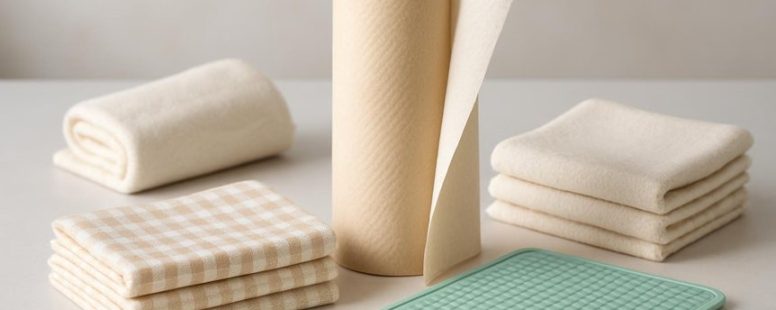
Imagine wiping away spills with a soft cloth that feels like a gentle hug rather than a rough scrape. Switching from disposable paper towels to eco-friendly options transforms your cleanup routine into a small act of kindness for the planet.
Reusable cloths and beeswax wraps can tame everyday messes just as effectively—sometimes even better—while reducing waste that piles up like an unwelcome mountain.
Surprisingly, making this switch not only cuts down on clutter but also introduces a satisfying sense of mindfulness to your daily habits.
With a little know-how on choosing and caring for these alternatives, you can keep your home tidy and your conscience clear, all without sacrificing the ease you crave.
How Do Eco-Friendly Alternatives Reduce Waste and Deforestation?
Eco-friendly paper towel alternatives help reduce waste and prevent deforestation in simple ways. They are made from sustainable materials like bamboo or recycled fibers. These materials grow quickly and need less water and land than traditional trees used for paper. Many of these alternatives are reusable or biodegradable, so they break down naturally instead of sitting in landfills for years. This means fewer waste items pile up and less pollution in our environment.
Some people worry that using eco-friendly products might not be enough. For example, reusable towels need to be washed often, which uses water and energy. Others say that making these products still has some impact, but it’s much less than traditional paper towels. It’s good to think about these points when choosing eco-friendly options.
Top Reusable Cloths and Towels for Sustainable Cleaning
Reusable cloths and towels are a smart choice for sustainable cleaning. They help reduce waste and save money over time. The type of fabric matters because each material absorbs water and dirt differently.
Microfiber cloths are known for being super absorbent. They can pick up dust and dirt easily and work well without needing chemical cleaners. For example, cleaning your kitchen counter with a microfiber cloth can save you from using sprays and papers.
Cotton towels are another good option. They are strong and naturally absorb water. You can use them for drying dishes or wiping up spills in the kitchen. Cotton towels last a long time if you wash them properly.
Linen towels are less common but also useful. They absorb well and tend to be durable. Some people prefer linen because it gets softer with each wash and can last many years.
Choosing the right cloth depends on what you need to clean. For example, microfiber is great for quick dusting, while cotton is better for drying. It’s also good to think about how often you will wash the cloths.
Some people worry that reusable cloths might not be as clean as paper towels. But if you wash them regularly in hot water, they can be just as sanitary. Others warn that microfiber may trap dirt if not cleaned properly, so rinsing well is important.
In the end, understanding how each material works can help you pick the best cloths for your home. Using reusable cloths reduces waste and helps protect the environment. So, next time you clean, think about switching to cloths that fit your needs and are kind to the planet.
Best Eco-Friendly Products That Replace Paper Towels
Switching from regular cloths to eco-friendly products can help make your cleaning more sustainable. These options are gentle on the environment and work well too. Most of them are made from plant-based fibers that break down naturally and help reduce waste. Plus, they often come in packaging that is also biodegradable, which means less trash in landfills.
Here are some of the best eco-friendly products to try:
Bamboo paper towels are made from fast-growing bamboo, a plant that grows quickly and doesn’t need much water. They are a good alternative to traditional paper towels and can be used many times.
Beeswax wraps are reusable covers made from beeswax, cotton, and tree resin. You can use them to cover bowls or wrap food instead of plastic wrap. They are biodegradable and last for months if taken care of properly.
Compostable cleaning cloths are made from plant fibers that break down in compost bins. They are perfect for wiping counters or cleaning spills without adding plastic waste.
Reusable cellulose cloths are highly absorbent and break down naturally. They can be washed and used again and again, reducing the need for paper towels.
Cloth napkins are durable and often made from organic cotton or linen. They can be washed and used over and over, cutting down on paper waste during meals.
Some people worry that these eco-friendly options might not be as convenient as traditional paper towels. While they are reusable and often more durable, they may require washing and some extra care. For example, beeswax wraps need to be washed gently and kept dry to last longer. Also, biodegradable products work best when disposed of correctly, like in compost bins, so check local waste rules.
Trying these products can help you cut down on waste and make your home greener. Would you like to see reviews of specific brands or tips on how to start replacing paper towels today?
How to Choose the Right Paper Towel Alternative for Your Needs
Choosing the right paper towel alternative is key to making cleaning easier and more eco-friendly. The best option depends on what you need to clean, your lifestyle, and how you like to organize your kitchen.
Reusable cloths and microfiber towels are great if you want quick access and easy cleaning. They can be washed and used again, but you need a dedicated place to store them. For example, a set of colorful cloths can be kept in a basket near your sink. Keep in mind, they need regular washing, so if you prefer less work, this might not be the best choice.
If you want something small and compact, bamboo or cellulose sponges are good. They fit easily in a drawer or container. These sponges are useful for quick spills or wiping down counters. But, they wear out faster than cloths and need to be replaced regularly.
Think about how often you’ll use the alternative. Some products, like cloths, are meant to be washed and reused many times. Others, like disposable paper towels, are more convenient for occasional use but create waste.
Also, consider what messes you usually handle. Do you often deal with spills or food prep? If so, you might want a sturdy sponge or cloth that can handle heavy-duty cleaning. For light messes, softer options work fine.
Some people prefer eco-friendly brands like Seventh Generation or Grove Collaborative, which offer washable and compostable options. Others may choose simple kitchen sponges or rags they already have.
The key is choosing an option easy to access, fits your cleaning habits, and works well with your kitchen storage. Trying out a couple of options can help you find what works best for you. Remember, the goal is to clean effectively while reducing waste and saving money over time.
How to Properly Care for Reusable Towels and Cloths
Reusable towels and cloths need proper care to last longer and stay clean. Washing them regularly with hot water is the best way to keep bacteria away. Hot water helps kill germs better than cold water, especially if the cloths get really dirty or sweaty.
After washing, drying them completely is key. You can hang them outside in the sun, which also helps disinfect naturally. If you prefer using a dryer, set it to a high heat setting to make sure they dry fully. Wet cloths left sitting can grow bacteria and mold, which no one wants.
Sometimes, cloths get stains that are hard to remove. In those cases, pre-treat the stain with a stain remover or a mixture of baking soda and water. Let it sit for a few minutes before washing. This helps keep your cloths looking fresh and clean longer.
Some people worry about using too much heat. It’s true, high heat can sometimes wear out fabric faster. Check the care label on your towels or cloths to see what temperature is safe. Using too hot water or drying on high heat all the time might make them wear out sooner.
Regular Washing Routine
Washing your reusable towels and cloths the right way keeps them clean and helps them last longer. To get good results, there are some simple steps you should follow.
First, rinse off any dirt or debris before washing. This helps prevent buildup in your laundry machine. When you wash, use warm water because it cleans better than cold water. Use just a small amount of detergent—too much soap can leave residue and make the cloths less absorbent. Avoid using fabric softeners because they can coat the fibers and reduce how much water the cloths can soak up.
It’s best to wash cloths separately from very dirty or greasy items. After washing, you can air dry them outside or tumble dry on low heat. High heat can damage the fabric over time.
Some people prefer air drying because it’s gentler on the fabric and helps keep the cloths absorbent. Others choose tumble drying because it’s faster. Both ways work, but be careful not to use high heat if you want your cloths to stay soft and strong.
Following these simple steps makes sure your reusable towels stay clean, absorbent, and ready to replace paper towels. Do you ever wonder if using too much detergent can actually make your cloths dirtier? It’s true—using too much soap can leave a film that traps dirt and reduces their usefulness. So, a little detergent goes a long way.
Proper Drying Methods
Drying your reusable towels and cloths properly is key to keeping them in good shape and ready for use. The best way to dry them is by air drying because it is gentle and helps stop bacteria from growing in damp cloths. To do this, hang your towels in a well-ventilated spot, like near a window or outside on a dry day. Make sure they are spread out so they dry evenly and quickly. Wringing them out too hard can rip fibers, so gently squeeze out excess water instead.
Once they are dry, storing your towels properly helps keep them fresh. Fold or roll them neatly, then put them in a clean, dry place. This keeps mold away and makes sure your towels stay clean longer. Using air to dry also saves electricity compared to using a dryer, which can use a lot of energy and wear out your towels faster.
Some people prefer using a dryer because it is faster, especially in cold or rainy weather. But dryers can sometimes damage towels if used too often or at high heat. So, if you want your towels to last, air drying is a good choice, especially for delicate fabrics.
If you have a busy household, you might find it hard to air dry everything. In that case, try to balance both methods. For example, air dry towels most of the time and use the dryer when you need them quickly. Remember, how you dry your towels affects how long they last and how clean they stay.
Stain Removal Tips
Stain removal is about acting fast and choosing the right methods. When a stain happens on reusable towels or cloths, quick action helps stop it from setting. The first step is to treat the stain as soon as possible. Using eco friendly detergents is a good idea because they are gentle on the environment but still tough enough to remove stains. Brands like Seventh Generation or Mrs. Meyer’s are popular options.
Pre-treating stains with a mixture of baking soda and water or a natural stain remover works well. For example, make a paste with baking soda and water and put it on the stain before washing. If the stain is stubborn, soaking the cloth in a solution of white vinegar and water for about 30 minutes can help loosen the spot. Be careful with colored fabrics because vinegar might fade some dyes, so test a small area first.
Always wash cloths in hot water if the fabric can handle it, because hot water helps break down stains better. After washing, line dry the cloths in sunlight. Sunlight acts like a natural bleach, making whites brighter and helping remove leftover spots. But if the fabric is delicate or colorfast, air drying indoors is safer.
Some people also argue that harsh chemicals like bleach can remove stains faster but might weaken the fabric or cause discoloration over time. If you choose to use bleach, do so sparingly and follow the instructions on the label.
Here are some quick tips:
Act fast and pre-treat stains immediately
Use eco friendly detergents for cleaning
Avoid harsh chemicals unless necessary
Soak very stained cloths in vinegar solution
Sun-dry for extra whitening and freshness
Cost Comparison: Reusable Options vs. Disposable Paper Towels
Reusable options, like cloth towels, can cost more upfront but may save you money in the long run. The key is to look at how much you spend on washing, replacing, and maintaining them. These costs can add up, so it’s good to compare them with the price of disposable paper towels.
For example, buying a set of cloth towels might cost $20 to $50. Each time you wash them, you use a little water and soap, which costs less than buying a roll of paper towels every week. Over time, you might save money if you use cloth towels regularly.
But there are some warnings. Cloth towels need to be washed and replaced if they get torn or stained. If you don’t wash them often enough, they can get dirty or smelly. Also, the initial cost might be too high for some people.
Some people prefer disposable paper towels because they are cheap to buy in small amounts and don’t need washing. However, they can be more expensive over time because you keep buying new rolls. Plus, paper towels create more trash, which is bad for the environment.
Initial Purchase Costs
Reusable cloths and towels cost more at first, but they can save money over time. The initial price for these options includes good quality fabrics, which can be more expensive than buying disposable paper towels. Even though they cost more upfront, these durable items last longer, which makes them cheaper in the long run. Here are some key points to consider:
Reusable cloths usually cost between $10 and $30 for a set.
High-quality towels last longer, so you buy fewer replacements.
Disposable paper towels are cheap per pack, but the costs add up if you use them often.
Reusables require a larger initial payment but do away with ongoing purchases.
Although the start-up cost is higher, many people think it’s worth it because of the savings later.
Thinking about what you spend at the beginning helps you decide if reusable options are a good deal for you. Would you prefer paying more now for less waste later, or saving money upfront with disposables? Both choices have their good and bad sides.
Long-Term Savings Potential
Reusable cloths and towels may cost more money at first, but they can save you a lot over time. If you compare the total cost over months or years, reusable options usually end up cheaper than buying paper towels every week. When you choose cloths, you stop spending money on new rolls constantly. For example, instead of buying a new pack of paper towels each week, you can wash and reuse a cloth many times. This saves you money and reduces waste.
Reusable cloths are also better for the environment because they use fewer resources to make. They create less trash and waste less energy. For example, making one roll of paper towels uses water, trees, and energy. Reusable cloths need washing, but that uses less water and energy than making new paper towels every time.
Some people might worry that cloths take more work because you have to wash them. But many find that the savings and environmental benefits are worth it. Plus, cloths can be softer and more absorbent than paper towels, making cleaning easier.
In the long run, switching to reusable cloths can lower your household bills and help protect the planet. It is a simple change that can make a big difference. Would you like to try using cloths instead of paper towels?
Maintenance and Replacement
Reusable cloths cost less over time than disposable paper towels. They last longer if you take good care of them. Washing them regularly keeps them clean and working well. Because they can be washed many times, they stay effective longer, saving you money.
Choosing strong materials like microfiber or cotton makes cloths last longer. For example, microfiber cloths are known for holding up well after many washes.
Washing cloths often helps prevent bad smells and bacteria from building up. Think of it like cleaning your hands to stay healthy.
Stains can be easier to remove if you use the right cleaning method. Soaking stained cloths in warm water with a little soap helps lift the dirt.
Rotating several cloths means you use each one less, which slows down wear and tear. Keep a few clean cloths ready so you don’t overuse one.
Storing cloths properly in a dry, clean place keeps them from getting damaged or dirty. Avoid leaving them in damp areas where mold can grow.
Some people prefer disposable paper towels because they are quick and easy. But they cost more over time and fill landfills fast. Reusable cloths need regular washing, which takes time and water. If not washed enough, they can smell or harbor germs. So, weigh the benefits and downsides when choosing between them.
Common Mistakes to Avoid When Switching to Eco-Friendly Alternatives
Switching to eco-friendly paper towel options is simple, but some common mistakes can cause more waste or frustration. One mistake is not checking if reusable products are safe. Some may contain harmful chemicals if not properly tested. Always look for products labeled non-toxic and safe for your family. For example, some cloth towels might have dyes that irritate sensitive skin.
Another mistake is ignoring packaging waste. Many eco-friendly products still come in lots of packaging that can’t be recycled. Choosing products with minimal or recyclable packaging helps cut down on trash. For example, some brands package reusable towels in plastic that ends up in landfills, which defeats their eco purpose.
A third mistake is selecting products that do not fit your daily needs. Using large, bulky towels when you only need small ones can cause unnecessary waste and money. Think about your routine and pick options that match your lifestyle. For instance, if you only need paper towels for quick spills, small reusable cloths might be best.
Some people focus only on the environmental benefits and forget safety. While reusable options are better for the planet, they must be safe to use. Checking labels and product details helps avoid harmful surprises. Also, remember that eco-friendly products might cost more initially but save money over time.
Environmental Benefits of Using Sustainable Cleaning Products
Sustainable cleaning products are better for the environment because they usually contain natural, biodegradable ingredients. These ingredients break down more easily in nature, reducing pollution. For example, brands like Seventh Generation and Ecover make cleaning products that are safer for waterways and wildlife. When you choose these products, you help prevent harmful chemicals from running off into lakes and rivers, which can hurt fish and plants.
Many sustainable cleaning brands also use biodegradable packaging. This means the bottles and containers break down faster in landfills, reducing plastic waste. Imagine throwing away a plastic bottle that takes hundreds of years to decompose versus one that breaks down in a few months. This simple choice can make a big difference in reducing pollution.
Switching to eco-friendly cleaning options can also lower your carbon footprint. Some companies use renewable energy and organic farming practices to make their products. This means less reliance on non-renewable resources like oil and less damage to the environment.
However, some people worry that natural cleaning products might not work as well as traditional ones. While most are effective for everyday cleaning, tougher jobs may require stronger chemicals. It’s also worth noting that not all biodegradable packaging is equally eco-friendly, so always check labels.
Tips to Transition Smoothly to Eco-Friendly Cleaning Habits
Eco-friendly cleaning means using products and habits that are better for the environment. Making this switch can seem hard at first, but small steps can help you change gradually.
First, choose cleaning products that come in eco-friendly packaging. These often use less plastic or are made from recycled materials. Brands like Seventh Generation or Method focus on sustainability and clear ingredient lists. Look for labels that show how products are made and where ingredients come from. This helps you pick safe and sustainable options.
Next, replace disposable cleaning items with reusable ones. For example, switch from paper towels to cloth rags or use washable sponges. Keep these within easy reach so you remember to use them every day. Reusable cloths last longer and cut down on trash.
Learning why sustainable sourcing matters can also help you make smarter choices. For example, some ingredients are better for the planet and local communities. But keep in mind, eco-friendly products might cost more or be harder to find. Some brands might also use greenwashing, claiming to be eco-friendly when they are not. So, always read labels and do a little research.
To provide the best experiences, we use technologies like cookies to store and/or access device information. Consenting to these technologies will allow us to process data such as browsing behaviour or unique IDs on this site. Not consenting or withdrawing consent, may adversely affect certain features and functions.
Functional
Always active
The technical storage or access is strictly necessary for the legitimate purpose of enabling the use of a specific service explicitly requested by the subscriber or user, or for the sole purpose of carrying out the transmission of a communication over an electronic communications network.
Preferences
The technical storage or access is necessary for the legitimate purpose of storing preferences that are not requested by the subscriber or user.
Statistics
The technical storage or access that is used exclusively for statistical purposes.The technical storage or access that is used exclusively for anonymous statistical purposes. Without a subpoena, voluntary compliance on the part of your Internet Service Provider, or additional records from a third party, information stored or retrieved for this purpose alone cannot usually be used to identify you.
Marketing
The technical storage or access is required to create user profiles to send advertising, or to track the user on a website or across several websites for similar marketing purposes.