Native Rowan vs. Ornamental Cherry: Which Small Fruit Tree Is Right For Your Landscape
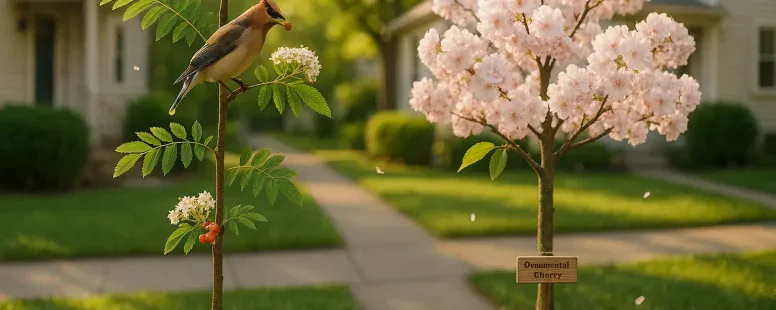
You can create a pocket of seasonal drama with a single small tree. Native rowan (Sorbus spp.) and ornamental cherry (Prunus spp.) both offer flowers, fruit, and fall color, but they serve very different roles in a yard. Which one gives you more wildlife value, easier care, or better curb appeal? This article compares Native Rowan vs. Ornamental Cherry so you can decide with confidence. Expect clear ID tips, practical planting steps, honest maintenance tradeoffs, and real-world examples that reflect USDA zones and city planting constraints.
At-A-Glance Comparison: Key Differences And Similarities
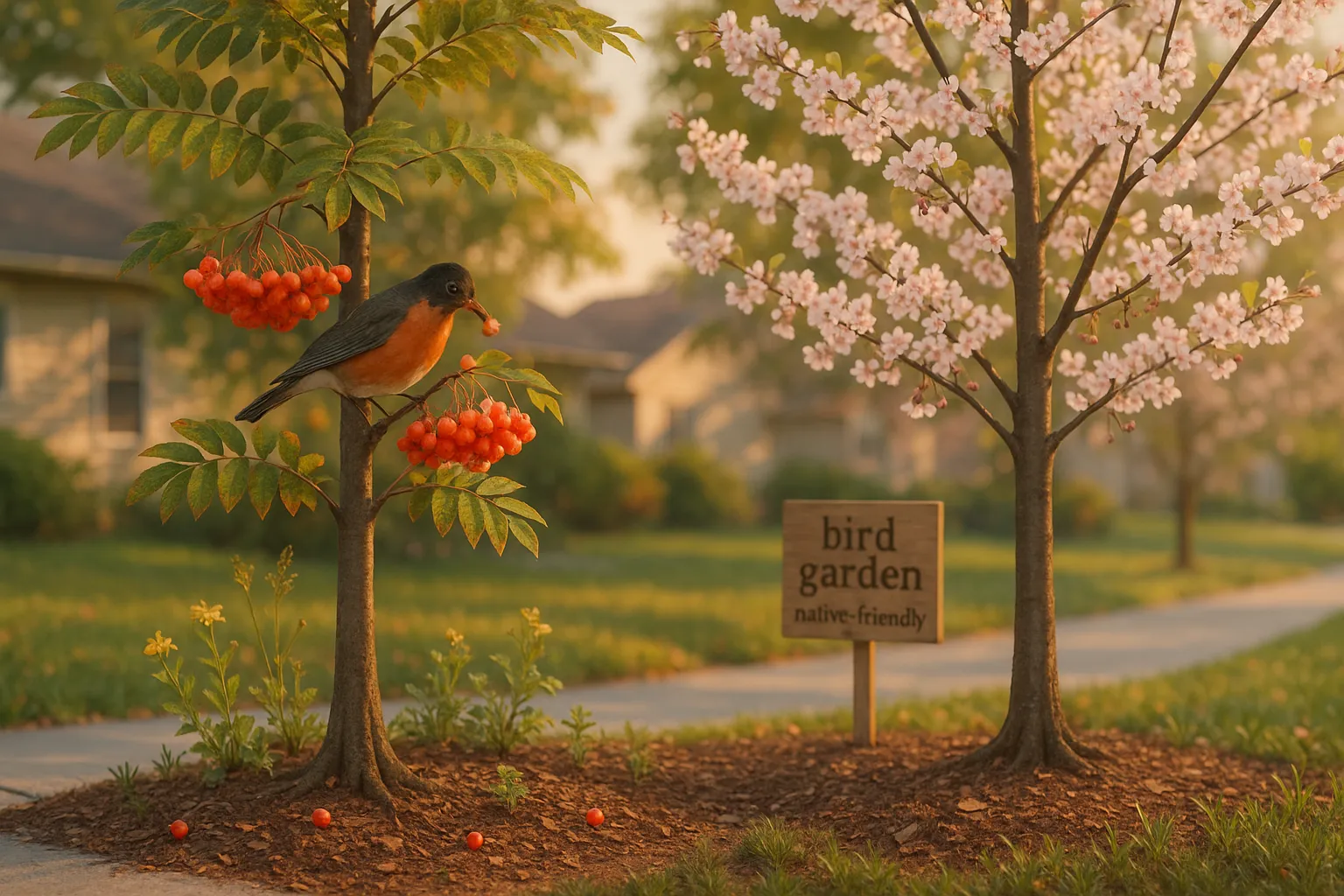
Fact: Rowan and ornamental cherry differ most in wildlife value and fruit use. Both are small trees with spring flowers and autumn interest, but their fruit, ecology, and disease profiles contrast sharply.
Quick snapshot:
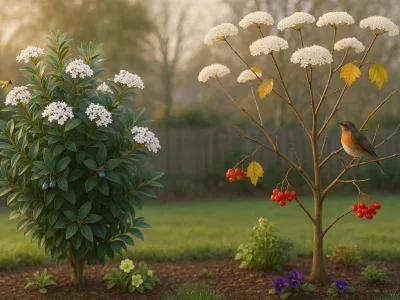
- Native rowan (Sorbus aucuparia and related species): Small (15–30 ft), clusters of white flowers, bright orange to red pomes, high wildlife value, native in temperate Europe and parts of North America (Sorbus scopulina, S. sitchensis are North American natives). Good for restoration and bird gardens. Hardy in USDA zones roughly 3–7 depending on species.
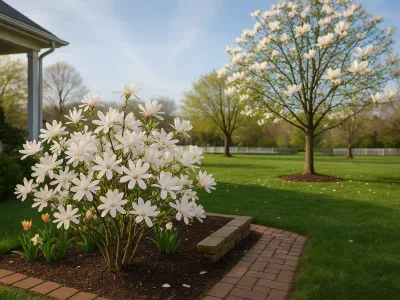
- Ornamental cherry (Prunus serrulata, P. x yedoensis, and many cultivars): Small to medium (15–25 ft), showy single or double spring blossoms in pink/white, small drupes or sterile fruits on some cultivars, prized for bloom display and urban streetscapes. Many cultivars suit USDA zones 5–8.
Similarities to note: both provide spring interest, are manageable in small landscapes, and can be trained as single-trunk trees or multi-stem specimens. They differ where it matters: fruit edibility, native status, and susceptibility to specific pests and diseases.
Appearance And Identification
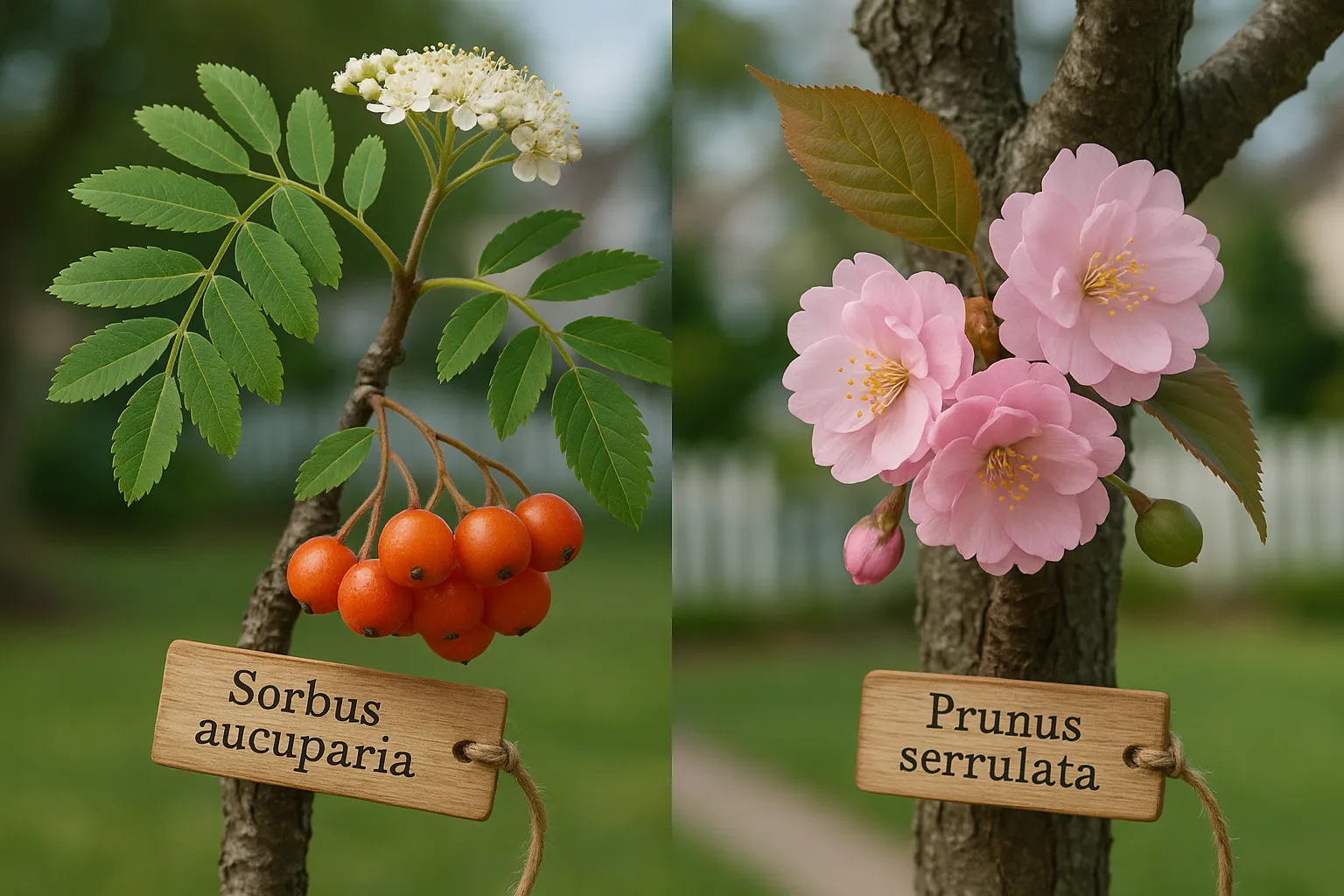
Fact: Leaves, flowers, and fruit give the clearest ID clues between rowan and ornamental cherry.
Leaves, Flowers, And Fruit: How To Tell Them Apart
Rowan leaves are pinnate. You’ll see 9–15 leaflets arranged along a central stem. The leaflets are slender, serrated, and they turn yellow or orange in fall. Flowers appear in flat-topped clusters (corymbs), each small and white. Fruit are pomes, think tiny apples, that ripen to yellow, orange, or red and persist into winter.
Ornamental cherry leaves are simple and ovate. They often have a single serrated margin and a pointed apex. Flowers are larger and showier than rowan’s: they appear in single blooms or clusters and sometimes as doubles (many petals). Fruit are drupes (tiny cherries) when present: some cultivars produce almost no fruit because they were bred for bloom.
Example: Sorbus aucuparia vs. Prunus serrulata. If you see compound leaves, it is rowan: a single leaf is a cherry. The Royal Horticultural Society and USDA plant profiles confirm these diagnostic traits.
Size, Form, And Seasonal Interest
Fact: Rowan tends to be more upright with airy crowns: cherries often form rounded canopies.
Rowan typically grows as a narrow, upright tree or a multi-stem shrub. Its winter berry clusters add structure and color when other plants are bare. Ornamental cherries make bold spring statements with a mass of petals that draw immediate attention but leave a quieter summer and fall.
Practical note: If you want winter berries for birds and late-season color, pick rowan. If you want a focal point for spring and for people to photograph, pick ornamental cherry. Both can be pruned to maintain 15–20 ft mature height for small yards.
Growing Conditions And Care Requirements
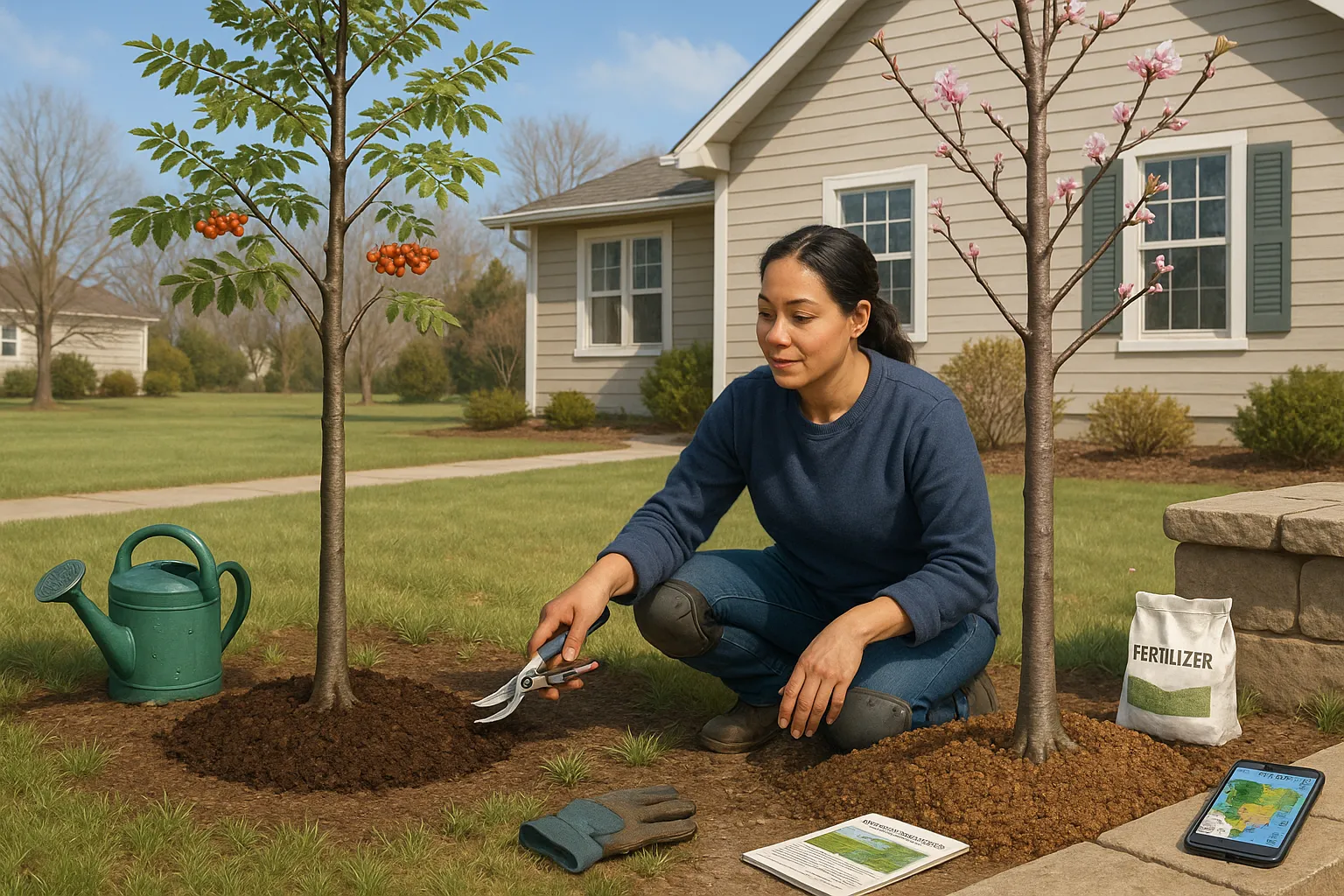
Fact: Soil, light, and climate determine which tree will thrive on your site.
Soil, Light, And Climate Preferences
Rowan prefers moist, well-drained soil and tolerates poorer soils and some alkalinity. It handles colder climates better: many species are hardy to USDA zone 3 or 4. You should plant rowan in full sun to part shade: in hot southern yards it may drop foliage or suffer heat stress.
Ornamental cherry prefers fertile, well-drained soils and full sun for best flowering. Many cherries are hardy to zone 5 but may struggle in colder zone 4 winters or hot humid summers. They often demand better drainage than rowan.
Decision tip: Match the species to your zone. Check local extension services (for example, your state university extension) for cultivar recommendations that suit microclimates in your city.
Pruning, Fertilizing, And Watering Needs
Fact: Both trees need formative pruning: cherry often requires more disease-focused care.
Pruning: Prune rowan lightly in late winter to open the crown and remove crossing branches. Prune ornamental cherries also in late winter, but avoid heavy pruning of spring-flowering types or you’ll remove next year’s buds.
Fertilizing: Apply balanced, slow-release fertilizer in spring if growth is poor. Rowan tolerates lower fertility: cherry benefits from a modest nutrient boost to maximize blooms.
Watering: Establish both with regular watering the first two years. After that, rowan tolerates some drought better than many cherries. Use a 2–3 inch mulch ring to conserve moisture and moderate soil temperature.
Vulnerable moment: I once planted a cherry in a windy, exposed front yard and lost half the buds to frost the next spring. Lesson learned: site matters, cherries need sheltered, sunny spots for reliable bloom.
Wildlife, Ecological Value, And Native Plant Benefits
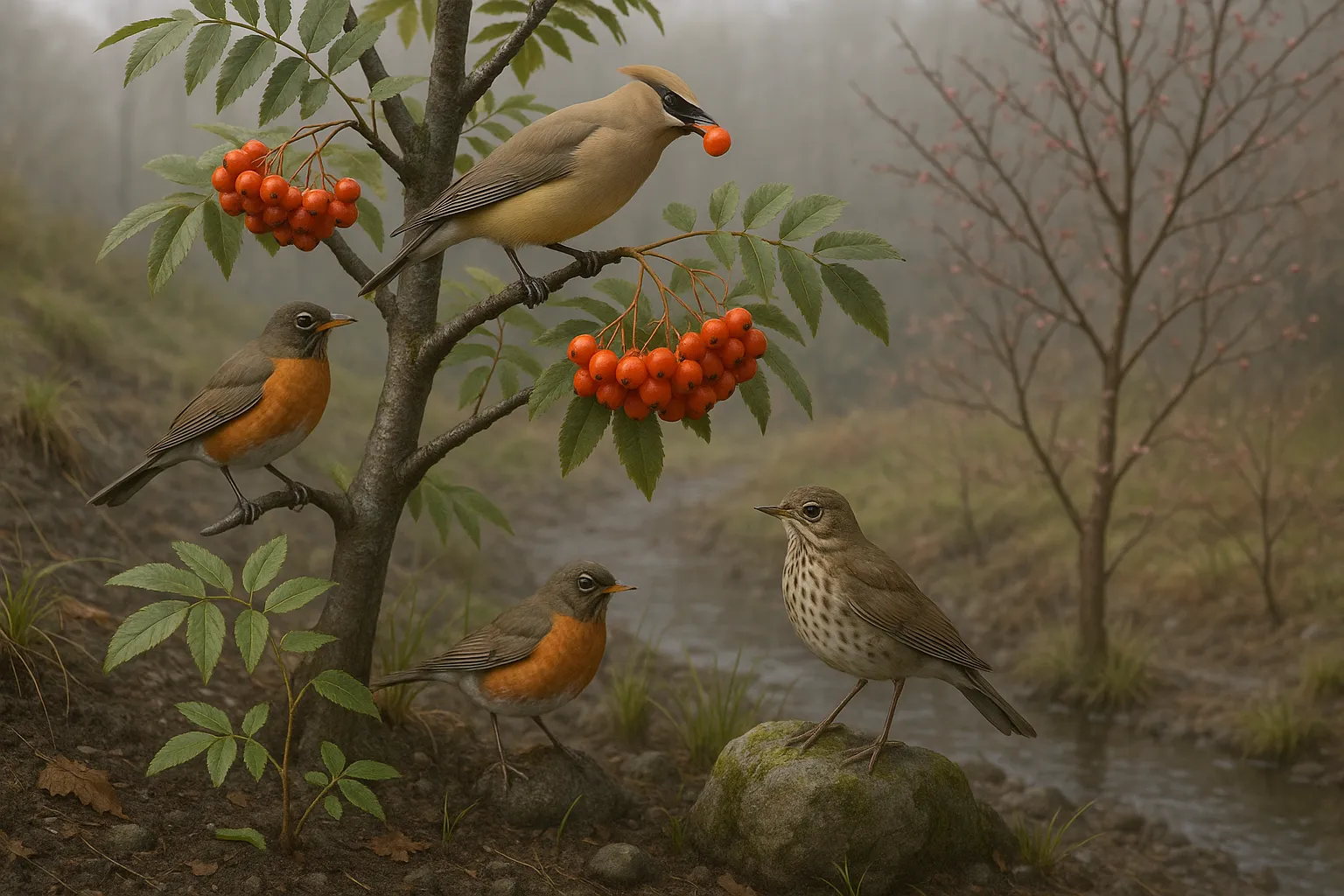
Fact: Native rowan supports wildlife more directly than most ornamental cherries.
Pollinators, Birds, And Food Web Contributions
Rowan flowers attract bees and flies: the berries feed many bird species, waxwings, thrushes, and robins, and small mammals. The fruit often persists into winter, providing a critical food source in lean months. Native insects also use rowan as host plants, supporting caterpillars that birds eat.
Ornamental cherries provide pollen and nectar early in spring to bees and other pollinators. Some cherries’ fruit feed birds, but many modern cultivars are sterile or produce small, less nutritious drupes. If supporting a local food web is your priority, native rowan usually delivers more ecological bang for your buck.
Native Rowan’s Role In Restoration Versus Ornamental Use
Fact: Rowan is effective in restoration and riparian planting because it tolerates poor soils and provides persistent fruit.
Land managers use rowan (for example, Sorbus scopulina in the Pacific Northwest) in slope stabilization and understory restoration. It establishes quickly, improves habitat complexity, and helps native bird populations. Ornamental cherries, while beautiful, rarely play a major role in restoration except where aesthetic screening is required.
Practical caveat: If you plant rowan in a suburban yard, be ready for birds to spread seedlings, volunteers will appear and that can be good or a minor nuisance.
Landscape Uses And Practical Applications

Fact: Use cherries for show and rowan for function: both have practical places in a designed landscape.
Ornamental Value, Street And Garden Planting
Ornamental cherries excel as avenue trees and focal specimens. Cities often plant Prunus x yedoensis for uniform spring displays. They fit small front yards, patios, and parks where dramatic spring color is desired.
Rowan fits under-transmission-line strips, native gardens, and bird-friendly pockets. It’s well-suited to mixed borders and smaller yards where persistent fruit and fall color add seasonal layering.
Design tip: Plant a cherry near a sidewalk or entry where people can admire blooms. Plant rowan near a hedgerow or wild corner to support wildlife and add late-season color.
Culinary And Cultural Uses Of Rowan And Cherry Fruit
Fact: Rowan fruit are edible after processing: ornamental cherry fruit vary from edible to inedible.
Rowan berries have high tannin content raw and taste bitter. You can cook them into jellies, wines, and preserves after blanching to reduce bitterness. Traditional cultures in Northern Europe used rowan jelly with game meats.
Ornamental cherry fruit range from small, tart drupes to larger sweet cherries in some Prunus species. Many ornamental cultivars produce small, sour cherries that birds prefer. If you want fruit for the kitchen, choose a fruiting cherry cultivar (Prunus avium, Prunus cerasus) rather than an ornamental bred only for flowers.
Pests, Diseases, And Maintenance Challenges
Fact: Ornamental cherry and rowan face distinct pest and disease pressures: cherries often attract fungal issues while rowan may have leaf spot or pest outbreaks but less chronic disease.
Common Problems For Each Tree And How To Manage Them
Cherries: Watch for brown rot, cherry leaf spot, and bacterial canker. Brown rot affects blossoms and fruit: cherry leaf spot causes early defoliation. Good sanitation, remove fallen leaves and infected fruit, reduces inoculum. Choose disease-resistant cultivars where available and avoid overhead irrigation.
Rowan: Susceptible to fireblight in some regions, and to synthetic problems like aphids or sawfly larvae. Rowan may develop leaf spot, but outbreaks are seldom catastrophic. Managing rowan focuses on good airflow, prompt pruning of diseased limbs, and monitoring for heavy defoliation.
Integrated Pest Management And Disease-Resistant Choices
Fact: IPM works for both trees: prioritizing resistant cultivars and cultural care reduces chemical use.
Start with resistant or less-susceptible cultivars. For cherries, look for varieties rated by the Royal Horticultural Society or your agricultural extension for resistance to leaf spot and canker. For rowan, select native species or proven cultivars for your region (for example, Sorbus scopulina in western North America).
Use IPM steps: monitor regularly, remove and destroy infected material, encourage predators (ladybeetles, parasitic wasps), and apply targeted treatments only when thresholds are reached. Chemical controls may be needed for severe outbreaks, but integrated approaches usually keep problems manageable.
Honest note: You may still lose a season of bloom or see fruit rot some years, weather and local pathogen pressure play large roles.
Choosing, Planting, And Long-Term Care
Fact: Choosing the right species and planting correctly sets you up for decades of success.
Selecting The Right Species Or Cultivar For Your Site
Match the species to your USDA zone, soil type, and goals. Want wildlife and winter berries? Choose a native rowan species known in your region (Sorbus aucuparia in parts of Europe, Sorbus scopulina in western N. America). Want spring spectacle and urban polish? Choose an ornamental cherry with disease resistance and appropriate mature size, such as some Prunus serrulata cultivars rated for your zone.
Ask local nurseries, consult the USDA PLANTS Database, or check your state extension for cultivar lists. Buy from reputable nurseries that label species and rootstock .
Planting Steps, Establishment Tips, And Maintenance Timeline
Fact: Proper planting and early care reduce long-term problems.
Planting steps (simple SVO order):
- Dig a hole two times the root ball width and the same depth as the root ball.
- Loosen roots and place the tree so the graft union is 2–3 inches above soil on grafted stock.
- Backfill with native soil, water to settle, and mulch 2–3 inches deep avoiding trunk contact.
- Stake only if necessary: remove stakes after one year.
Establishment tips: Water weekly in the first growing season unless heavy rain falls. Watch for pests monthly and prune in late winter. Fertilize the second spring if growth is weak.
Maintenance timeline: Years 1–2 focus on watering and formative pruning. Years 3–5 you shape the canopy and monitor for disease. After year 5, reduce interventions to occasional pruning, monitoring, and fruit management.
Final practical push: If you want ecological value and winter interest pick native rowan. If you value dramatic spring blooms and urban form pick ornamental cherry. Either way, plant in the right place and you’ll enjoy seasonal highlights for decades to come.

- Micro-Clover vs. Grass: Which Groundcover Is Right For Your Lawn? - March 24, 2026
- Best Alternatives to Robinhood - March 24, 2026
- Olive Oil Alternatives: When Olive Oil Is the Wrong Tool, and What to Use Instead - March 23, 2026
by Ellie B, Site Owner / Publisher