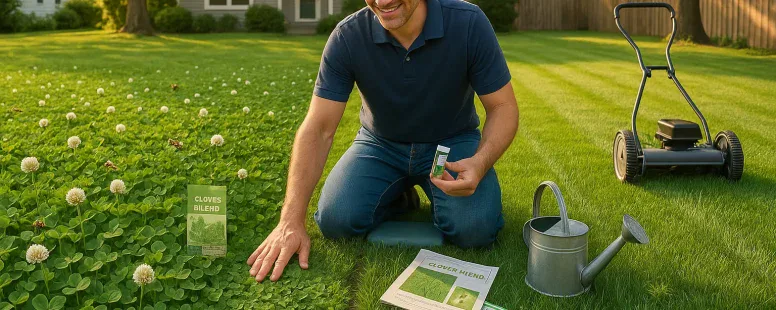
Micro-clover performs differently than traditional turf grass in ways you’ll notice within a season: it fixes nitrogen, stays greener in low fertility, and fills thin spots quickly. If you want a lawn that drinks less water, tolerates light foot traffic, and reduces fertilizer bills, micro-clover deserves a close look. This piece compares micro-clover and grass across growth, care, costs, pests, and environmental impact. Read on to learn which option fits your yard, budget, and lifestyle, and what trade-offs you’ll accept.
How Micro-Clover and Traditional Turf Grass Differ
Fact: Micro-clover is a low-growing legume that fixes atmospheric nitrogen, while turf grass is a group of monocot species (like Kentucky bluegrass, perennial ryegrass, and fescue) that must get nitrogen from soil or fertilizer.
Micro-clover (Trifolium repens var. ‘micro’) produces small trifoliate leaves and runs by short stolons. It forms a mat that blends with grass or stands alone. Turf grasses produce narrow blades, form clumps or sod, and rely on root mass for resilience. The two differ in physiology: clover uses rhizobia bacteria in its root nodules to convert N2 into plant-available nitrogen. Grass lacks that ability and so depends on you or a fertilizer program.
You’ll see practical differences in appearance and behavior. Micro-clover keeps a softer, more uniform texture. Grass gives the traditional “lawn” look: upright blades, defined mow lines, and spring green-up patterns tied to species. Micro-clover flowers small white blooms in late spring: grass grasses produce seedheads that sometimes show in summer.
If you ask about shade tolerance: clover tolerates moderate shade better than many grass species, but deep shade will reduce both. For drought: micro-clover often stays green longer without watering because of lower transpiration area and its nitrogen advantage, though deep-rooted tall fescue can outlast clover in extreme drought.
Common named entities include University of Minnesota Extension and Penn State Extension, both publish trials showing micro-clover mixes lower fertilizer needs and improve soil N. The USDA recognizes clover’s role in sustainable pasture and cover-cropping systems, and lawn-care brands like Scotts now sell clover-blend seed for consumer use.
Key Benefits Of Micro-Clover
Fact: Micro-clover reduces your need for synthetic nitrogen and improves soil nitrogen supply for neighboring grasses.
Environmental and cost benefits are immediate. When you seed micro-clover into a lawn, you often cut N fertilizer use by 30–50% according to several extension studies. That saves money and reduces runoff of nitrates into stormwater. You also lower the need for frequent feeding, a big win if you dislike chemical inputs.
Practical lifestyle benefits matter. Micro-clover stays lower than many grasses, so you can mow less often and at a lower height. It tolerates casual foot traffic, kids playing, pets wandering, without creating brown patches as fast as shallow-rooted grass might.
Aesthetic benefits are subtle but real: the lawn looks uniformly green and resists thin spots. You’ll see fewer weeds such as dandelion and chickweed because clover fills space quickly and competes well, especially when combined with fine fescue or perennial ryegrass in seed mixes.
Health and biodiversity benefits appear too. Clover flowers attract pollinators like honeybees and native bees, which helps local gardens. So, your yard supports insects while still functioning as a lawn.
Limitations And Drawbacks Of Micro-Clover
Fact: Micro-clover isn’t ideal if you expect a perfectly uniform, dense, short-cut carpet or if you need very high wear tolerance.
Visual expectations: some homeowners expect a velvet-like manicured sod. Micro-clover produces a softer, moundy texture that won’t show crisp mower stripes. If you host formal events or show homes, lawn judges might mark clover down.
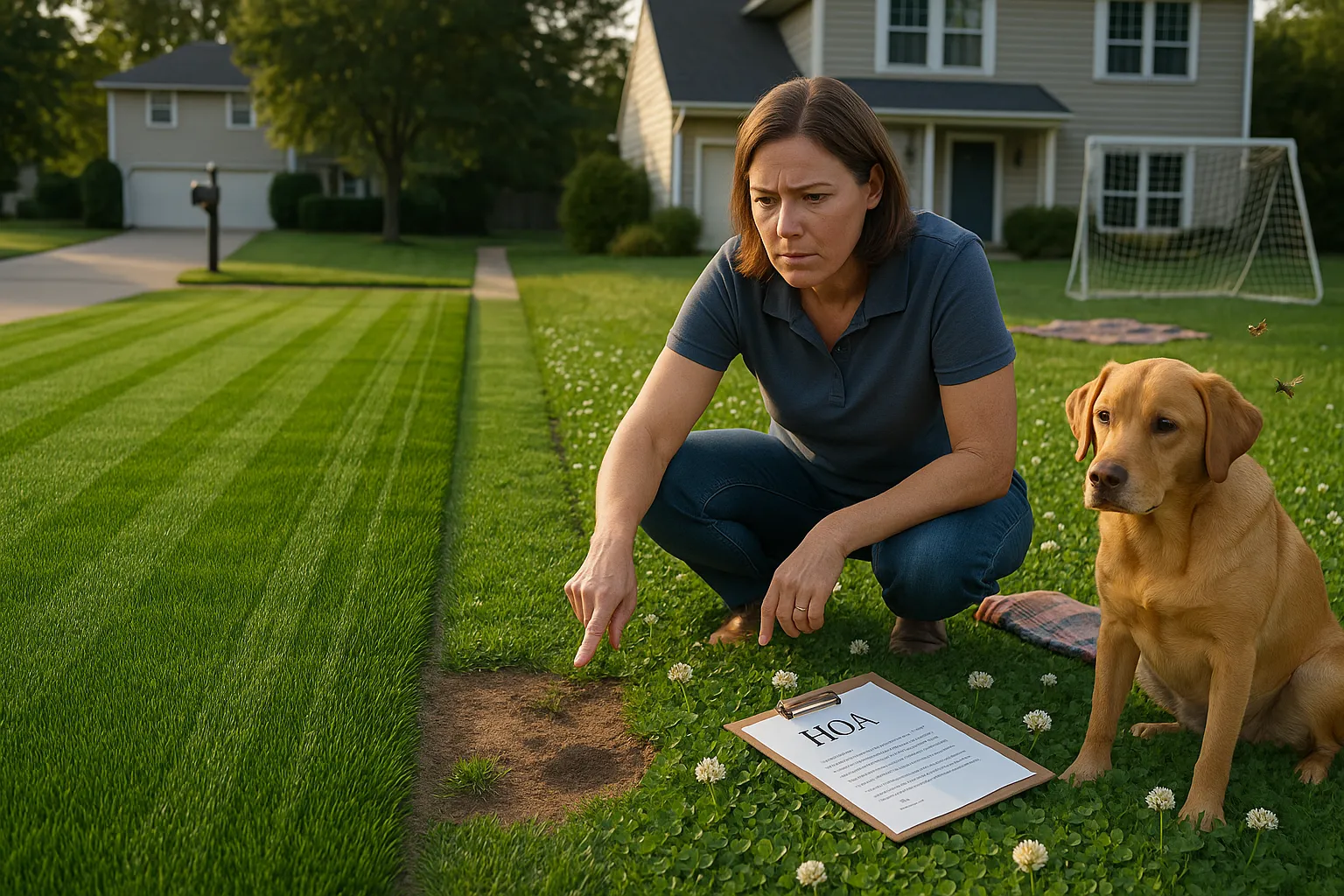
Wear and recovery: high-impact areas, soccer goals, heavy parties, daily dog runs, cause clover to thin out faster than tough perennial ryegrass or tall fescue turf. Clover repairs by stolons, but repeated, concentrated wear can create bare soil.
Allergies and bees: clover blooms attract bees. That’s a plus ecologically, but it raises sting risk for people with bee allergies. If someone in your household is highly allergic, you may want to limit bloom stages by mowing more frequently.
Seasonal color: in early spring, some grass species green up faster than clover. You might see a mixed seasonal palette unless you choose the right grass-clover blend.
Seeding limitations: many municipal turf codes or HOA rules restrict clover in front yards. Check local ordinances before switching.
Maintenance, Watering, And Fertilization Comparisons
Fact: Micro-clover needs less fertilizer and slightly less frequent mowing, but you must monitor watering and manage bloom for certain uses.
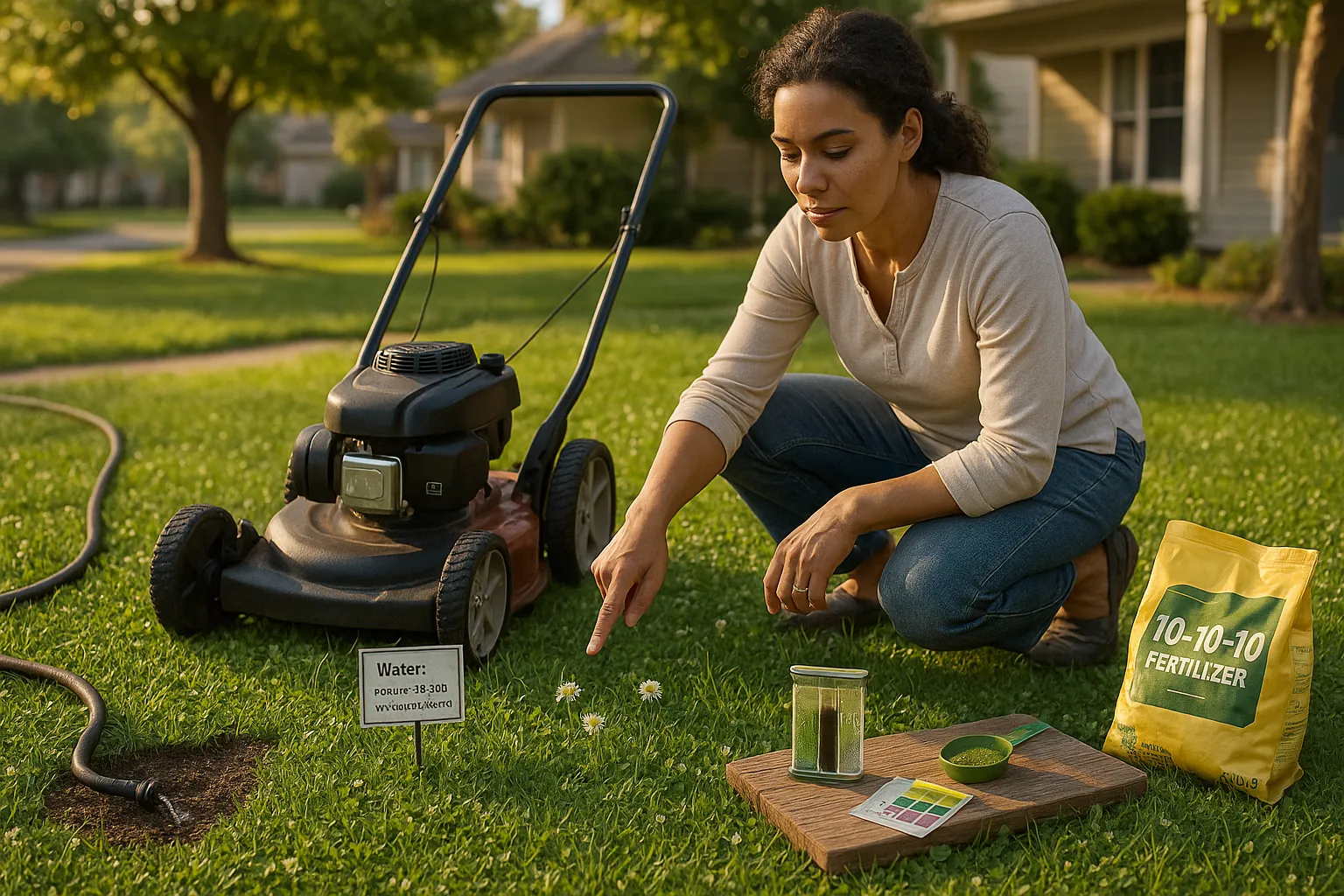
Mowing: set mower height to 2–2.5 inches for a clover-grass mix. Clover tolerates low cuts better than many broadleaf plants, but cutting too low will stress both plants. You’ll likely mow less often because clover grows slower in height.
Watering: you can reduce irrigation by roughly 10–30% when clover is well-established. Clover’s smaller leaf area and N-fixation maintain green color on limited water. But, during prolonged heat waves, supplemental deep watering helps both clover and mixed grasses survive. Follow local watering guidelines: many utilities publish evapotranspiration-based schedules.
Fertilization: plan on at least one light spring application of a balanced fertilizer if your soil test shows low P or K. For nitrogen, rely on clover: don’t apply heavy N in spring or you may favor grass over clover and lose the nitrogen-fixation benefit. University extension recommendations often suggest soil testing every 3–4 years to set a baseline.
Weed control: pre-emergent herbicides may suppress clover establishment. If you use herbicides, follow label guidance and consider spot-treating only. Organic options like corn gluten meal give mixed results and can harm clover too.
Establishing Micro-Clover Or Grass: Seeding, Timing, And Soil Prep
Fact: Micro-clover establishes best when seeded with or into cool-season grass mixes in early fall or early spring, after you correct soil pH and prepare a firm seedbed.
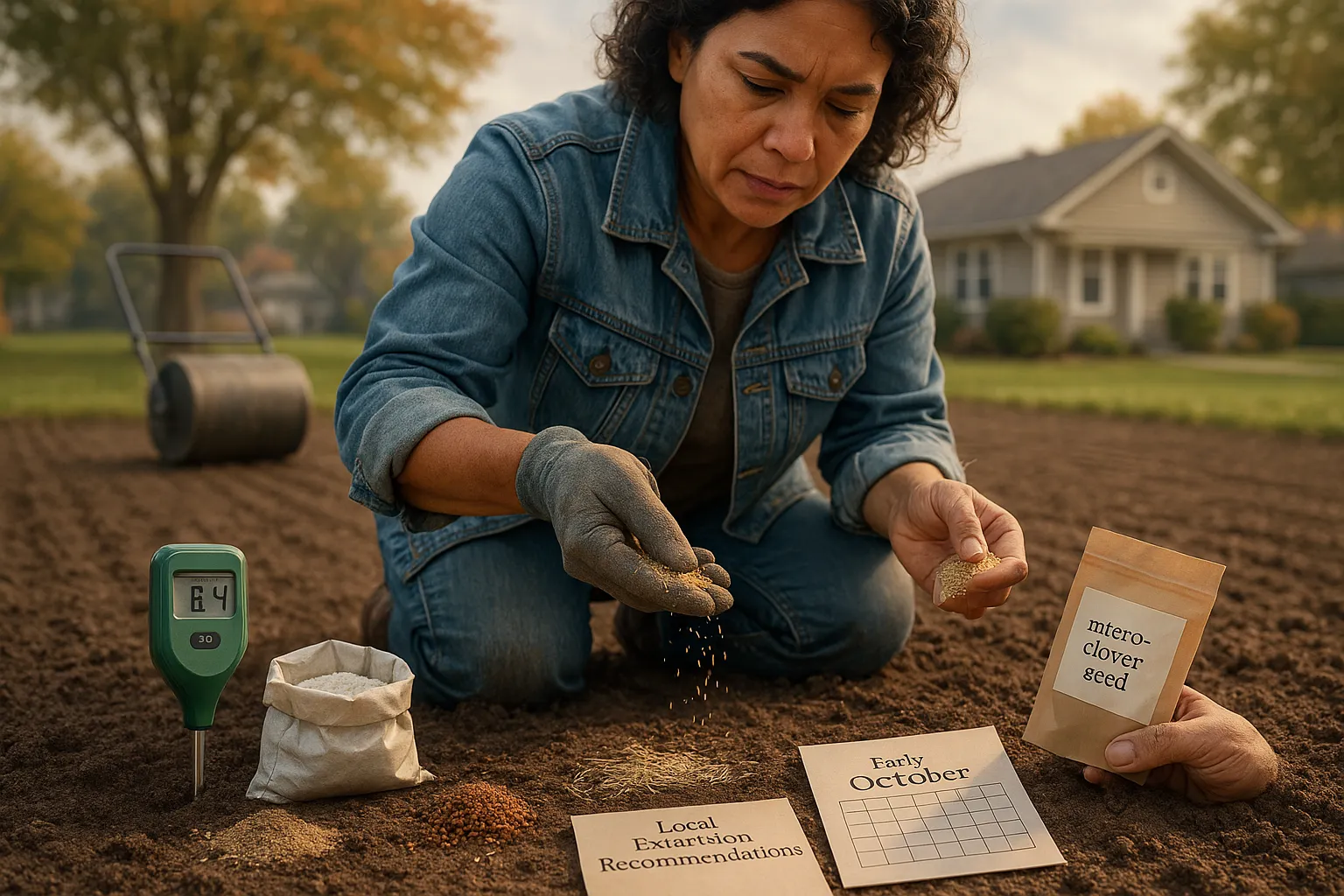
Soil test first. Both clover and grass prefer pH near 6.0–7.0: clover tolerates slightly lower pH but performs best above 6.0. Add lime if pH is low and you want robust nitrogen fixation, rhizobia struggle in very acidic soil. Local extension offices like Cornell or North Carolina State will help interpret tests.
Seed rates and mixes: typical micro-clover-only sowing recommends 1–2 lb per 1,000 sq ft, but when mixed with grass, add 0.25–0.5 lb per 1,000 sq ft of micro-clover to a standard grass seed rate. Broadcast seed on a firm, raked surface, press with a roller or walk the area, and keep seedbed moist until germination.
Timing: early fall gives cooler soil, predictable rain, and less weed pressure. Spring works too, but summer heat can stress seedlings.
Rhizobia inoculant: when using clover on new sites, use a clover-specific rhizobia inoculant on seed if prior clover history is unknown. The inoculant helps nodulation and speeds N-fixation. Many garden centers sell peat-based inoculants or water-soluble packets.
Avoid heavy pre-emergent herbicide if you plan to seed clover, and schedule seeding at least 6–8 months after a broad-spectrum lawn herbicide application.
Pest, Disease, And Wear Tolerance
Fact: Micro-clover resists many grass-specific diseases but can host its own pests and has moderate wear tolerance compared with athletic-grade turf.
Disease: clover avoids brown patch and dollar spot, which plague cool-season grasses. But clover can suffer from powdery mildew or root rot under poorly drained conditions. Good drainage and avoiding overwatering reduce those risks.
Pests: clover can attract white clover weevil and some root-feeding insects. Lawn grubs attack grass roots and may reduce grass more than clover, causing clover to expand into grub-damaged areas. That can be a natural remedial interaction, but heavy grub pressure still harms overall turf.
Wear tolerance: tall fescue and perennial ryegrass generally outlast clover under constant heavy use. If you have kids who play soccer daily, choose a high-wear grass and consider micro-clover in peripheral or low-traffic zones. For mixed lawns, clover speeds repair of small holes: it fills spaces where grass seedlings often fail.
Cost, Environmental Impact, And Choosing The Right Option For Your Property
Fact: Micro-clover lowers lifetime lawn costs and reduces environmental impacts tied to fertilizer, but upfront seed and planning costs vary.
Costs: seed mixes with micro-clover cost more per bag than plain grass seed, but you save on annual fertilizer. If you hire a lawn service, you may cut service frequency and cost. Over 3–5 years many homeowners report net savings when clover reduces fertilization and watering.
Environmental impact: micro-clover cuts nitrogen runoff risk, supports pollinators, and can reduce greenhouse gas emissions tied to fertilizer production. Municipalities with stormwater programs sometimes encourage clover for these reasons.
Choosing: pick micro-clover if you want reduced inputs, more pollinators, and a relaxed lawn aesthetic. Pick traditional turf grass if you need a formal look, very high wear resistance, or your HOA forbids clover. You can also choose a hybrid approach: plant clover in low-traffic zones, keep sport areas as fescue or ryegrass.
Practical decision test: walk your yard. Mark high-traffic zones, shaded patches, and areas you want pristine. Seed those zones differently. If more than 30% of your lawn sees heavy daily use, prioritize tough grass for that portion.
Practical Care Tips And Troubleshooting For Mixed Clover-Grass Lawns
Fact: For mixed lawns, manage mowing, fertility, and seed balance to keep both species healthy.
Mow at consistent height (2–2.5 inches). Mowing often keeps clover from flowering and reduces bee activity.
If grass overgrows clover, reduce nitrogen inputs briefly to allow clover to compete. Too much spring N favors grass tillers and suppress clover.
Spot-seed bare patches with a grass-clover blend during early fall. Keep soil moist until seedlings root.
Watch for anthracnose on grass and powdery mildew on clover: treat cultural factors first (airflow, drainage) before chemicals.
If bees become a problem, mow more frequently during bloom or apply a rolling pass to knock blooms down. Don’t try blanket insecticides: they harm pollinators.
A small real-world note: one neighbor I know switched half his front yard to a clover-fescue mix. The first summer he forgot to fertilize. The patch with clover stayed green and the other half browned, he was convinced and expanded clover the next season. Your mileage may vary, but testing a small area first will tell you more than reading ads.
To provide the best experiences, we use technologies like cookies to store and/or access device information. Consenting to these technologies will allow us to process data such as browsing behaviour or unique IDs on this site. Not consenting or withdrawing consent, may adversely affect certain features and functions.
Functional
Always active
The technical storage or access is strictly necessary for the legitimate purpose of enabling the use of a specific service explicitly requested by the subscriber or user, or for the sole purpose of carrying out the transmission of a communication over an electronic communications network.
Preferences
The technical storage or access is necessary for the legitimate purpose of storing preferences that are not requested by the subscriber or user.
Statistics
The technical storage or access that is used exclusively for statistical purposes.The technical storage or access that is used exclusively for anonymous statistical purposes. Without a subpoena, voluntary compliance on the part of your Internet Service Provider, or additional records from a third party, information stored or retrieved for this purpose alone cannot usually be used to identify you.
Marketing
The technical storage or access is required to create user profiles to send advertising, or to track the user on a website or across several websites for similar marketing purposes.