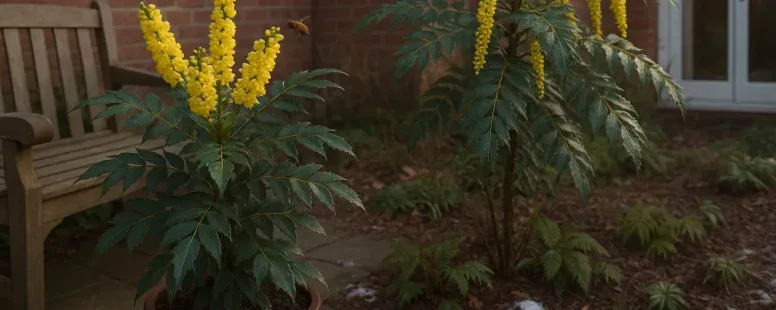
Mahonia ‘Winter Sun’ Vs. ‘Charity’
You can get dramatic winter color without roses or bulbs. Two mahonias, ‘Winter Sun’ and ‘Charity’, give bold yellow flowers in late winter, deep evergreen leaves, and architectural form that holds through cold months. Which one fits your garden? This comparison maps clear differences in size, bloom, care, and landscape use, so you can pick the right mahonia fast. Expect concrete facts, real trade-offs, and practical warnings that save time and plant lives.
At-A-Glance Comparison
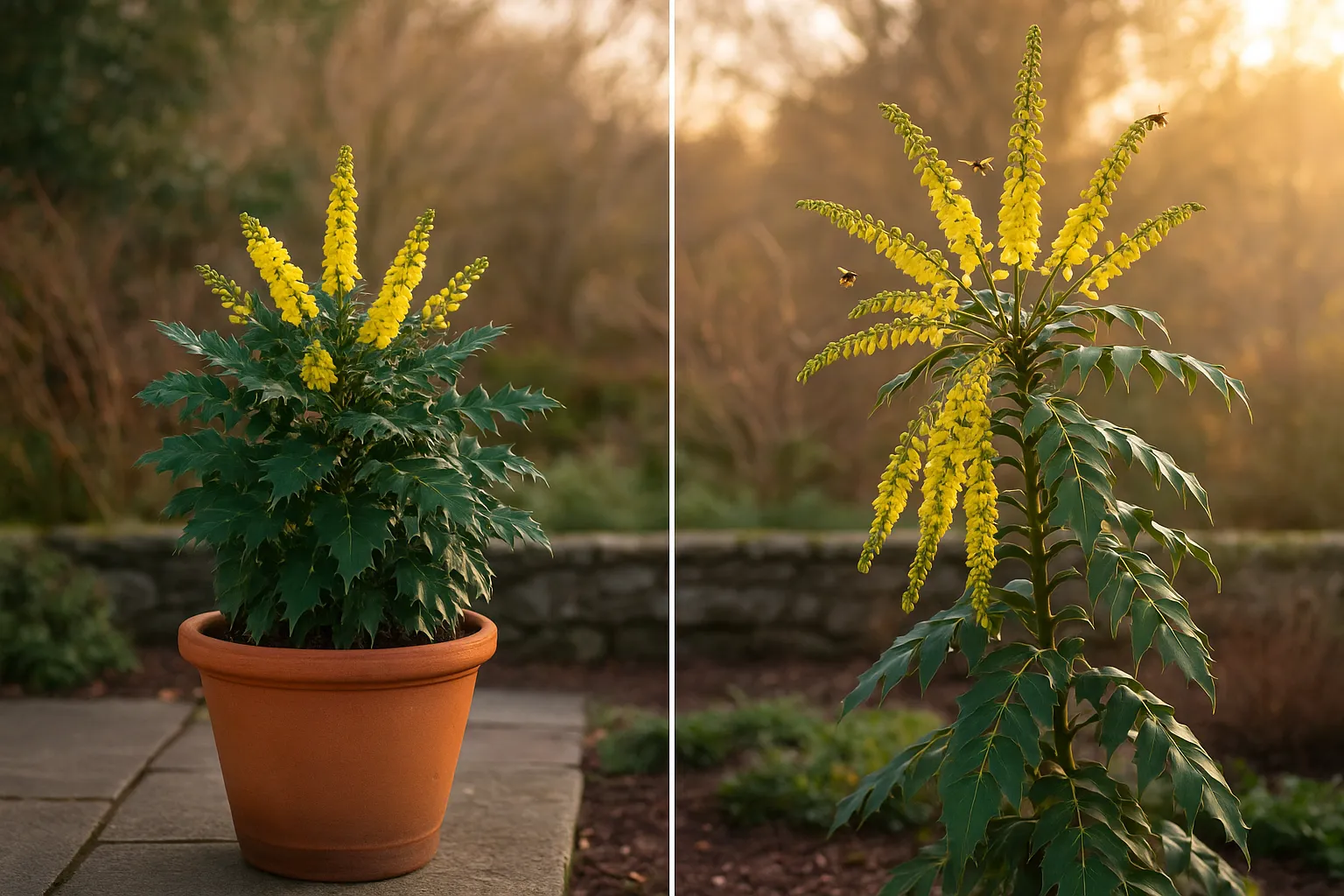
Fact: ‘Winter Sun’ is more compact and reliably floriferous: ‘Charity’ grows larger and makes a strong architectural statement.
- Mahonia ‘Winter Sun’, Height: 3–5 ft (0.9–1.5 m). Habit: upright, bushy. Flowers: early winter, clusters of bright yellow. Best for: small gardens, containers, underplanting.
- Mahonia ‘Charity’, Height: 6–8 ft (1.8–2.4 m) or more. Habit: taller, columnar to loose. Flowers: mid to late winter, showy yellow racemes. Best for: bold hedging, back-of-border focal points.
Key difference: you choose compact vs. larger scale. Both are evergreen and long-lived where conditions suit them. Both also attract winter pollinators, especially early bees, which is a practical benefit many gardeners overlook.
Source note: the Royal Horticultural Society lists both cultivars as reliable garden plants in temperate climates, but they differ in mature size and pruning response.
Appearance And Growth Habit
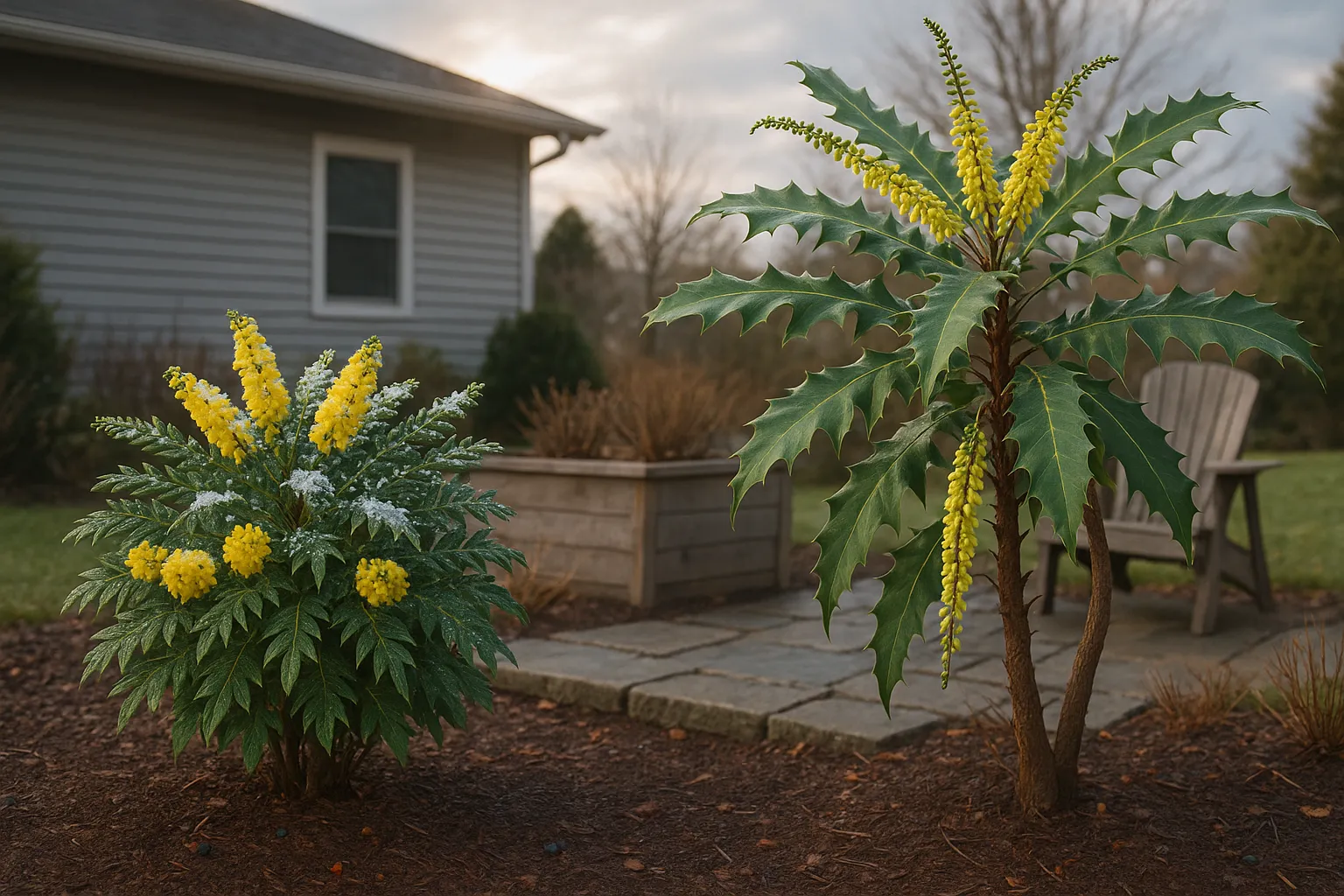
Fact: ‘Winter Sun’ stays compact: ‘Charity’ reaches for height. Below you’ll see how that affects form, foliage, and flowering.
Size And Form
‘Winter Sun’ grows as a neat, multi-stemmed shrub. You get the same footprint even after several seasons. ‘Charity’ develops taller canes and a more open crown. If you want a tight, sculpted mass, pick ‘Winter Sun’. If you want vertical presence or a background plant behind perennials, pick ‘Charity’.
Practical note: ‘Charity’ can top 6 feet within 5–7 years in good sites. ‘Winter Sun’ usually tops out nearer 4 feet in the same time.
Foliage And Texture
Fact: Both have glossy, pinnate leaves with spiny leaflets, but texture and scale differ. ‘Winter Sun’ shows slightly narrower leaflets: the foliage reads as fine-textured at a distance. ‘Charity’ has larger leaflets: the plant reads as bold and sculptural.
You should handle both with gloves. The leaves resist drought once established, and they hold color through winter. The glossy surface sheds rain and light snow, which helps the plant keep a clean look in storms.
Flower Characteristics And Bloom Time
Fact: Both bloom in winter, but timing and display differ. ‘Winter Sun’ flowers early, often December to January in mild areas, and shows dense clusters of rich yellow blooms close to the stems. ‘Charity’ tends to flower slightly later and may produce longer racemes that hang away from the foliage.
Anecdote: One gardener I know planted ‘Winter Sun’ near a patio. By Christmas the scent of the blooms drifted through the window: visitors asked what perfume it was. So expect fragrance: mahonia flowers smell spicy and sweet, and the scent can be a subtle highlight on cold days.
Growing Conditions And Care
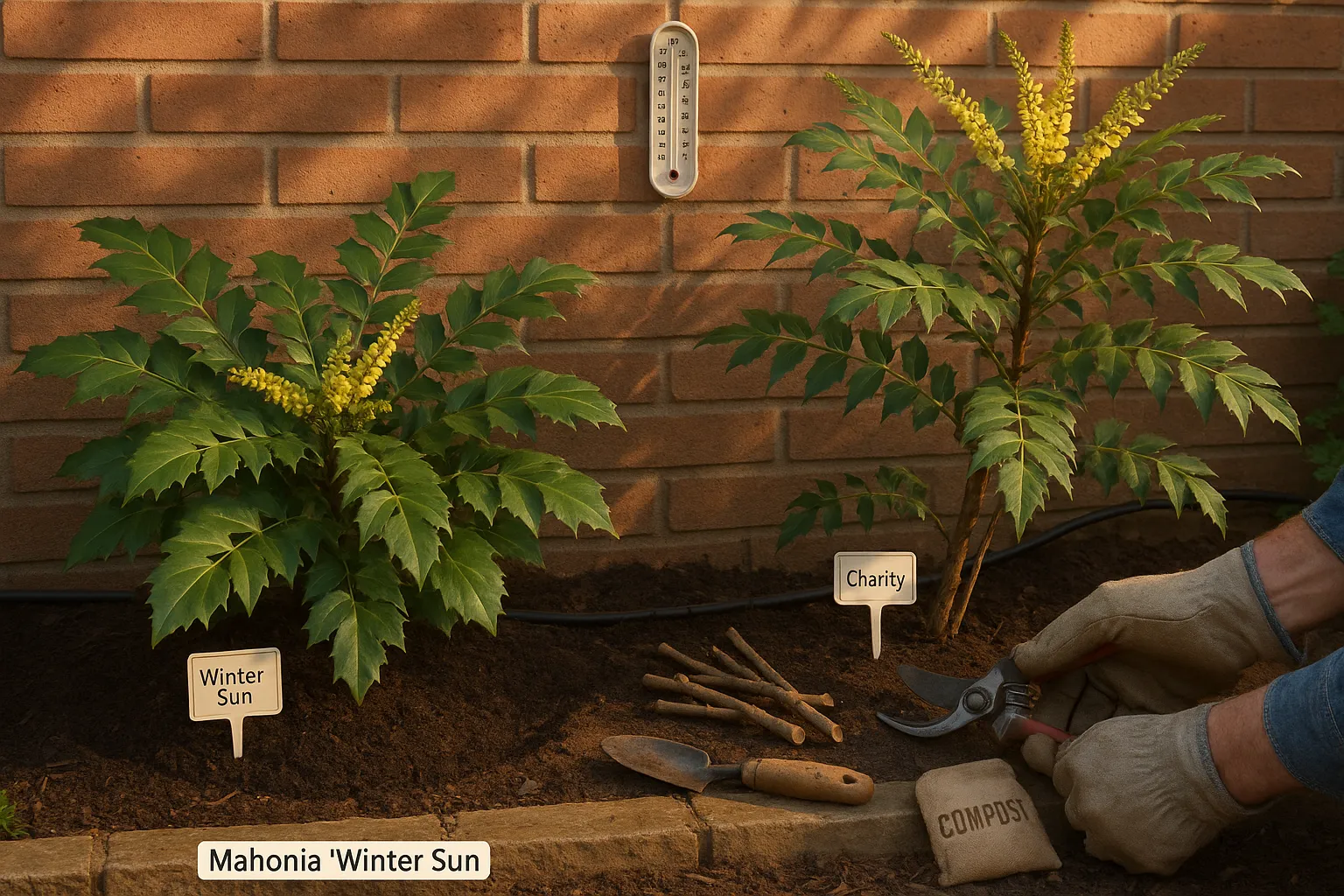
Fact: Both cultivars prefer part shade, well-drained soil, and moderate moisture. Below are specifics on climate tolerance, soil, pruning, and problems.
Hardiness And Climate Tolerance
Mahonia ‘Winter Sun’ and ‘Charity’ are hardy to roughly USDA zones 7–9, though ‘Charity’ sometimes tolerates slightly colder pockets because of its larger woody structure. The RHS rates many mahonias as hardy to -10°C (14°F) but local microclimates matter.
If you live in zone 6, give either a sheltered spot against a south or west wall. Cold winds and late frosts can damage early buds: shelter reduces that risk.
Soil, Light, And Moisture Requirements
Fact: Both prefer rich, humusy soil with good drainage. They tolerate a range of pH from slightly acidic to neutral. You should avoid waterlogged soils, roots rot in standing water.
Light: Give part shade to dappled sun. ‘Winter Sun’ tolerates deeper shade than ‘Charity’, which flowers best with morning sun. Moisture: keep soil evenly moist the first two years: then both handle moderate drought.
Practical tip: Add 2–3 in (5–7 cm) of leaf mold or compost at planting to improve structure. Mulch annually to conserve moisture and protect roots.
Maintenance, Pruning, And Longevity
Fact: ‘Winter Sun’ needs less pruning than ‘Charity’. Both respond well to light maintenance.
- ‘Winter Sun’: Remove dead wood and thin only to shape after flowering. It blooms on older wood, so avoid heavy cutting late in season.
- ‘Charity’: You may need to cut back older canes to maintain shape or reduce height. Prune immediately after flowering to avoid removing next season’s buds.
Both may live 20+ years with good care. Over time, you might remove one or two old canes at the base to renew the crown.
Pests, Diseases, And Common Problems
Fact: Both are generally pest-resistant but can suffer from leaf spot and root rot in poor drainage. Occasionally scale insects or vine weevils attack: monitor foliage and roots.
Warning: Avoid heavy nitrogen late in season, it can promote soft growth that freezes back. If leaves go yellow, check pH and drainage first: iron deficiency sometimes shows on older leaves in high pH soils.
Real-world note: In one community garden, a ‘Charity’ specimen developed powdery mildew after prolonged wet spring weather. The solution was to improve air circulation and remove affected foliage promptly.
Landscape Uses And Design Tips
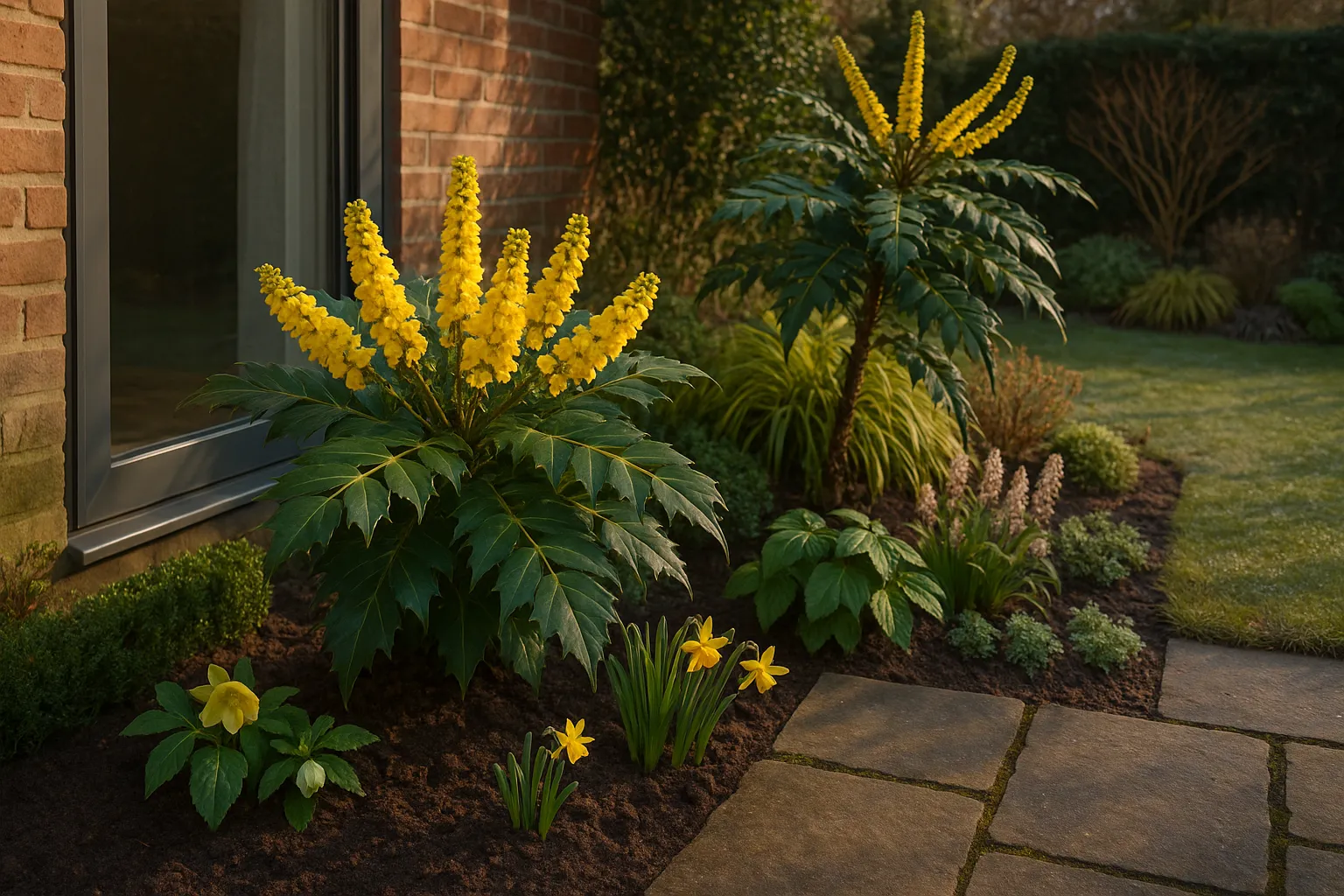
Fact: ‘Winter Sun’ serves well in small-scale and container settings: ‘Charity’ anchors larger beds and hedges. Use their strengths to shape winter interest.
Seasonal Interest And Function
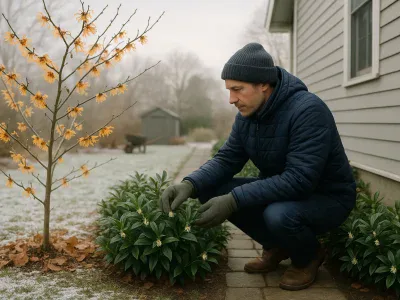
Use ‘Winter Sun’ where you want bright winter flowers close to eye level, near doors, patios, or seating areas. Its compact form lets you place bulbs or low perennials in front.
Place ‘Charity’ as a vertical counterpoint behind herbaceous borders. Its taller flowers add height in winter when most perennials are dormant.
Both keep an evergreen structure year-round. That gives winter backbone and summer shade understory for ferns or foamflower (Tiarella).
Companion Plants And Placement Ideas
Fact: Both pair well with shade-tolerant companions like Helleborus, Heuchera, and ferns. Match scale: plant low groundcovers with ‘Winter Sun’ and larger perennials with ‘Charity’.
- For ‘Winter Sun’: pair with Helleborus orientalis, Narcissus ‘February Gold’ and a low box or evergreen hebe for year-round structure.
- For ‘Charity’: plant behind shade-tolerant grasses like Hakonechloa, or next to a Viburnum for layered winter interest.
Design tip: Place ‘Winter Sun’ near a window or path so you smell the blooms. Place ‘Charity’ where its height won’t block sightlines: it makes a quiet, yellow-flowering backdrop for spring bulbs.
Propagation, Availability, And Cost

Fact: Both are usually propagated by semi-ripe cuttings or by division of suckers: ‘Winter Sun’ rootsets more readily in pots.
Propagation Methods And Success Rates
- Cuttings: Take semi-ripe cuttings in late summer. Use a rooting hormone and a well-drained mix. Expect 50–70% success under good conditions. ‘Winter Sun’ typically roots faster.
- Division and Suckers: Both produce basal shoots you can lift and replant in spring. Success is high if you keep roots moist and avoid transplanting mid-summer.
- Seed: Not recommended for true-to-type results. Seeds can vary and take years to flower.
Real example: A plant nursery I visited uses 8–10-week mist bench propagation for ‘Winter Sun’ cuttings, and their bench-grown plants reached sale size quicker than field-lift ‘Charity’ liners.
Where To Buy And Typical Price Range
Fact: Both cultivars are available from specialist nurseries, mail-order suppliers, and some larger garden centers. Availability varies by season.
- Price: Young liners or 1–2 gallon pots commonly range from $25–$60 in the U.S., depending on size and supplier. Larger specimen plants run higher.
Buy tips: Order from a reputable nursery like Burncoose Gardens or local specialist nurseries that list plant hardiness and provenance. Inspect roots for health when buying: avoid plants with circling roots or soggy crowns.
How To Choose Between ‘Winter Sun’ And ‘Charity’
Fact: Choose by available space, sightlines, and the role you want the plant to play. Below is a checklist and recommended picks.
Decision Checklist Based On Site And Goals
- Space: If your bed is under 6 ft deep or you have a small yard, pick ‘Winter Sun’. If you need height or a backdrop, choose ‘Charity’.
- Bloom placement: For flowers near seating or windows, pick ‘Winter Sun’. For background winter color, pick ‘Charity’.
- Pruning willingness: If you prune rarely, choose ‘Winter Sun’. If you don’t mind shaping and occasional cane removal, ‘Charity’ is fine.
- Exposure: In deeper shade, ‘Winter Sun’ will flower better. In sunnier morning sites, ‘Charity’ rewards with longer racemes.
- Soil: Both prefer well-drained, humus-rich soil: neither tolerates waterlogging.
Answer these points and you’ll land the better fit.
Recommended Picks For Common Garden Situations
- Small urban garden or container: ‘Winter Sun’. It gives winter bloom without overcrowding paths.
- Mixed shrub border with tall perennials: ‘Charity’ for vertical structure.
- Woodland edge with ferns and hellebores: ‘Winter Sun’ for subtle presence and good underplanting.
- Hedge or informal screen: ‘Charity’ if you want more height and density.
Practical warning: If you get either plant, don’t place it in a bowl-shaped site that stays wet all winter. Both will sulk or die in poor drainage.
If you still feel unsure, buy one of each and observe their habits for two seasons. You will quickly see which habit suits your garden. This is a low-risk test: both are forgiving and you’ll learn fast.

- Best Alternatives to Photoshop - March 24, 2026
- Micro-Clover vs. Grass: Which Groundcover Is Right For Your Lawn? - March 24, 2026
- Best Alternatives to Robinhood - March 24, 2026
by Ellie B, Site Owner / Publisher