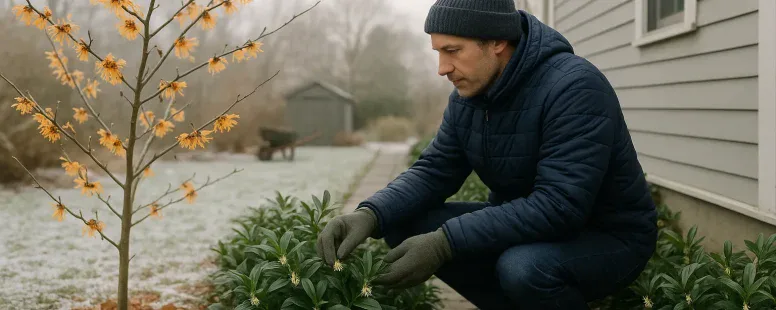
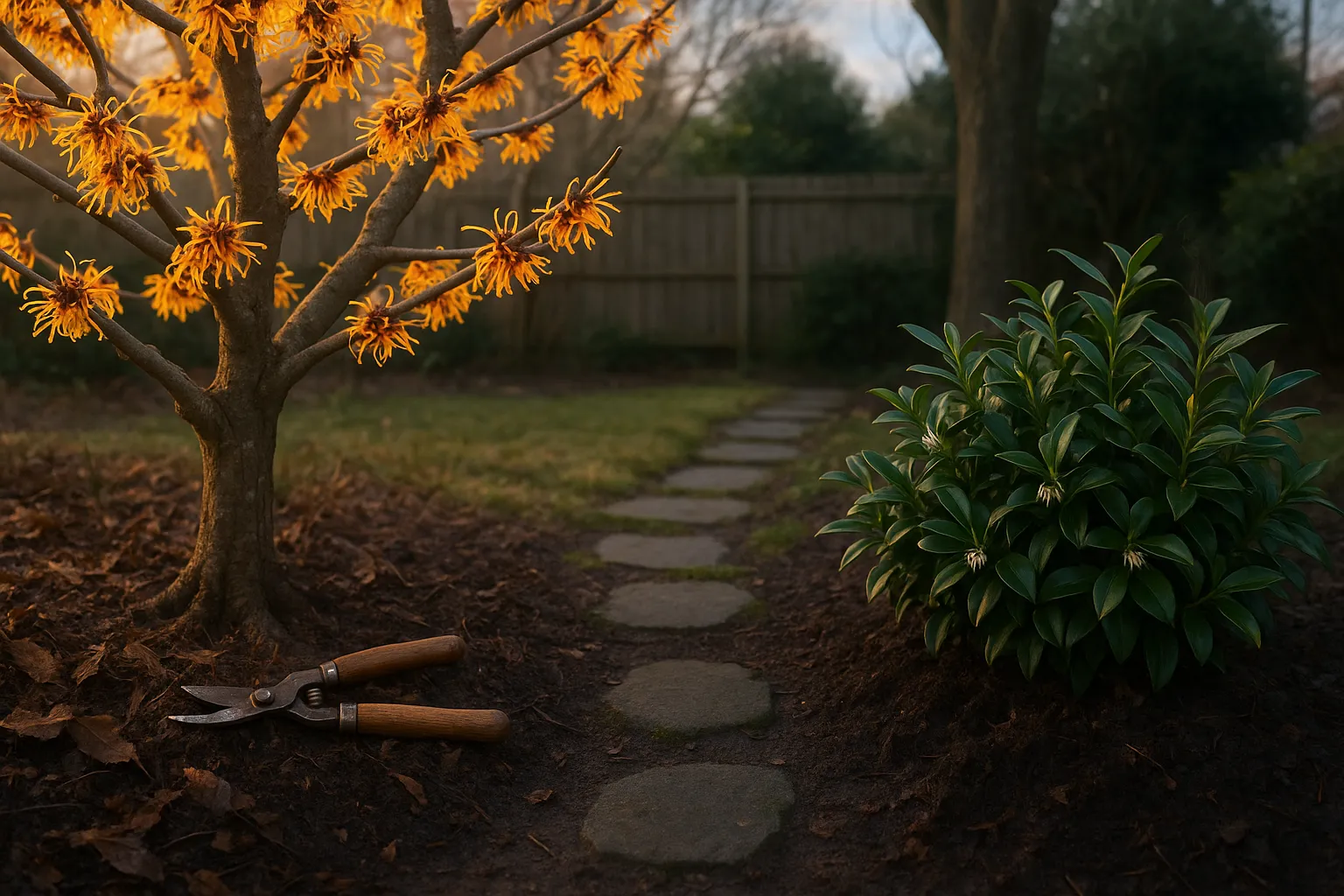
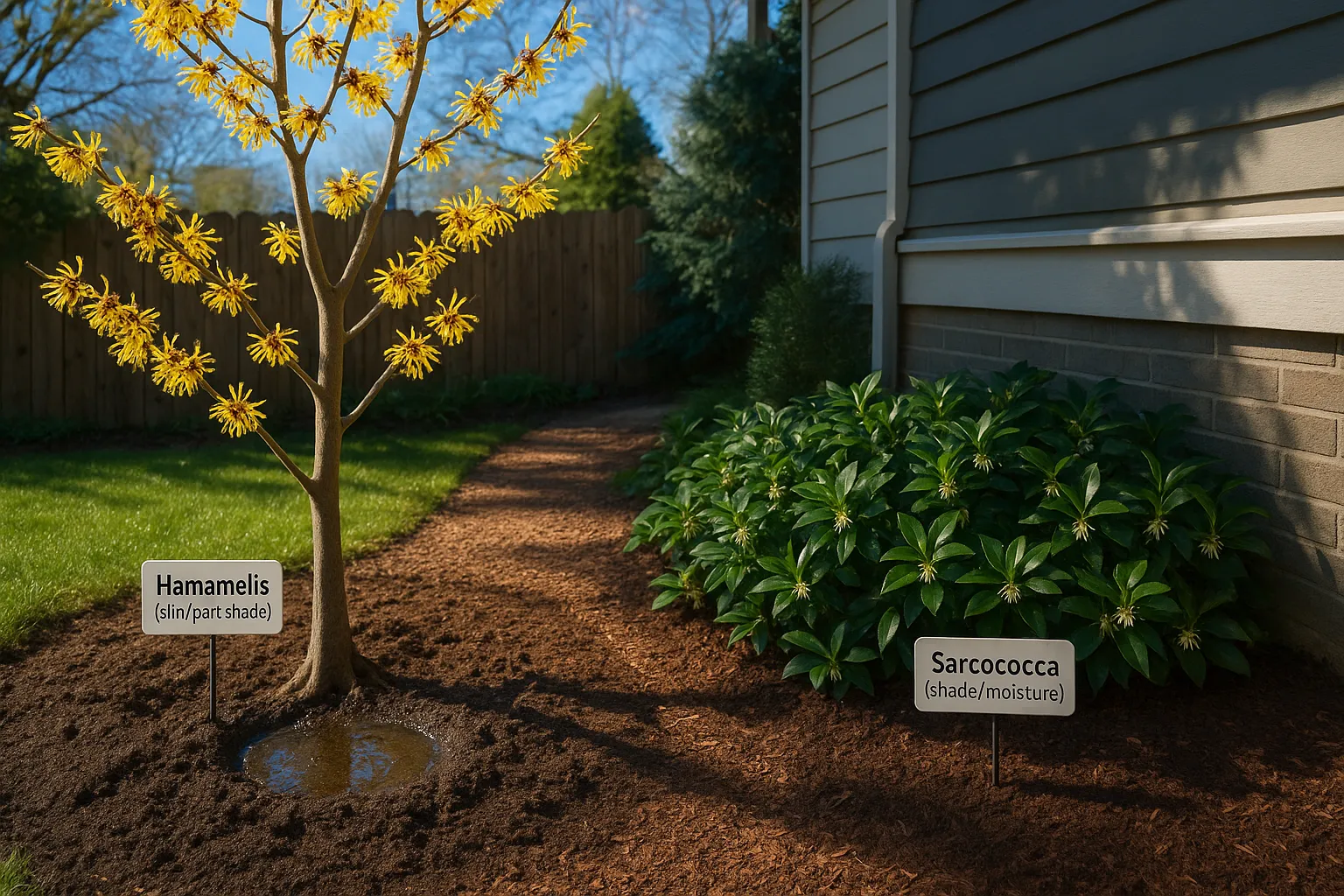
Hamamelis vs. Sarcococca frames a seasonal choice: one plant offers late-winter blooms like spun ribbon and citrus-sweet perfume: the other brings small but fierce floral scent that brightens cold corners. You can pick based on fragrance, bloom time, or how much pruning you want to do. This comparison will show the clear strengths and trade-offs so you can match plant to purpose, whether you want a bold specimen that announces spring in January or a low-maintenance evergreen that perfumes a shaded path.
Quick Comparative Snapshot
Fact: Hamamelis blooms in late winter and offers showy flowers: Sarcococca stays evergreen and perfumes winter shade. Quick points you should remember:
Hamamelis (witch hazel): deciduous, large shrub or small tree, dramatic strap-like flowers in late winter, high visual interest, moderate pruning.
Sarcococca (sweet box): evergreen subshrub, tiny white flowers in winter, very fragrant, excellent for shade, low pruning needs.
Use case difference: pick Hamamelis for seasonal drama and structure: pick Sarcococca for year-round foliage and reliable winter scent.
This snapshot sets the core contrast so you can decide fast: do you want flowers that shout, or fragrance that whispers?
Botanical Profiles And Key Differences
Fact: Hamamelis belongs to the Hamamelidaceae family: Sarcococca belongs to Buxaceae. Below you get essential identity and the traits that separate them.
Hamamelis (Witch Hazel), Characteristics And Varieties
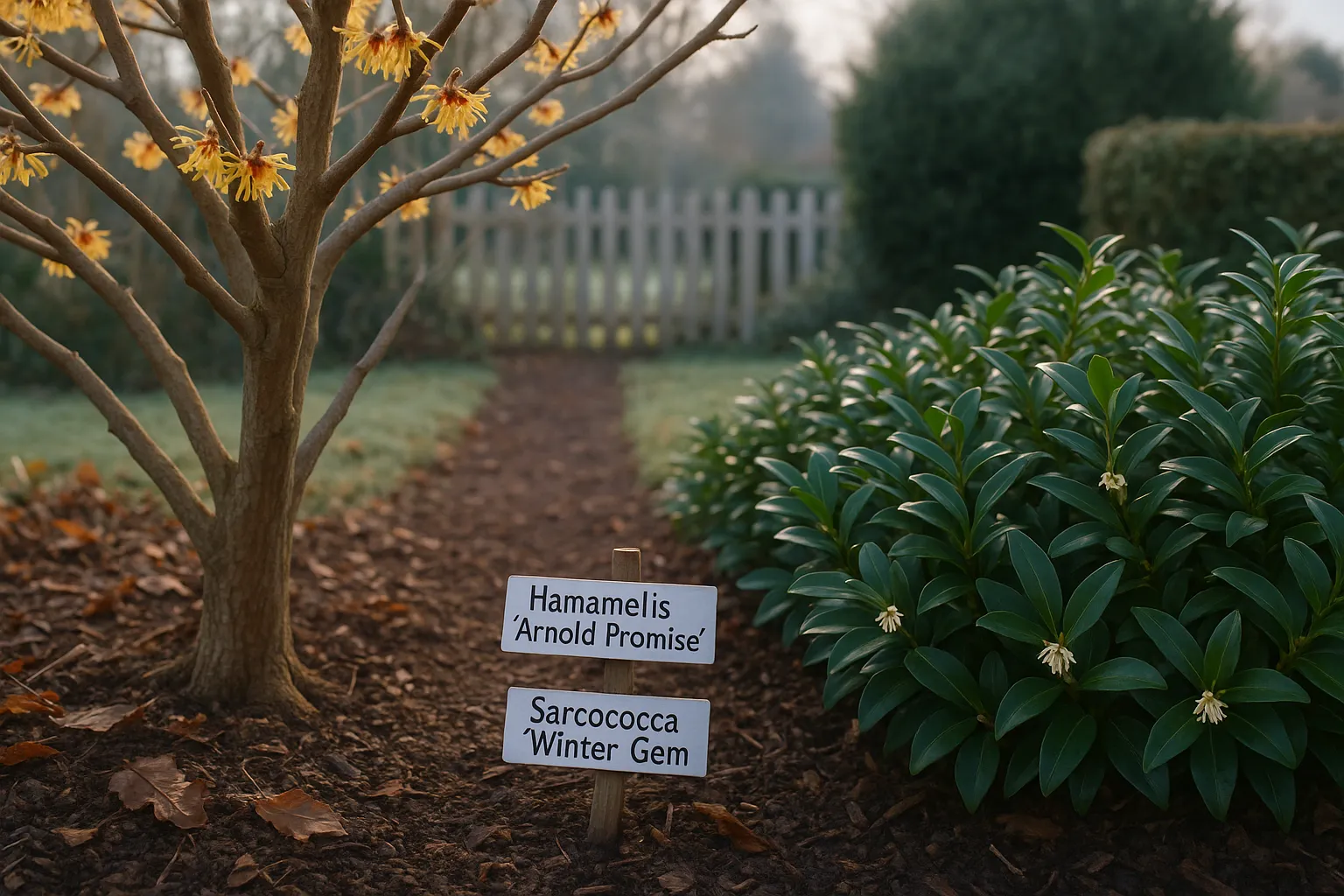
Hamamelis is a genus of 4–5 species native to North America, Japan, and China (Hamamelis virginiana, H. × intermedia, H. japonica). The plants have zigzag branches and strap-like petals in colors from pale yellow to deep red. Popular cultivars include ‘Jelena’, ‘Arnold Promise’, and ‘Diane’, each differs in bloom timing and color intensity. Witch hazel can reach 10–20 feet: some forms remain smaller. You get late-winter flowers, attractive fall foliage, and occasional seed capsules that pop.
Sarcococca (Sweet Box), Characteristics And Varieties
Sarcococca includes about 10–12 species, with Sarcococca confusa and S. hookeriana var. humilis being common in gardens. These are evergreen, compact, often under 4 feet high, with glossy leaves and racemes of tiny white flowers in mid-to-late winter. Cultivars like ‘Winter Gem’ or ‘Green Sheen’ are chosen for dense habit and vigor. The fragrance is the plant’s signature, sweet, peppery, and surprisingly strong for tiny blooms.
Size, Form, And Foliage Comparison
Fact: Hamamelis is larger and deciduous: Sarcococca is smaller and evergreen. Hamamelis gives seasonal structure and colorful fall leaves: Sarcococca gives continuous green and low, dense form for groundcover or screening. If you need a small tree, choose Hamamelis. If you need a shade-loving evergreen carpet, pick Sarcococca.
Flowering, Fragrance, And Seasonal Interest
Fact: Hamamelis attracts attention with visible flowers: Sarcococca attracts with scent.
Hamamelis Flowering Timing And Fragrance Notes
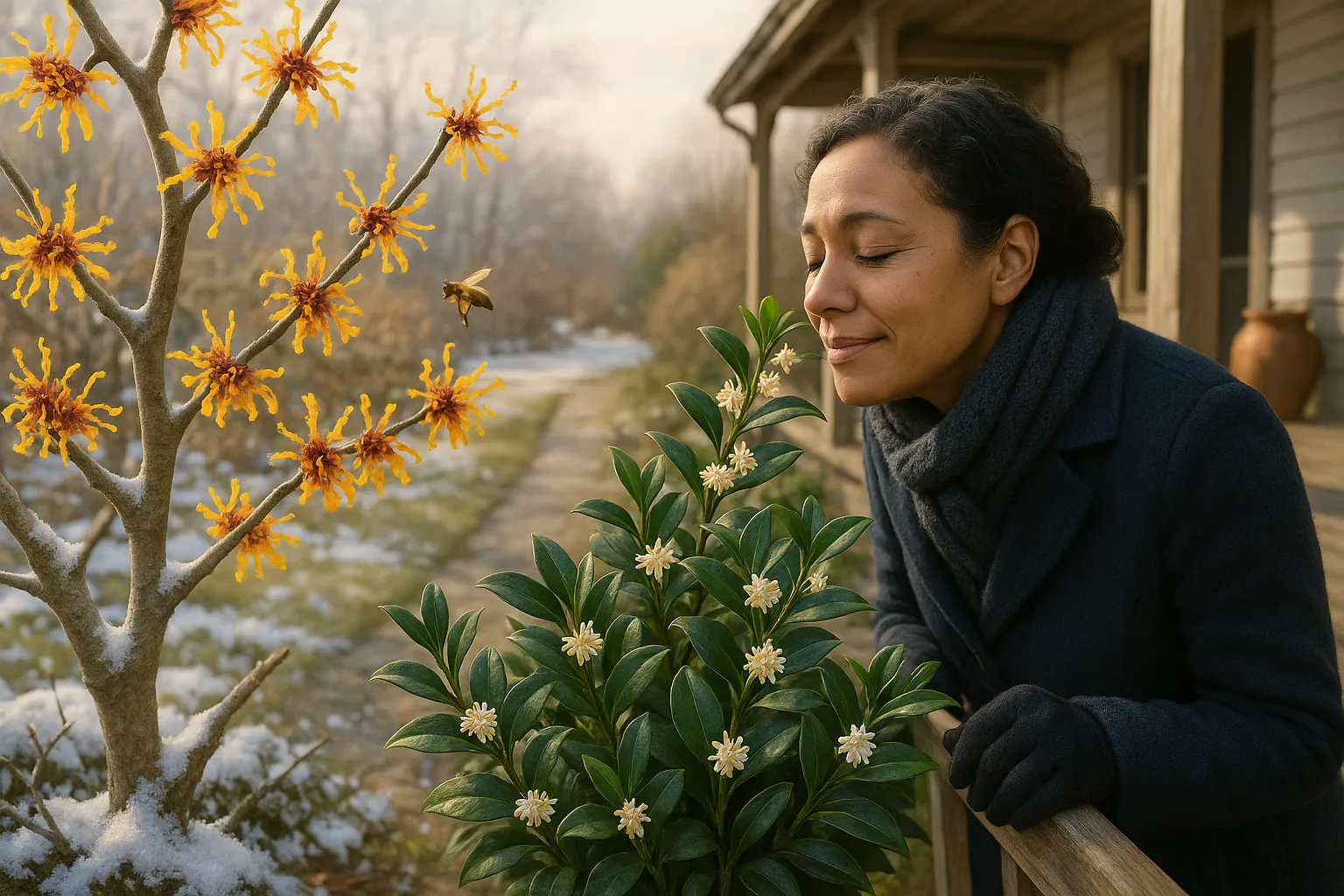
Hamamelis typically flowers from January through March depending on variety and climate. Flowers have thin, crinkled petals that look like ribbon or firework bursts. Fragrance varies: H. japonica often smells spicy or citrusy, while H. virginiana has a faint, green scent. The display pairs well with snowy backgrounds: you notice the color and form more than scent. Bees and early pollinators will visit on milder days.
Sarcococca Flowering Timing And Fragrance Notes
Sarcococca blooms in mid-winter to early spring, often when little else is flowering. The flowers are tiny but extremely fragrant, notes you might call honeyed, spicy, or almond-like. The scent travels along paths and near doorways: it’s effective at low temperatures. You will often discover Sarcococca by scent before you see the flowers.
Growth Conditions And Cultural Requirements
Fact: Both prefer well-drained soil: light preference differs. Here are the specifics so you can place each plant correctly.
Light, Soil, And Moisture Preferences
Hamamelis prefers full sun to part shade and thrives in deep, moist, well-drained loam with a slightly acidic pH. It tolerates clay when drainage is decent. Sarcococca prefers full shade to deep shade and favors humus-rich, consistently moist, well-drained soil. Sarcococca will suffer in hot afternoon sun and dry soils.
Hardiness, Climate Suitability, And Microclimate Tips
Hamamelis hardy zones: about USDA 4–9 depending on species: Sarcococca hardy zones: approximately USDA 7–9 for S. confusa, though some varieties handle zone 6 with protection. If you have cold winters and frequent freezes, Hamamelis species and hybrids are generally safer. In mild coastal gardens, Sarcococca will shine in shaded beds. Use microclimates: plant Sarcococca near foundations or under eaves for winter warmth: give Hamamelis open air so flowers show against the sky.
Planting, Watering, And Fertilization Best Practices
Plant both in spring or fall. For Hamamelis, dig a hole twice the root spread, amend with compost, and water deeply weekly in dry spells for the first year. For Sarcococca, plant at the same soil depth, mulch to retain moisture, and water regularly: it dislikes drought. Fertilize Hamamelis lightly in early spring with a balanced slow-release formula: feed Sarcococca with low-nitrogen organic compost in spring. Avoid overfertilizing either: too much nitrogen can reduce flowering.
Maintenance, Pruning, And Longevity
Fact: Hamamelis benefits from selective pruning: Sarcococca requires minimal pruning. Your maintenance plan will differ by choice.
Pruning Techniques And Timing For Hamamelis
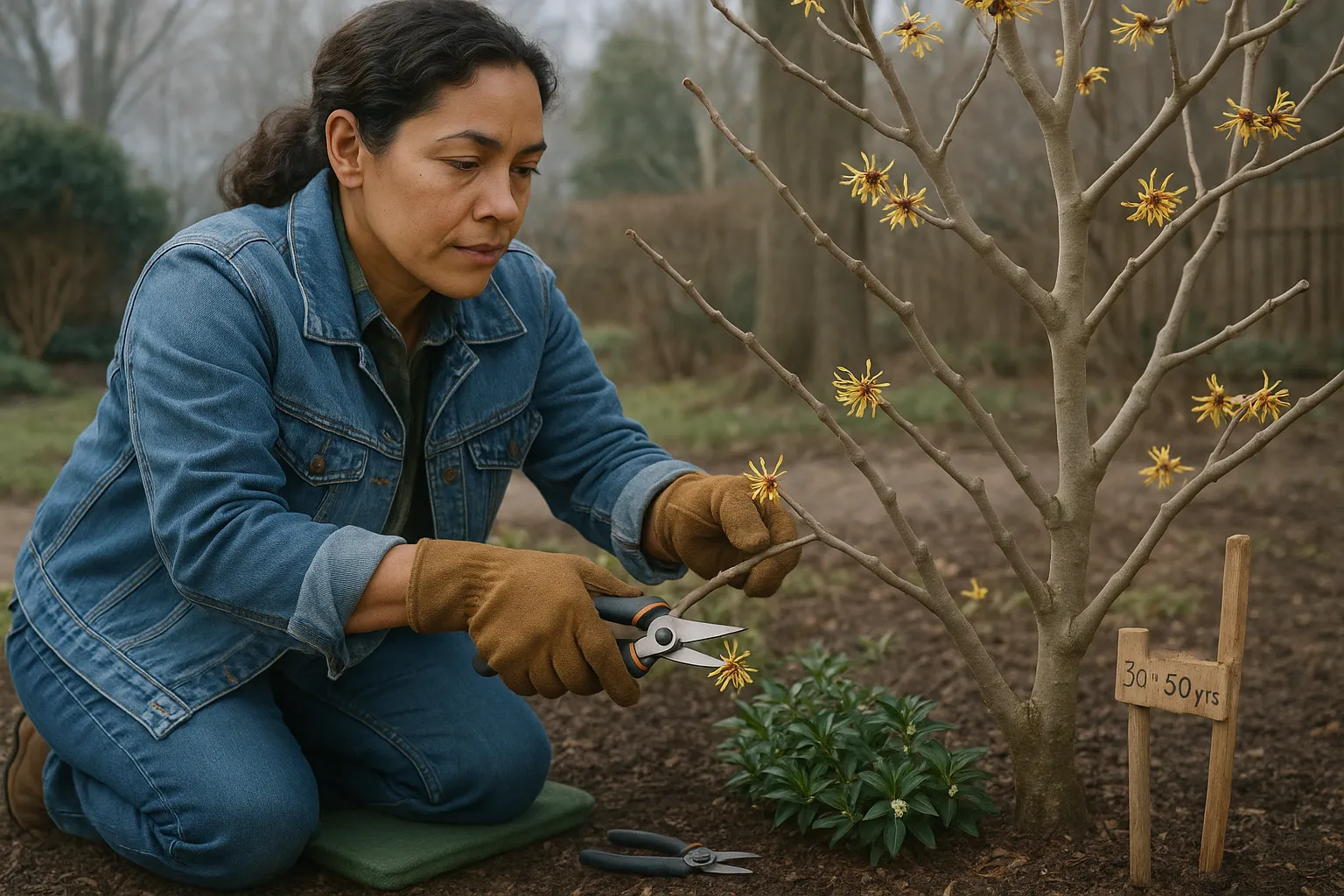
Prune Hamamelis immediately after flowering to preserve next season’s buds. Remove deadwood and inward-growing branches to open the crown. You can rejuvenate with selective thinning rather than hard cutting: heavy pruning reduces flower display for the next year. Witch hazel can live decades with good care: many specimens reach 30–50 years.
Pruning Techniques And Timing For Sarcococca
Prune Sarcococca lightly after flowering to shape and remove straggly growth. You rarely need more than occasional thinning. If you must reduce height, cut back older stems to the base in early spring to encourage new shoots. Sarcococca is long-lived as a groundcover or hedge when kept moist and cool.
Common Pests, Diseases, And Troubleshooting
Fact: Both have relatively few pests but different vulnerabilities. Know the likely problems so you can act early.
Problems More Likely With Hamamelis
Hamamelis can suffer from leaf gall (Exobasidium), powdery mildew in humid conditions, and sometimes canker. Occasional aphids may appear on new growth. Solution: remove infected leaves, improve air flow, and avoid overhead watering. Use fungicide only when necessary: many issues are cosmetic rather than fatal.
Problems More Likely With Sarcococca
Sarcococca may show leaf scorch in hot, sunny sites and root rot in poorly drained soils. Scale insects or mealybugs can appear in shaded, humid environments. Solution: move plants to shadier, better-drained locations, treat pests with horticultural oil, and keep mulch shallow near stems to avoid excess moisture at crowns. If growth stalls, check root health first.
Landscape Uses And Design Ideas
Fact: Hamamelis works as a specimen or small-tree anchor: Sarcococca works as an evergreen underplanting or low hedge.
Specimen, Woodland, And Mixed-Border Uses For Hamamelis
Place Hamamelis where you can see winter blooms, near patios, along drives, or as a focal point in mixed borders. In woodland gardens, use it as mid-layer structure under tall trees but above spring bulbs. The fall leaf color adds another season of interest. A single well-placed Hamamelis can lift a winter garden.
Underplanting, Groundcover, And Hedge Uses For Sarcococca
Use Sarcococca to perfume shady pathways, fill narrow shady borders, or form low hedges under windows. It pairs well under large oaks and alongside foundations where evergreen screening is wanted. Plant several for continuous fragrance: the effect grows as clumps spread.
Companion Plants And Seasonal Layering Suggestions
Pair Hamamelis with spring bulbs (tulips, crocus) and evergreens (boxwood) for year-round structure. Pair Sarcococca with ferns, hellebores, and hostas for texture and layered shade interest. For fragrance corridors, alternate Sarcococca with small clumps of witch hazel so scent and sight overlap.
Propagation, Buying Guide, And Cost Considerations
Fact: Both propagate from cuttings: Hamamelis also from seed and grafting. Here’s what to expect when you propagate or buy.
How To Propagate Each Plant (Seed, Cuttings, Layering)
Hamamelis: Seed grows true only sometimes: stratify seed for several months then sow in spring. Softwood cuttings taken in early summer can root with rooting hormone under mist. Grafting onto compatible rootstock is common for named cultivars.
Sarcococca: Propagate easily by semi-ripe cuttings in summer or by layering in spring, bend a low stem to soil and peg it down: roots form within months. Division of mature clumps also works.
What To Look For When Buying Mature Plants Or Cultivars
Buy healthy, well-rooted specimens from reputable nurseries like Royal Horticultural Society–recommended suppliers or local extension-verified sellers. For Hamamelis, check for multiple flower buds and balanced branching. For Sarcococca, look for dense, glossy foliage and strong basal shoots. Price: expect Hamamelis to cost more for larger, grafted specimens ($40–$200 depending on size/cultivar): Sarcococca is usually cheaper per plant but you may buy more for groundcover ($15–$60).
Which To Choose: Decision Checklist For Different Garden Goals
Fact: Choose Hamamelis for winter spectacle: choose Sarcococca for evergreen scent and low maintenance. Use this checklist to decide.
Choosing Based On Garden Size, Light, And Desired Interest
Small garden, deep shade: choose Sarcococca. It saves space and gives year-round green.
Large garden, sun or part shade, want seasonal drama: choose Hamamelis.
Patio or entrance where winter scent matters: Sarcococca near the door: Hamamelis as a visible focal point.
Maintenance Commitment, Fragrance Priority, And Wildlife Value
Low maintenance, constant scent: Sarcococca. It needs little pruning and keeps green in winter.
Moderate maintenance, visual payoff: Hamamelis. You prune after flowering and get striking blooms and fall color.
Wildlife: Hamamelis supports early pollinators: Sarcococca provides shelter for small birds. If wildlife value is priority, Hamamelis slightly edges out for pollinators.
If you can, plant both: use Hamamelis for vertical drama and Sarcococca to perfume the understory. That combination gives winter sight and scent together, and you won’t regret the mix.
Last Updated: March 8, 2026 at 11:11 am by Ellie B, Site owner & Publisher
To provide the best experiences, we use technologies like cookies to store and/or access device information. Consenting to these technologies will allow us to process data such as browsing behaviour or unique IDs on this site. Not consenting or withdrawing consent, may adversely affect certain features and functions.
Functional
Always active
The technical storage or access is strictly necessary for the legitimate purpose of enabling the use of a specific service explicitly requested by the subscriber or user, or for the sole purpose of carrying out the transmission of a communication over an electronic communications network.
Preferences
The technical storage or access is necessary for the legitimate purpose of storing preferences that are not requested by the subscriber or user.
Statistics
The technical storage or access that is used exclusively for statistical purposes.The technical storage or access that is used exclusively for anonymous statistical purposes. Without a subpoena, voluntary compliance on the part of your Internet Service Provider, or additional records from a third party, information stored or retrieved for this purpose alone cannot usually be used to identify you.
Marketing
The technical storage or access is required to create user profiles to send advertising, or to track the user on a website or across several websites for similar marketing purposes.