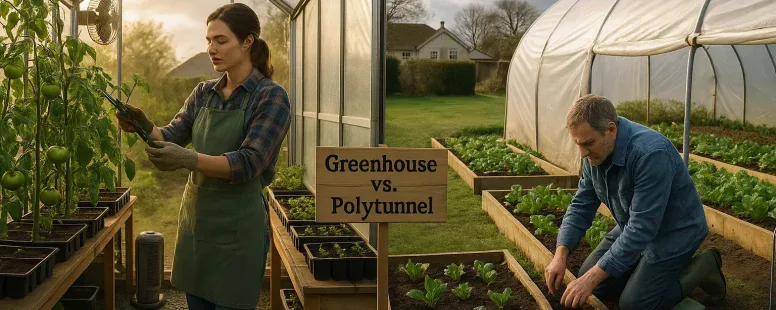
You can double your growing season and protect tender plants, but the structure you choose will shape what and how you grow. Greenhouse vs. polytunnel is more than a debate over plastic or glass, it’s a question about climate control, crop goals, budget, and the rhythm of your garden. Picture stepping into a warm, glassed room in late March where tomato vines hum with life, or ducking under a curved polythene tunnel that turns a rainy April into a dry, work-ready week. Both deliver shelter and heat, yet they produce very different microclimates, maintenance needs, and returns on your time. Read on to learn the clear facts first, then the practical trade-offs so you can choose the right structure for your patch of earth.
Head-to-Head Comparison At A Glance
Fact: A greenhouse gives rigid structure and better long-term light clarity: a polytunnel gives volume at lower cost.
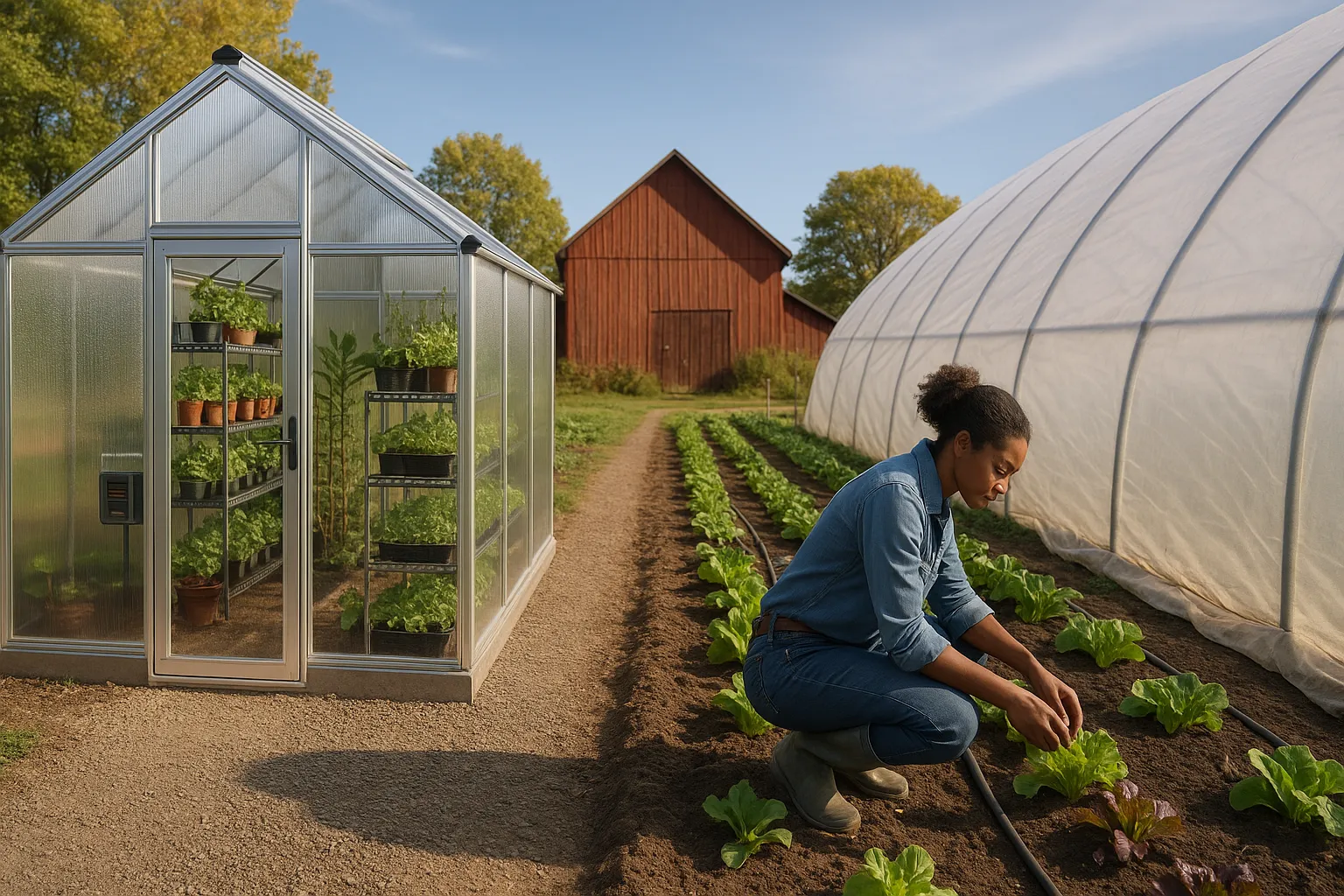
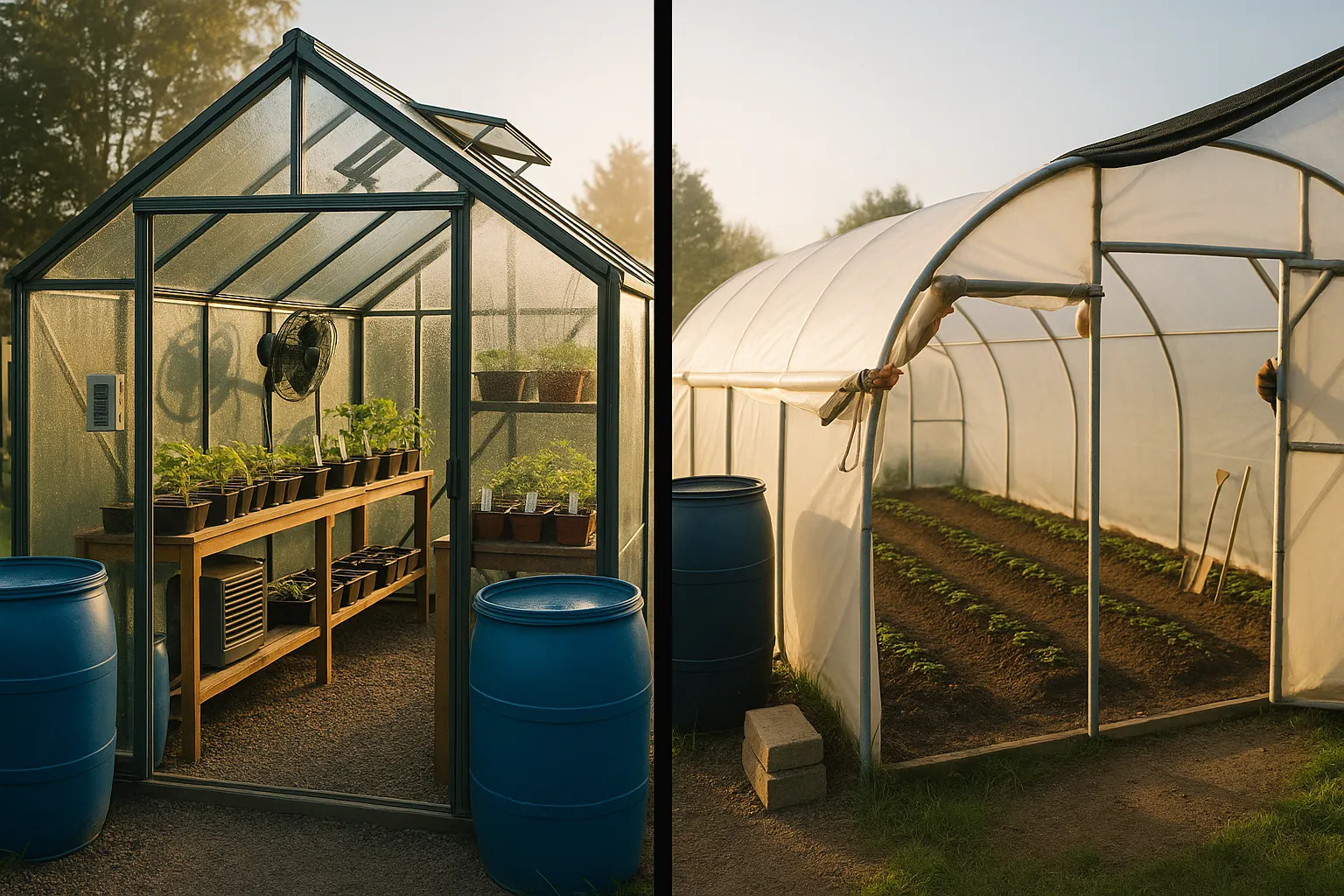
Greenhouse: rigid frames, glass or polycarbonate glazing, stable day/night temperatures, usually permanent. Polytunnel: hoop frame, polythene skin, quick to erect, good for large-scale season extension.
Quick side-by-side:
Climate control: greenhouse, precise: polytunnel, broad and forgiving.
Space efficiency: greenhouse, compact footprint, vertical options: polytunnel, more floor area per dollar.
Use this snapshot to match the structure to your goal. If you want year-round, controlled production you likely prefer a greenhouse. If you want seasonal extension for rows of crops with tight budget, polytunnel often wins.
Benefits And Limitations Of Greenhouses
Fact: Greenhouses let you manage heat and light precisely, which boosts yields for sensitive crops.
Benefits
Temperature control: Glass or polycarbonate panels trap solar heat well. You can add heaters, thermostats, and automated vents. That control raises success rates for tomatoes, peppers, orchids, and citrus.
Light quality: Glass gives high visible light transmission with good clarity. Polycarbonate also transmits well and diffuses light, reducing hot spots.
Durability and permanence: Properly built greenhouses often last decades. They resist wind and snow better than thin polythene tunnels.
Year-round use: A heated greenhouse supports overwintering and early starts.
Limitations
Cost and complexity: Higher materials and foundation costs. You may need concrete footings for larger models. Installation often requires tools or pros.
Ventilation demands: Because they retain heat, greenhouses need planned ventilation and shade in summer to avoid overheating.
Less floor area per dollar: For large-scale spacing, a greenhouse can be pricier compared to a polytunnel.
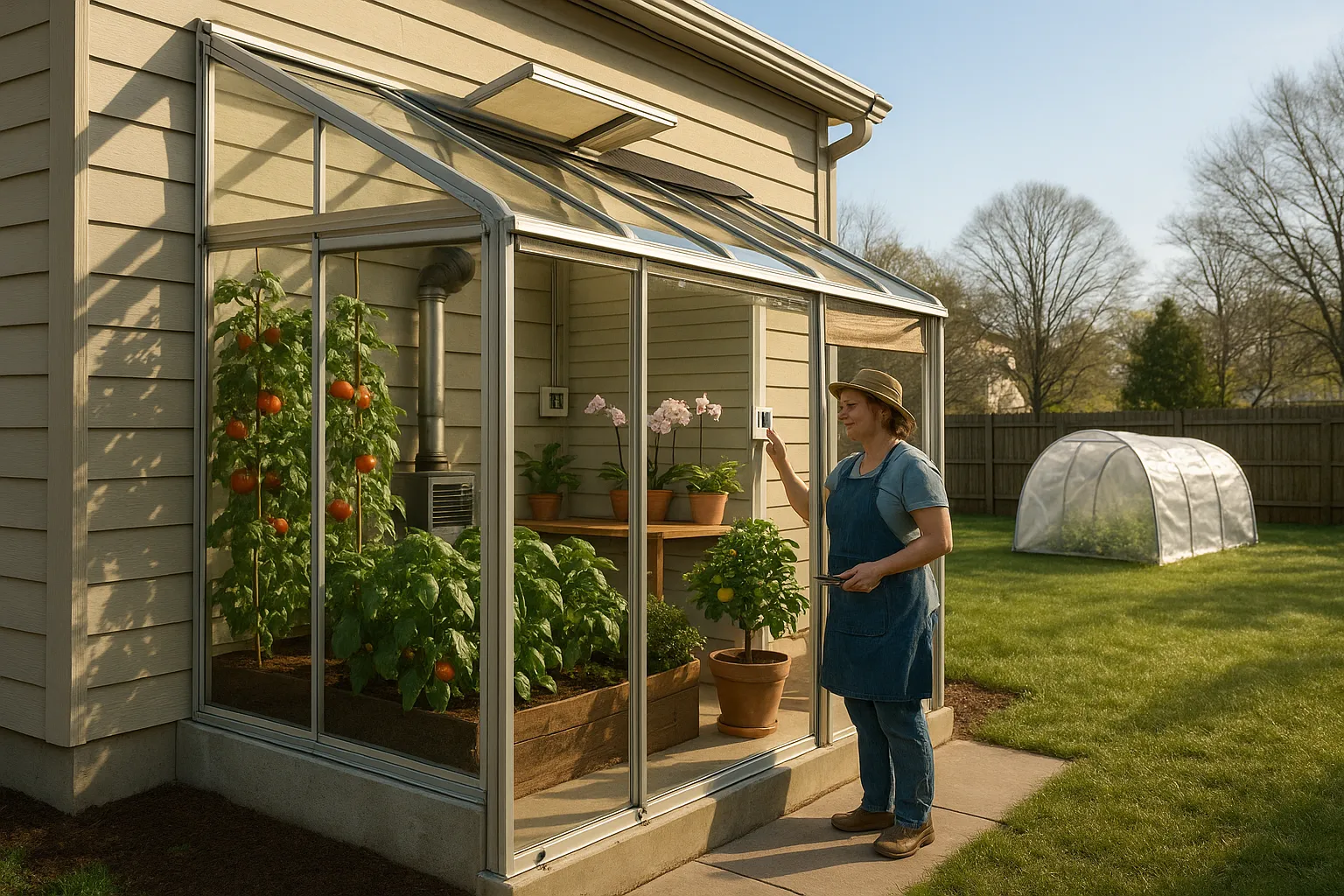
Real-life note: A gardener I know paid extra for a lean-to glass greenhouse and still added blackout shade and an oscillating fan to stop summer collapse of seedlings. Good planning saved them from losing a season.
Benefits And Limitations Of Polytunnels
Fact: Polytunnels give the best cost-to-area ratio and simple season extension for row crops.
Benefits
Cost-effective: Hoop frames with polythene cover deliver large sheltered areas at low cost. That makes them popular for community farms and market growers.
Rapid installation: You can assemble a polytunnel in days with basic tools and a few helpers.
High internal volume: Curved tunnels warm quickly and provide a forgiving air buffer: night temperature swings are smaller than open field.
Flexibility: You can set up multi-bay tunnels, move them (on small frames), or replace covers seasonally.
Limitations
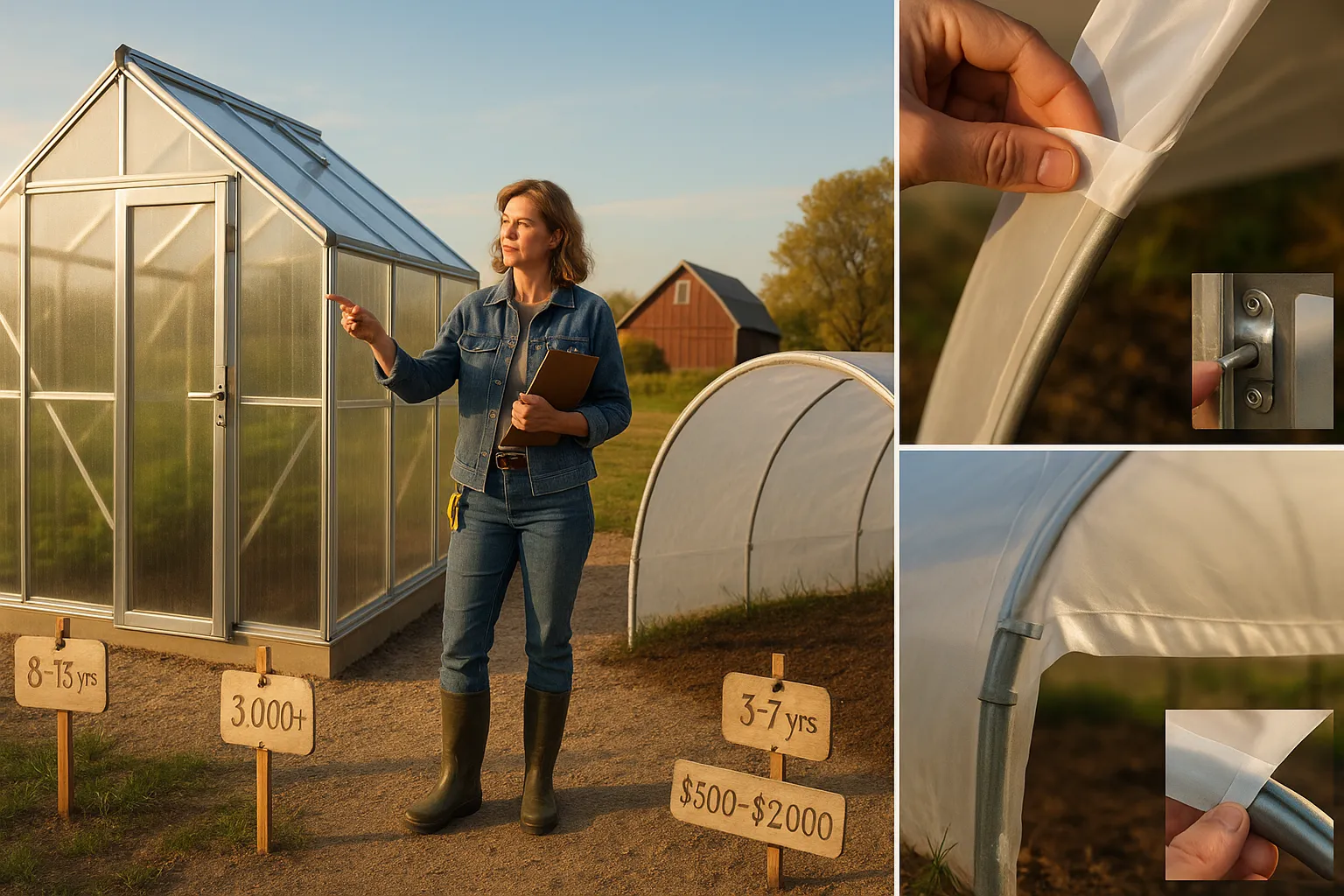
Shorter cover life: Standard polythene degrades under UV. Expect 3–7 years for single-skin film, longer for UV-stabilized or double-skinned systems.
Less precise control: You can’t manage microclimates as tightly as in glassed greenhouses. That limits growing of highly sensitive ornamentals or tropicals.
Wind and snow vulnerability: Without good anchoring and a strong frame, tunnels can be damaged by heavy weather.
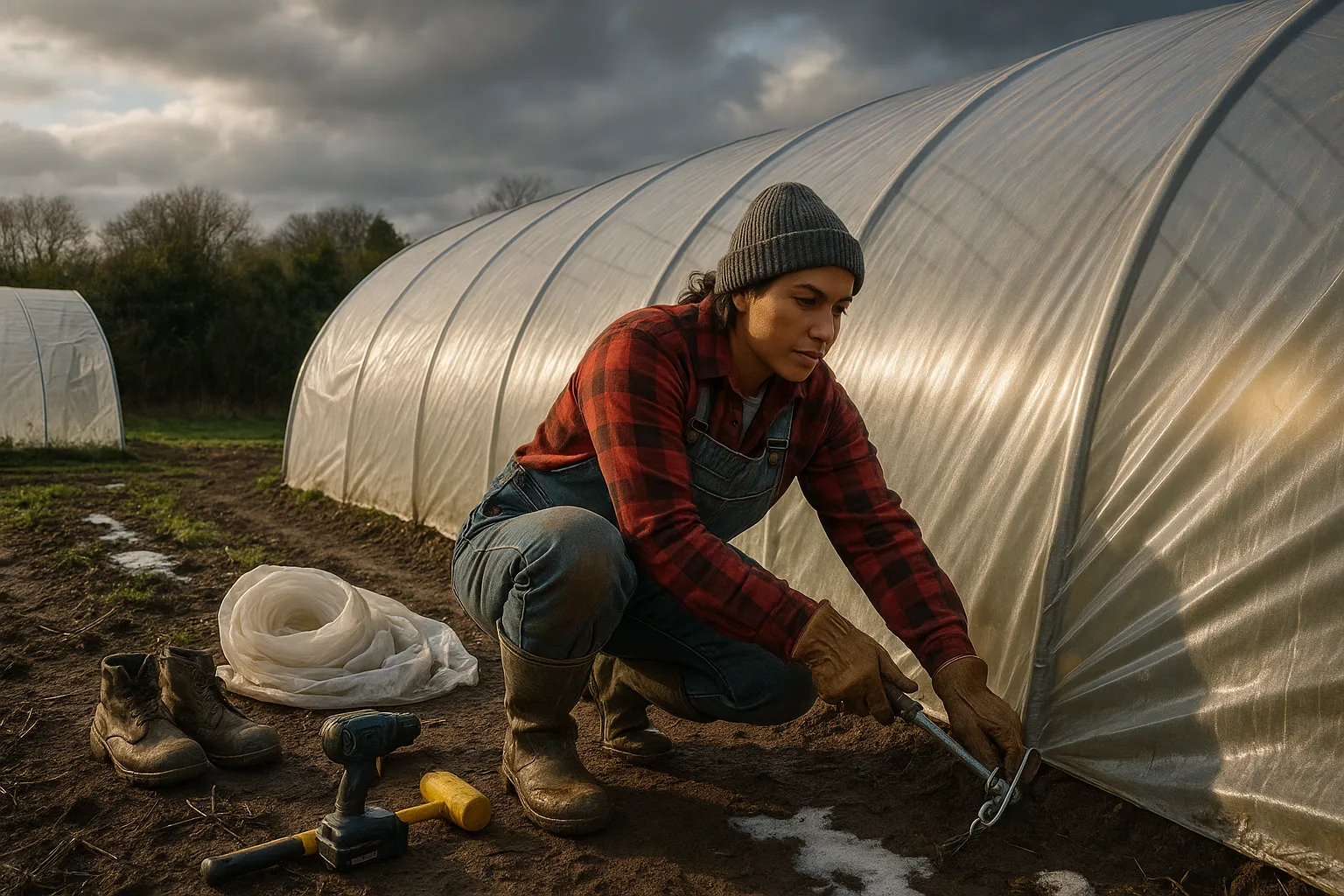
Vulnerable moment: A small grower lost a first-year polythene cover to a winter storm because they underestimated local wind gusts. They learned to site tunnels behind hedges and add ground anchors.
Climate Control, Light And Microclimate Differences
Fact: Greenhouses create a narrower, more controllable microclimate: polytunnels create a larger, more buffered one.
Heating, Cooling, And Ventilation Requirements
Greenhouses need active ventilation and often heating for winter crops. Automatic roof vents, circulating fans, and thermostatic heaters work well. Polytunnels require simpler strategies: roll-up side vents, end-wall doors, and passive shading. Both benefit from thermal mass, barrels of water or masonry heat stores reduce night dips. These measures reduces frost risk and keeps seedlings steady.
Light Transmission, Shade, And Seasonal Variations
Glass transmits light cleanly: polycarbonate diffuses light and reduces sharp shadows. Polythene is less optically consistent and can yellow over time. In summer you may need shade cloth in any structure. In spring and autumn, the extra volume of a polytunnel can speed soil warming, letting you plant earlier. In winter a greenhouse holds heat longer if well-sealed and insulated.
Cost, Materials, And Durability
Fact: Cost varies widely: simple polytunnels cost a fraction of a glass greenhouse: material quality drives lifespan.
Typical Costs And Long-Term Value
A small hobby polytunnel (10–20 ft) can cost a few hundred dollars to a couple thousand installed. A hobby greenhouse of similar size, with polycarbonate glazing, typically runs several thousand dollars. Commercial glasshouses run far higher.
Long-term value depends on use. If you grow high-value crops year-round, a greenhouse can pay back faster via earlier production and higher market price. If you only want season extension for field crops, the polytunnel’s low cost per square foot often gives better short-term ROI.
Common Materials And Lifespans (Glass, Polycarbonate, Polythene)
Glass: lasts 20–50+ years, high clarity, higher cost and fragility.
Polycarbonate: 8–15 years for twin-wall panels, good insulation and impact resistance.
Polythene film: 3–7 years for single-skin, 5–10 for UV-stabilized or double-layer inflated systems.
Choose materials based on budget, wind and snow loads, and crop value. Brands like Palram and Gardman supply common consumer options: commercial growers often use materials from Rimol or Coveris.
Space, Size, And Placement Considerations
Fact: Site and orientation change performance: you must match size to crop workflows and garden layout.
Site Selection, Orientation, And Wind Exposure
Place structures on well-drained ground, avoid frost hollows, and orient long axis east-west to maximize winter sun on many sites. Shelter from prevailing wind reduces heat loss and polythene flapping. If you live in USDA zones with heavy snow, choose a greenhouse frame rated for snow loads or a strong-hoop polytunnel with extra bracing.
Scale Options: Small Backyard To Commercial Use
Small backyard: lean-to glass or a 6–10 ft greenhouse suits hobby gardeners. Mid-scale: 12–30 ft polytunnels provide lots of bed area at low cost. Commercial: modular glasshouses or multi-bay polytunnels with irrigation and environmental controls. Your choice should reflect labor, access for equipment, and crop spacing needs.
Best Crops And Growing Strategies For Each Structure
Fact: Each structure favors certain crops and cultural methods: match plant sensitivity to control level.
Seasonal And Year-Round Production Differences
Greenhouses support true year-round production when heated. You can force spring bulbs, overwinter perennials, and ripen tomatoes early. Polytunnels excel at early spring and late autumn crops, lettuce, brassicas, and salad mixes, plus summer melons if ventilated well.
Crop Examples: Vegetables, Ornamentals, Seedlings, And Sensitives
Greenhouse winners: tomatoes, peppers, cucumbers (trained vertically), orchids, citrus, potted exotics, and seedling propagation for early market.
Polytunnel winners: salad greens, chard, brassicas, squash, pumpkins, and field seedlings. Polytunnels also suit cut flowers grown in long rows like calendula or cosmos.
Practical tip: Start seedlings in a heated greenhouse and harden them off in a polytunnel before transplanting to the field. That mix of structures often gives the best yields.
Installation, Maintenance, And Legal Considerations
Fact: Installation complexity and maintenance differ: polytunnels are quicker but need more periodic cover work: greenhouses require precise foundations and occasional glazing care.
Assembly, Upkeep, And Repair Tips
Greenhouse assembly often needs level foundations. Tight seals, drip edges, and solved condensation control are key. Replace damaged panes or panels promptly to avoid pests. For polytunnels, check anchors each season, replace torn polythene early, and retension covers to prevent flapping damage.
Maintenance routines that help both: clean glazing for light, check gaskets, service fans and heaters, and inspect for pests. Keep a seasonal checklist: spring ventilation checks, summer shading, autumn insulation, and winter snow clearing.
Permits, Insurance, And Local Regulations
Fact: Local rules vary: some municipalities require permits for structures over fixed sizes or permanent foundations. Check your city or county building department and your homeowner association. Insurers may list greenhouses as structures: polytunnels sometimes are considered temporary, changing coverage. Always confirm before major purchases.
A neighbor once built a 20-ft greenhouse without a permit and had to apply retroactively, pay fees, and alter the foundation. Don’t skip this step.
How To Decide: Practical Checklist For Choosing Between A Greenhouse And Polytunnel
Fact: Match your budget, crop goals, and site constraints with a simple checklist to make the right choice.
Decision Factors And Quick Buyer Persona Scenarios
Checklist:
Budget: low (polytunnel) vs. medium-high (greenhouse).
Crop type: hardy greens (polytunnel) vs. tropicals/seedlings (greenhouse).
Year-round need: yes (greenhouse) vs. seasonal extension (polytunnel).
Wind/snow exposure: high (choose sturdy greenhouse or reinforced tunnel).
Labor and skills: low (polytunnel) vs. moderate (greenhouse systems require monitoring).
Buyer personas:
Weekend hobbyist who grows ornamentals and wants a tidy structure: small greenhouse.
Market grower needing 1000+ sq ft for salad mixes: polytunnel bays.
Urban gardener with limited yard and desire for year-round tomatoes: lean-to greenhouse.
Next Steps: Budgeting, Sizing, And Trial Options
Start by measuring available space, sketch orientation, and get three quotes for materials and installation. Consider a small trial: a 6×8 ft greenhouse or a single polytunnel bay for a season. That trial will reveal local microclimate quirks and maintenance time without large commitment.
Final push: plan for anchors, ventilation, and a modest contingency fund for cover replacement or glazing repairs. Then pick the structure that fits your growing goals and make the season count.
To provide the best experiences, we use technologies like cookies to store and/or access device information. Consenting to these technologies will allow us to process data such as browsing behaviour or unique IDs on this site. Not consenting or withdrawing consent, may adversely affect certain features and functions.
Functional
Always active
The technical storage or access is strictly necessary for the legitimate purpose of enabling the use of a specific service explicitly requested by the subscriber or user, or for the sole purpose of carrying out the transmission of a communication over an electronic communications network.
Preferences
The technical storage or access is necessary for the legitimate purpose of storing preferences that are not requested by the subscriber or user.
Statistics
The technical storage or access that is used exclusively for statistical purposes.The technical storage or access that is used exclusively for anonymous statistical purposes. Without a subpoena, voluntary compliance on the part of your Internet Service Provider, or additional records from a third party, information stored or retrieved for this purpose alone cannot usually be used to identify you.
Marketing
The technical storage or access is required to create user profiles to send advertising, or to track the user on a website or across several websites for similar marketing purposes.