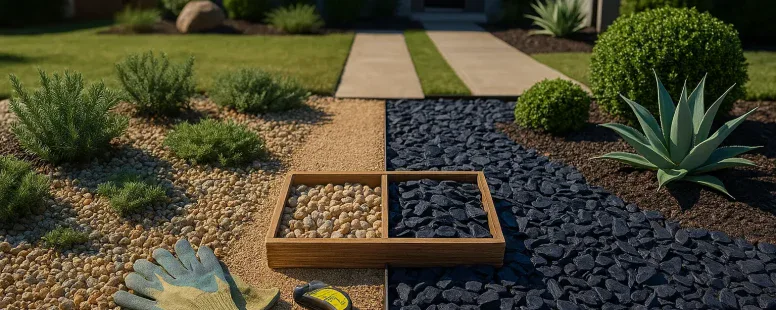
You can change the look of a bed, cut maintenance, and control erosion with a single choice of groundcover. Gravel mulch and slate chips both do those jobs, but they behave very differently underfoot, under sun, and near roots. This article compares them directly so you can pick the right material for your yard, front walkway, or commercial beds. Expect clear trade-offs, cost, color permanence, drainage, and plant health, and surprising benefits you might not expect, like how slate’s flat shapes can reduce weed growth or how angular gravel locks together to resist movement.
Quick Comparison: Pros, Cons, And Best Uses At A Glance
Fact: Gravel mulch is generally cheaper and better for high‑traffic paths: slate chips look more refined and resist fading.
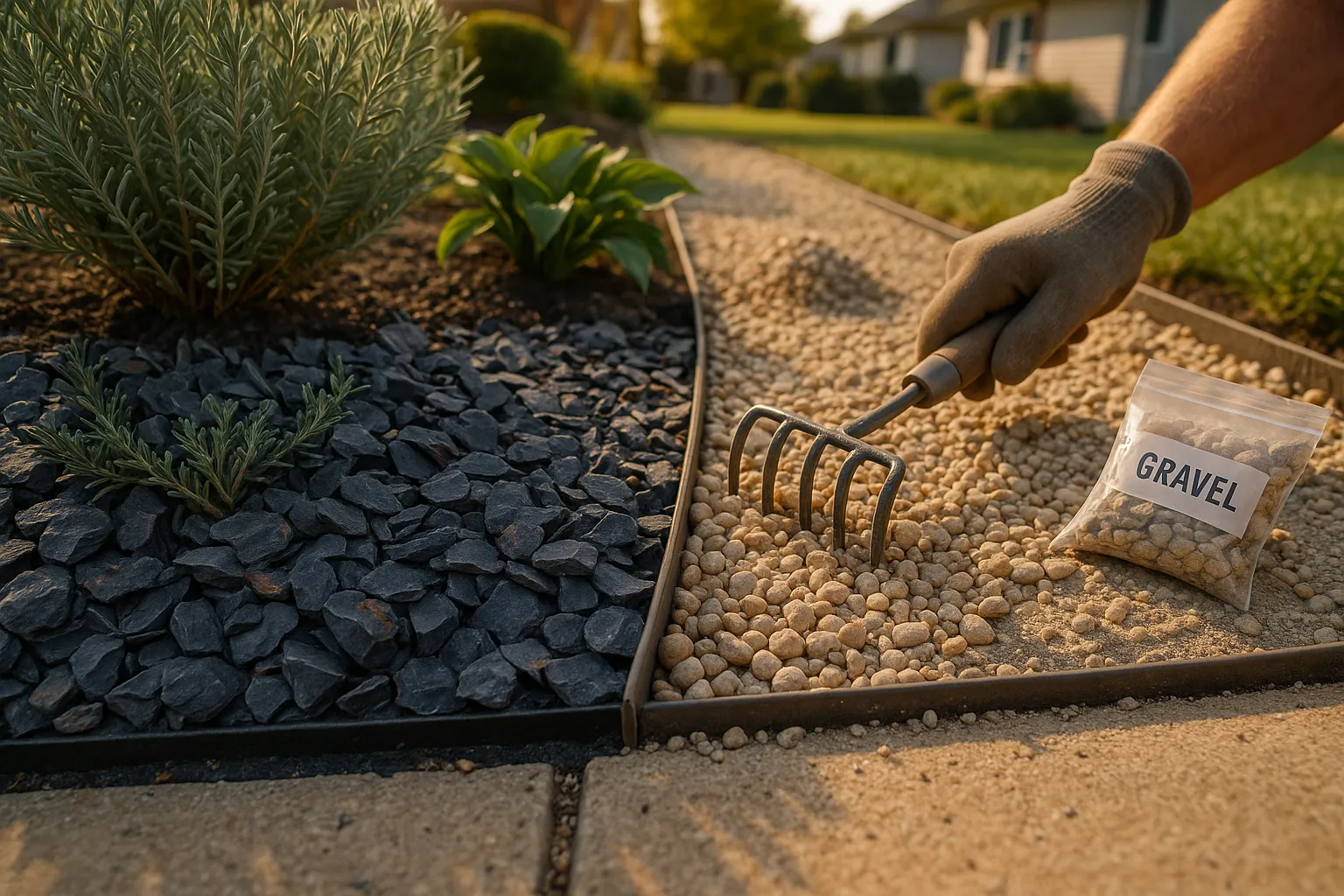
Gravel mulch, Pros: lower material cost, wide size range (pea gravel to crushed rock), excellent drainage, and easy to rake. Cons: moves underfoot, can compact, and some colors fade or show dust. Best uses: driveways, casual pathways, dry riverbeds, and xeriscape planting zones.
Slate chips, Pros: flatter pieces knit into the surface, strong color retention (blacks, blues, purples), and a cleaner modern look. Cons: higher cost, can be sharp on bare feet, and some varieties may leach fines that create dust. Best uses: decorative beds, foundation planting near homes, accent borders, and commercial entries where appearance matters.
Quick tip: If you want low initial cost and easy replacement, pick gravel: if you want a crisp, long‑lasting look for a visible bed, pick slate chips. Consider where people will walk, whether you’ll need to move the material seasonally, and how fine your soil is beneath the layer.
Material Characteristics And Varieties
Fact: Gravel and slate differ in origin and shape, which drives their behavior in landscape beds. Below, you get clear descriptions and practical examples.
Gravel Mulch: Sizes, Composition, And Typical Uses
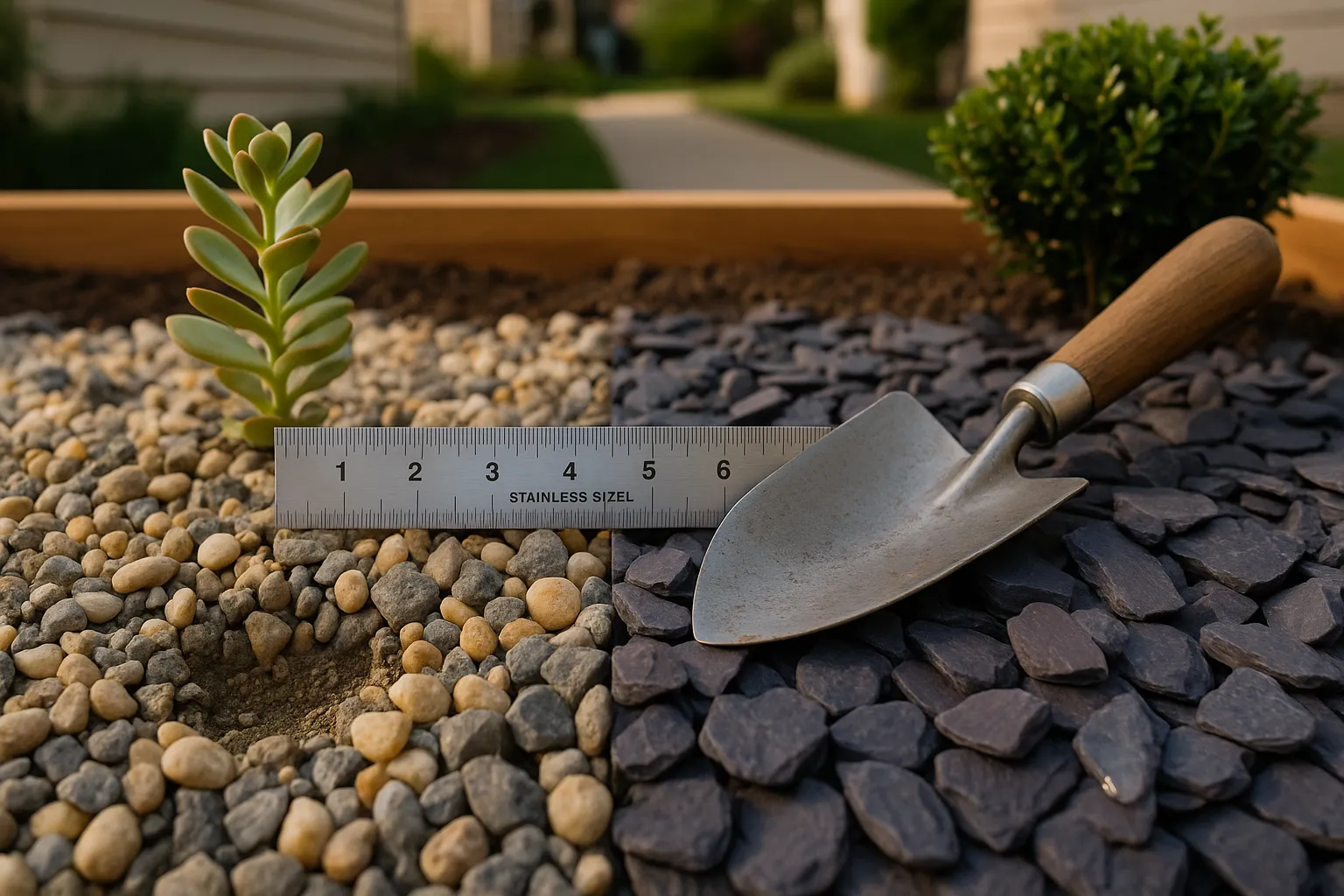
Gravel is fractured stone, river rock, or crushed rock. Sizes range from pea gravel (6–10 mm) to 1–2 inch crushed stone. Composition includes limestone, granite, basalt, and sometimes recycled concrete. Angular gravel locks together and slows movement: rounded river rock rolls and shifts more.
Common named types you’ll find at [Home Depot] or local quarries: pea gravel (soft walking feel), 3/8″ crushed stone (good for pathways), and decomposed granite (finer: compacts). Gravel works when you need drainage and low cost. Use a 2–3 inch layer for decorative beds, 3–4 inches for pathways, and compacted base + thicker layers for driveways.
Slate Chips: Types, Color Options, And Physical Properties
Slate comes from metamorphic rock: chips are split or crushed into thin, plate‑like pieces. Types include Welsh slate, Brazilian slate, and local slate from U.S. quarries. Colors range from deep black and gray to blue and purple tones that hold their hue longer than many gravel colors.
Physical properties: flat slabs shed water, interlock to form a relatively stable surface, and resist being tossed by wind. Typical chip size for landscaping is 1/2″ to 2″ across, with thickness often less than 1/4″. Slate is denser than many gravels, so a thinner layer can give similar coverage. Use slate where you want a contemporary look and minimal color change over years.
Installation, Cost, And Where To Source Materials
Fact: Installation needs a prepared base and a landscape fabric barrier for best weed control: costs vary with material type and freight. Below are steps and price guidance.
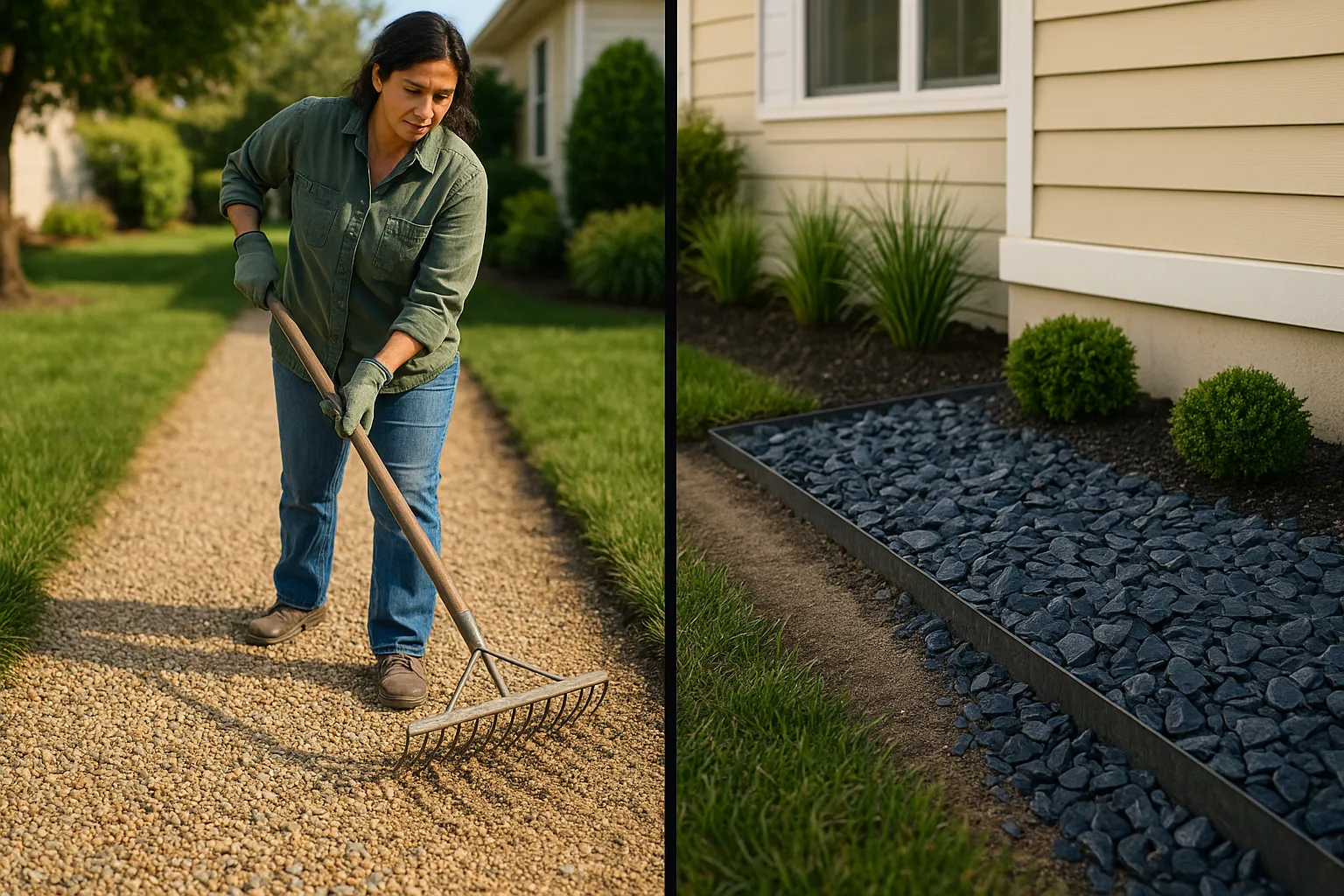
Site Preparation And Installation Steps
Clear the area of plants, roots, and debris.
Grade the soil for drainage away from structures.
Install edging (metal, plastic, or stone) to hold material in place.
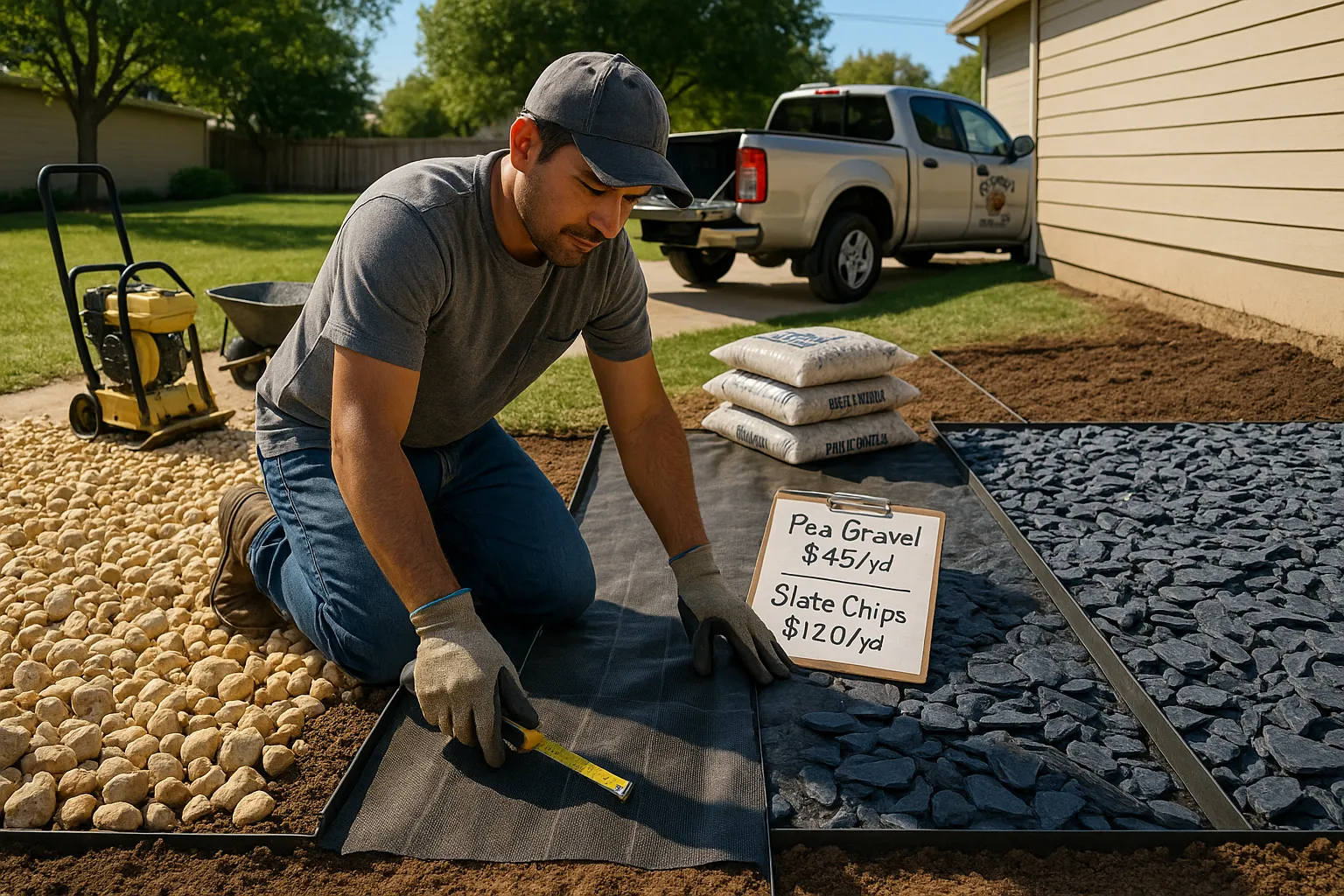
Lay a woven landscape fabric if you expect persistent weeds: leave fabric off if you prioritize soil‑to‑mulch contact for planting.
Add a 2–3 inch layer for slate, 2–4 inches for decorative gravel, or up to 3–6 inches for drive surfaces.
Tamp or light‑roll (for decomposed granite or crushed base) where stability is needed.
Practical note: Slate’s flat pieces sit cleanly on fabric: angular gravel can migrate through fabric tears. If you plan to plant directly into the bed, cut X‑shaped slits in the fabric and set plants through the openings.
Cost Breakdown: Materials, Delivery, And Labor Estimates
Material cost (per cubic yard, prices vary regionally):
Pea gravel: $40–$60
Crushed limestone: $45–$70
Decomposed granite: $50–$90
Slate chips: $80–$140
Delivery: $50–$150 depending on distance and volume. Labor: DIY saves money, expect 2–6 hours for a small bed: pros charge $35–$75 per hour or a flat install rate of $600–$2,500 depending on site prep and edging.
Where to source: local rock yards, municipal recycling centers (for crushed concrete), and big retailers like [Lowe’s] or [Home Depot]. For specialty slate colors, call regional quarries or stone suppliers. Slate may ship from specific quarries, which affects cost and lead time.
Performance And Maintenance
Fact: Slate chips last longer visually: gravel can require more frequent topping and wicking maintenance.
Weed Control And Mulch Layer Effectiveness
Both materials suppress weeds by blocking light and creating a physical barrier. Slate’s flat pieces form a tighter surface, which reduces seed penetration more than coarse, rounded gravel. But, neither will stop perennial weeds with deep roots: you still need to remove runners and treat persistent patches. Landscape fabric under either material reduces weeds dramatically, but fabric can trap moisture and create anaerobic pockets beneath shallow layers.
Drainage, Soil Temperature, And Plant Health Impacts
Gravel increases soil evaporation and warms soil in winter: this helps Mediterranean plants but can stress moisture‑loving species. Slate reflects less light when dark, so it can moderate soil temperature slightly. Both allow excellent drainage compared with organic mulches, lowering root rot risk. But note: in very hot climates, dark slate can raise surface temps that stress shallow roots, place a 2–3″ buffer from crowns for sensitive plants.
Durability, Longevity, And Long‑Term Maintenance Tasks
Durability: Slate resists color fade and breaks down slowly: gravel may show dusty surfaces and slowly fragment. Longevity: Expect slate to look good 10+ years: gravel may need top dressing every 3–5 years. Maintenance tasks: rake debris, remove weeds, replenish material, and adjust edging. If you use salt on walkways, slate can stain: test a small patch first. One honest lesson: I once used light colored crushed limestone near a hedge: after three winters it had ground fines that compacted and created a crust, so check samples before you buy.
Aesthetics, Landscape Design Applications, And Styling Tips
Fact: Slate provides a crisp, modern finish: gravel reads more casual and organic.
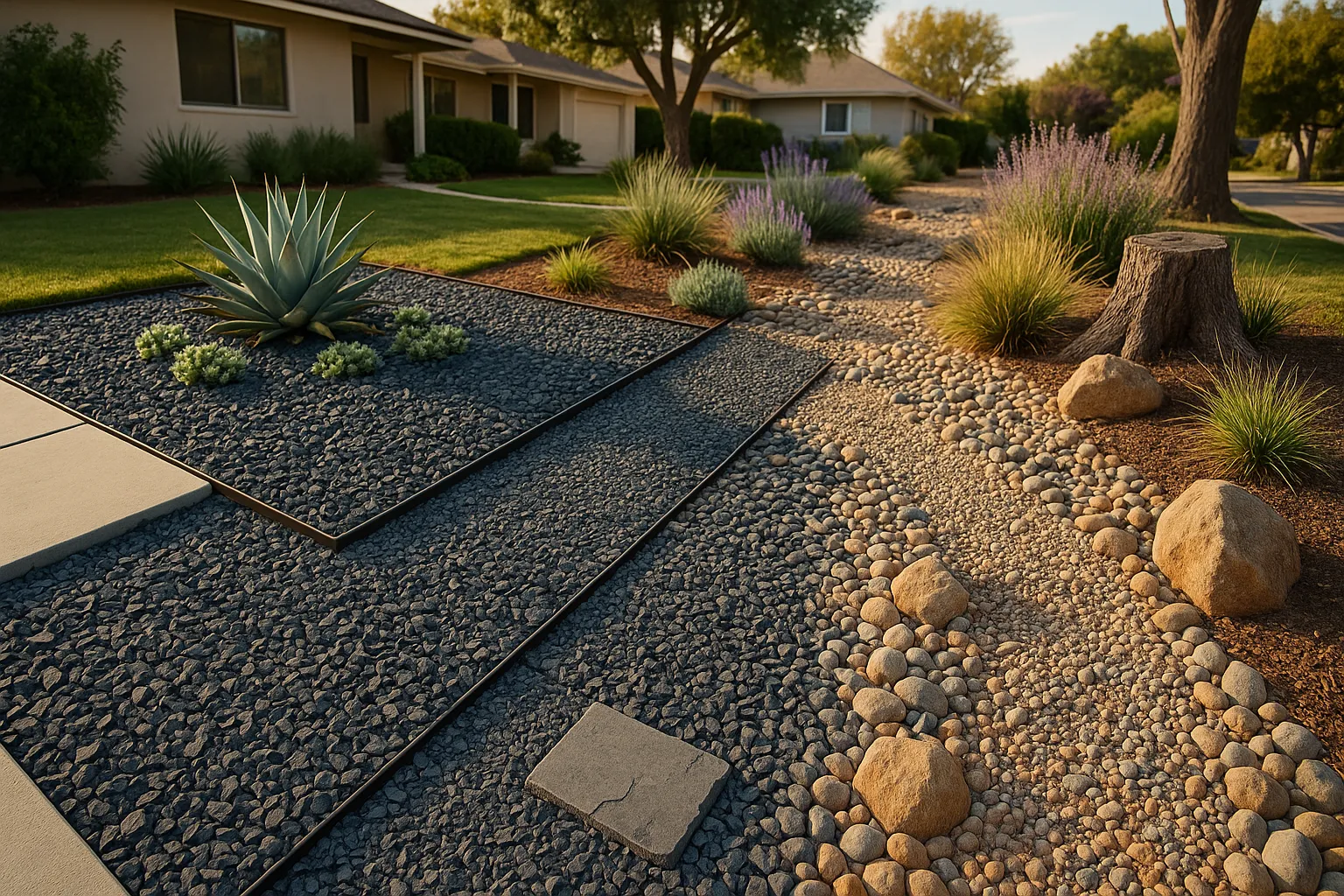
Use slate to frame formal beds, highlight specimen plants, or create contrast with green foliage. Slate chips pair well with succulents, black metal edging, and poured concrete paths. Try mixing a dark slate border with lighter gravel center for depth.
Use gravel for cottage or drought‑tolerant plantings, dry creek beds, and rustic patios. Gravel suits naturalistic gardens where movement and texture matter.
Styling tips: combine sizes to reduce dust (small chips in the center, larger around the edge), install a narrow hoggin or decomposed granite walking strip where people step to protect softer feet, and test color samples in sun and shade before buying a ton. Add a few larger boulders or pavers to anchor both materials visually.
Environmental, Safety, And Practical Considerations
Fact: Environmental impacts depend on quarrying practices and whether material is recycled.
Environment: Slate and gravel both require quarrying, ask suppliers about local sourcing to reduce transport emissions. Recycled concrete is an eco option for gravel‑type beds, but it can alter soil pH near sensitive plants.
Safety: Slate edges can be sharp: use caution around children and pets. Gravel can create dust that irritates lungs during installation, wear a mask. Both materials reflect heat: dark stones can increase local micro‑temperatures.
Practical considerations: Don’t lay a thick, impermeable layer over trees’ root zones, roots need air and moisture. Avoid mixing fine powders with slate, because fines fill gaps and reduce drainage. If you expect to change planting annually, choose gravel for easier removal.
How To Choose Between Gravel Mulch And Slate Chips For Your Project
Fact: Choose based on use case, prioritize cost and mobility for gravel, and appearance and permanence for slate.
Step 1: Define use. Is the area high‑traffic, decorative, or around sensitive plants?
Step 2: Budget. If you have a tight budget, select gravel and plan for occasional top dressing. If appearance and low refresh frequency matter, invest in slate.
Step 3: Climate and plant palette. Hot, drought‑tolerant plantings do well with gravel. Shade gardens with moisture‑loving perennials do better with organic mulch: avoid heavy stone there.
Step 4: Test samples. Put a handful of each on your bed for a week, see how dust and color behave, and watch runoff after a rain.
Step 5: Plan maintenance. If you want near‑zero seasonal chores, slate will please you longer: if you want flexibility for redesigns, choose gravel.
Actionable next step: Measure the area, request two small sample deliveries from a local supplier, and sketch paths and edging before you buy. That simple test often saves time, money, and a later headache.
To provide the best experiences, we use technologies like cookies to store and/or access device information. Consenting to these technologies will allow us to process data such as browsing behaviour or unique IDs on this site. Not consenting or withdrawing consent, may adversely affect certain features and functions.
Functional
Always active
The technical storage or access is strictly necessary for the legitimate purpose of enabling the use of a specific service explicitly requested by the subscriber or user, or for the sole purpose of carrying out the transmission of a communication over an electronic communications network.
Preferences
The technical storage or access is necessary for the legitimate purpose of storing preferences that are not requested by the subscriber or user.
Statistics
The technical storage or access that is used exclusively for statistical purposes.The technical storage or access that is used exclusively for anonymous statistical purposes. Without a subpoena, voluntary compliance on the part of your Internet Service Provider, or additional records from a third party, information stored or retrieved for this purpose alone cannot usually be used to identify you.
Marketing
The technical storage or access is required to create user profiles to send advertising, or to track the user on a website or across several websites for similar marketing purposes.