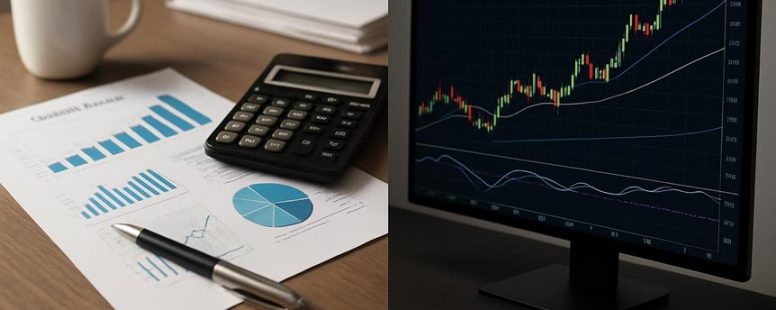
Imagine holding a shimmering stock chart in one hand and flipping through a company’s financial report in the other.
Which do you trust to guide your investment journey? That’s the heart of the clash between fundamental and technical analysis—two distinct paths through the market maze.
Understanding their differences can unlock hidden advantages, like uncovering the story behind the numbers or reading the market’s dance.
This simple distinction can transform your approach and reveal opportunities you might otherwise miss.
What Is Fundamental Analysis and Why It Matters
Fundamental analysis is a way to figure out if a company is worth investing in. It helps investors see the true value of a business, not just its stock price.
First, I look at the company’s market valuation. This means checking if its stock price matches what the company is really worth based on its earnings, assets, and growth. For example, if a small tech firm is priced like a giant, it might be overvalued.
Next, I study economic indicators. These are numbers like interest rates, inflation, and unemployment that show how the economy is doing. If the economy is strong, companies often do well too.
Then, I analyze financial ratios. These are simple numbers like the price-to-earnings ratio or debt-to-equity ratio. They tell me if a company is financially healthy. For instance, a low debt-to-equity ratio means the company isn’t borrowing too much money.
I also look at industry trends. Knowing if an industry is growing or shrinking helps me see future potential. For example, renewable energy companies are booming now, so they might be good investments.
Earnings reports are another key piece. They show how well a company actually performed recently. If earnings are up, that’s a good sign. But if they’re down, I need to find out why.
Investor sentiment can influence stock prices in the short run. Sometimes, people buy or sell just because of rumors or hype, not the company’s true worth. So, I try to tell the difference between hype and real value.
Risk assessment is also important. I ask myself what could go wrong. Could a new regulation hurt the company? Could a competitor take market share? Knowing the risks helps me decide if an investment is worth it.
Some people say fundamental analysis is slow or too focused on numbers. That’s true—sometimes it misses sudden changes or market moods. It’s best used with other methods.
In the end, combining all these factors helps me decide if a company is a good buy. It’s like doing a full health check-up before choosing a stock. This approach helps me avoid just chasing quick price moves and focus on what’s really worth my money. That’s why understanding fundamental analysis really matters.
How Technical Analysis Uses Price and Volume Data
Technical analysis uses price and volume data to help traders understand market moves. The most important part is knowing what price patterns and volume trends mean. For example, if a stock’s price is going up but the volume is low, it could be a weak move that might not last. But if the price rises with high volume, it shows strong interest from traders. This combination helps traders see if a trend will continue or if it might change soon.
Some traders use these signals to make quick decisions. They look for specific patterns like “head and shoulders” or “double bottoms” to spot possible reversals. Others watch volume to confirm if a move is real. If the price jumps, but volume stays low, they might be cautious. But if both price and volume increase together, it’s a sign the move is likely genuine.
However, there are limits. Price and volume data don’t always predict perfectly. Sometimes, a sudden news event can cause sharp moves that price and volume analysis can’t foresee. Also, relying only on these can lead to false signals. So, many traders combine technical analysis with other tools like news or fundamentals to make better choices.
Imagine you’re trying to guess if a wave will crash or keep rolling. Price patterns show the shape of the wave, and volume is like how many people are riding it. Both give clues but don’t guarantee the outcome. That’s why it’s smart to use them together, but always stay cautious about surprises.
Price Patterns Identification
Price patterns are ways to see how the market moves based on charts of price and volume. These patterns help traders guess where prices might go next by showing how investors feel and behave. Recognizing these patterns makes it easier to spot when a trend might change or continue. They also help find key points where prices might stop or turn, which are useful for making trades. Here are some of the most important patterns I look for:
Head and Shoulders: This pattern shows when a trend might reverse. It looks like a person’s head with shoulders on each side. When you see this, it can mean investors are losing confidence in the current trend.
Double Tops and Bottoms: These patterns show strong support or resistance levels. A double top is like two mountain peaks, indicating prices might fall. A double bottom is like two valleys, suggesting prices could rise.
Triangles: These form when prices get tighter, showing less movement. The pattern suggests a big move might happen soon, either up or down, after the trading range gets smaller.
Flags and Pennants: These are short-term patterns that show the trend will likely continue after a small pause. Think of them as a quick breather before the market keeps going in the same direction.
Knowing these patterns helps me manage risk better because I can see when prices might change. But remember, no pattern works all the time. Sometimes they give false signals, so it’s smart to use them with other tools. For example, a head and shoulders pattern might suggest a trend reversal, but if volume is low, it might not be reliable.
Some traders swear by these patterns because they clearly show investor feelings and market psychology. Others warn that relying only on patterns can be dangerous. Markets are unpredictable, and patterns can fail or be tricky to spot. So, it’s best to use them as part of a bigger plan, not the only guide.
In short, these patterns are helpful tools, but they’re not perfect. They can give clues about where prices might go, but always be careful and use other information too. Just like reading a weather forecast, they help but don’t guarantee what will happen next.
Volume Trends Analysis
Volume trends are key to understanding stock price moves. Volume data shows how much trading is happening, and it can confirm or challenge what price charts suggest. When analyzing volume, look for sudden spikes in trading activity and overall trading volume levels. These signals help you see if a price move is strong or weak. For example, if a stock’s price rises and trading volume also increases, it usually means many traders support the move. But if the price goes up on low volume, it might mean weak interest or just a temporary bump. Volume can also show how easy it is to buy or sell a stock, which affects how reliable price signals are. Combining volume data with price patterns gives a clearer picture of market strength or weakness. This makes your technical analysis more accurate, but remember, volume alone does not tell the full story. Sometimes, high volume can happen during false moves or reversals. So, always use volume with other tools for better results.
Main Differences Between Fundamental Vs. Technical Analysis
Fundamental analysis is a way to find out what a company’s stock is really worth. It looks at things like a company’s profits, debts, and how the economy is doing. Investors use this method if they want to hold stocks for a long time, hoping the value will grow. For example, if a company is making more money and has less debt, its stock might be a good buy. But this kind of analysis takes time and sometimes gives mixed signals, so it’s not always perfect.
Technical analysis is different. It studies how stock prices move over time. It uses charts and patterns to guess where prices might go next. People who use technical analysis often buy and sell quickly, trying to make small profits from short-term changes. For example, if a stock price hits a certain low, traders might buy expecting it to rise again. But, prices can be unpredictable, and relying only on charts can sometimes lead to mistakes.
Both methods have their good and bad points. Fundamental analysis can tell you if a stock is undervalued or overvalued based on real data, but it might miss short-term market changes. Technical analysis can spot quick opportunities, but it doesn’t tell you if a stock is a good long-term investment. Some investors use both to get a better picture.
In the end, understanding these differences helps you decide how to invest. Are you looking for steady growth over years, or quick trades? Knowing the strengths and limits of each method can save you from making bad decisions or falling for false signals.
When Should You Use Fundamental Analysis?
Fundamental analysis is a way to decide when to buy or sell a stock based on how healthy a company really is. It helps investors see beyond stock prices and look at the company’s financial health, management, and market position. If you want to invest for the long term, understanding these basics can help you make smarter choices.
People use fundamental analysis when they want to find good companies to hold for years. For example, they check a company’s profit reports, how much debt it has, and if its leaders are good at running the business. This helps them see if the company has potential to grow or if it might fail. But, it’s not perfect. Sometimes a good-looking company might face problems later, or the market might change in ways that are hard to predict.
Some investors say fundamental analysis is the best way to pick stocks for the long run. Others warn that it can be slow and might miss quick changes in the market. If you only look at numbers, you might miss how the company’s products are doing or if customers like them. So, it’s good to use fundamental analysis with some caution and also pay attention to the bigger picture.
In simple terms, think of fundamental analysis like checking the health of a person before you decide to be friends. You look at their habits, their skills, and how they handle problems. This can help you decide if they are a good long-term friend or not. But remember, even healthy people can get sick unexpectedly. So, always keep a balance when using this method.
Long-Term Investment Decisions
First, understanding economic indicators like interest rates, inflation, and employment figures helps you see where the market is headed. For example, if the economy is growing, stocks of good companies tend to rise over time.
Second, doing a careful risk check is important. You need to know what could go wrong and how much loss you might face. This way, you avoid losing money on investments that are too risky.
Third, pick assets that fit well together in your portfolio. For example, some stocks and bonds can balance each other out. This makes your investments more stable over many years.
Fourth, keep an eye on long-term trends. If a company is growing steadily and has strong products, it might be a good investment for years. But if a trend looks wrong or unsustainable, it might be better to stay away.
Some people think long-term investing is slow and might miss quick gains. Others worry that even with careful analysis, markets can still surprise you. So, it’s smart to remember that no method is perfect.
In the end, fundamental analysis helps you stay calm during market ups and downs. It encourages patience and good decision-making. If you want your money to grow steadily and avoid rushing into bad choices, this approach is worth trying. Just be aware that investing always has risks, and no method guarantees success.
Evaluating Company Health
How do you know if a company is truly healthy and worth investing in? Fundamental analysis is the best way to find out. It looks at key numbers like financial ratios to see if the company makes money and stays stable. For example, high profit margins show the company earns good profits, while low debt suggests it is not overextended. Cash flow is also important because it shows if the company has enough money to keep running day to day. If a company’s cash flow is strong, it can pay bills and invest in growth.
Another clue is revenue growth. If sales are increasing steadily, it signals the company is gaining momentum. Market share matters too; a company with a larger part of the market usually has a better position against competitors. A strong competitive advantage, like a popular brand or unique product, can help the company survive tough times.
Management quality is also key. Good leaders make smart decisions and steer the company in the right direction. Even the best numbers can be misleading if the leadership is weak. External factors like economic conditions and industry trends can impact the company too. For example, a company in the tech sector might grow fast when technology advances but slow down during a recession.
Some people prefer to use tools like Yahoo Finance or Morningstar to analyze these numbers quickly. Others say that numbers don’t tell the full story and you need to understand the company’s products and customers. Both views have truth—numbers are helpful but not everything.
Be careful, though. Even the strongest-looking companies can face risks like changing regulations or unexpected scandals. So, always look at a mix of financial data, management quality, and external factors. A good analysis helps you see if a company is likely to stay healthy and grow in the future. Remember, no method is perfect, but fundamental analysis is a solid start before making any investment.
When to Use Technical Analysis for Trading
Technical analysis is a way to look at stock and currency charts to make trading decisions. It helps you see how prices move and find good times to buy or sell.
You should use technical analysis when you want to:
Find when to enter or leave a trade by looking at trend lines and chart patterns. For example, if a stock’s price breaks above a resistance line, it might be a good time to buy.
Adjust your trades based on short-term or long-term goals. Short-term traders might watch for quick price movements, while long-term investors look at bigger trends.
Control your risk by checking how much prices bounce around and setting stop-loss orders. If a stock drops below a certain point, you can sell before losing more money.
Understand how traders feel about the market. When prices move suddenly, it can mean traders are feeling confident or scared.
Some people say technical analysis works best when news or company data is unclear or when decisions need to be made fast. But remember, it’s not perfect. Charts can be tricky and sometimes give false signals. It’s best to use it along with other tools and always be careful.
Learning how to read charts can help you time your trades better. But don’t rely only on technical analysis. Combining it with good research and a clear plan makes you more likely to succeed. Keep practicing, and you’ll get better at spotting good trade opportunities.
Top Tools and Indicators for Fundamental Analysis
Fundamental analysis helps you understand what a company is really worth. Here are the main tools and indicators to do that.
First, valuation metrics like the price-to-earnings (P/E) ratio and price-to-book (P/B) ratio tell you if a stock is fairly priced. For example, a low P/E ratio might mean a stock is cheap, but it could also mean the company has problems. Comparing these ratios to other companies in the same industry helps you see if a stock is overvalued or undervalued.
Second, looking at earnings reports and financial ratios shows how profitable and efficient a company is. For instance, high profit margins or quick asset turnover indicate good management. Reading reports from companies like Apple or Microsoft can help you see if they are growing or struggling.
Third, market sentiment reveals how investors feel about a stock. If many people are buying, the price might go up. But sometimes, hype can push prices too high. Checking news and social media can give clues, but remember, sentiment can be wrong or temporary.
Fourth, economic indicators and industry trends show the bigger picture. If the economy is slowing down, even good companies might suffer. Watching reports from the Federal Reserve or industry news helps you understand these trends.
Fifth, competitive analysis compares a company to its rivals. Knowing a company’s strengths and weaknesses can tell you if it has a competitive edge or faces threats. For example, Tesla’s innovation gives it an advantage, but reliance on scarce materials can be a weakness.
Finally, risk assessment makes sure you know about potential downsides before investing. Things like debt levels, market risks, or regulatory changes could hurt the company. Being aware of these helps you avoid surprises.
Using all these tools together gives a complete view of a company’s true value. While no method is perfect, combining them helps you make smarter and more confident investment choices. Remember, even the best tools have limitations, so stay cautious.
Common Charts and Patterns in Technical Analysis You Should Know
Charts and patterns are the main tools in technical analysis. They help you see what the market might do next. If you understand key patterns and trend lines, you can spot possible breakouts or reversals early. Candlestick formations show if buyers or sellers are in control. Support levels and resistance zones mark prices where the market often turns around. Moving averages smooth out price data and help confirm if a trend is strong or weakening. Spikes in trading volume can also confirm that a price move is real.
Here are four important elements you should learn:
Candlestick formations: These patterns tell you if buyers or sellers are pushing the price. For example, a long green candle shows strong buying pressure, while a red one indicates selling. Recognizing these can help you decide when to buy or sell.
Trend lines: These are lines drawn on charts to show the direction of price. Upward trend lines connect lows, showing buyers are in control. Downward trend lines connect highs, showing sellers dominate. Knowing the trend helps you trade with the market.
Fibonacci retracement: This tool highlights possible support and resistance levels after a price move. It uses ratios from the Fibonacci sequence. Traders watch these levels for signs of a reversal or continuation.
Volume spikes with breakout signals: When trading volume suddenly increases along with a price move, it can mean a breakout is likely to last. But beware, false signals happen if volume spikes are just temporary.
Mastering these elements helps you read charts better and make smarter trading decisions. Remember, no pattern guarantees success, so always combine tools and keep learning.
How to Combine Fundamental and Technical Analysis Effectively
Fundamental and technical analysis are two ways investors look at the market. Fundamental analysis checks a company’s financial health and economic factors. Technical analysis studies price charts and patterns to predict future moves. Combining these methods can give you a better chance to make smart trades.
Here are steps to combine them effectively:
First, start with fundamental analysis. Look at economic indicators like GDP growth, interest rates, and employment data. For example, if the economy is growing fast, stocks in that sector may rise. Also, compare how different sectors are performing to see where the best opportunities are.
Next, use technical analysis. Examine stock charts and watch for patterns like moving averages or support and resistance levels. This helps you decide the best time to buy or sell. For example, even if a company looks good financially, technical signals might tell you to wait until the stock hits a certain price.
Then, pay attention to market sentiment. How do investors feel? Are they optimistic or nervous? This can influence short-term moves. Reading news and social media can give clues about crowd psychology. For instance, if everyone is panicking, it might be a good time to buy, but be careful not to follow the crowd blindly.
Adjust your plan based on unexpected news. Sudden events like political changes or earnings surprises can cause rapid price moves. Staying updated helps you react quickly and avoid big losses.
Next, consider your investment goal. Are you investing for the long run or trading for quick profits? Your time frame affects your choices. Long-term investors might ignore short-term swings, while traders need to act fast on technical signals.
Use behavioral finance ideas. Recognize emotional biases like fear or greed that can lead to poor decisions. For example, avoid chasing stocks after they jump or selling in panic during dips.
Finally, diversify your portfolio. Spread your investments across different sectors and assets. This reduces risk and can give more steady returns. Think of it like not putting all your eggs in one basket.
Choosing the Right Analysis for Your Investment Style
Knowing which analysis to use depends on what kind of investor you are. The key is to match your analysis method with your goals, how much risk you’re willing to take, and how actively you want to trade. Understanding the current market and your own needs helps you make smarter choices. Here are some steps to help you decide:
First, think about your skills. Are you comfortable working with lots of data or do you prefer simple charts? For example, if you like looking at detailed financial reports, fundamental analysis might suit you. If you prefer quick decisions based on price charts, technical analysis could be better.
Second, match your risk level. If you can handle big swings and want to hold investments for years, fundamentals work well. But if you like quick trades and short-term gains, technical analysis helps you find good entry and exit points.
Third, consider the market. When markets are very volatile, technical analysis can help you time your moves better. For example, during sudden price jumps or drops, charts can show you when to buy or sell.
Finally, think about your goals. If you want steady growth over many years, focusing on company strength and earnings makes sense. But if you chase quick profits, technical signals like moving averages or candlestick patterns might be more useful.
Some investors swear by fundamentals for long-term wealth, while others rely on technical analysis for quick trades. Both methods have limits. Fundamentals take time to analyze and may not react fast enough during sudden market swings. Technical analysis can give false signals, especially in unpredictable markets. It’s good to know both but pick the one that fits your style and comfort level.
Imagine it like choosing a map: some prefer a detailed roadmap (fundamentals), while others go for a GPS with real-time updates (technical). The best choice depends on your goals and how you want to trade.
Sources like CNBC or Investopedia suggest matching your analysis style with your risk tolerance and trading frequency. Remember, no method guarantees success, so stay cautious and keep learning.
In the end, testing different approaches can show what works best for you. Don’t rely on a single method, and always keep an eye on market changes. Your investment style should match your comfort with risk and your desire for quick or slow growth.
To provide the best experiences, we use technologies like cookies to store and/or access device information. Consenting to these technologies will allow us to process data such as browsing behaviour or unique IDs on this site. Not consenting or withdrawing consent, may adversely affect certain features and functions.
Functional
Always active
The technical storage or access is strictly necessary for the legitimate purpose of enabling the use of a specific service explicitly requested by the subscriber or user, or for the sole purpose of carrying out the transmission of a communication over an electronic communications network.
Preferences
The technical storage or access is necessary for the legitimate purpose of storing preferences that are not requested by the subscriber or user.
Statistics
The technical storage or access that is used exclusively for statistical purposes.The technical storage or access that is used exclusively for anonymous statistical purposes. Without a subpoena, voluntary compliance on the part of your Internet Service Provider, or additional records from a third party, information stored or retrieved for this purpose alone cannot usually be used to identify you.
Marketing
The technical storage or access is required to create user profiles to send advertising, or to track the user on a website or across several websites for similar marketing purposes.