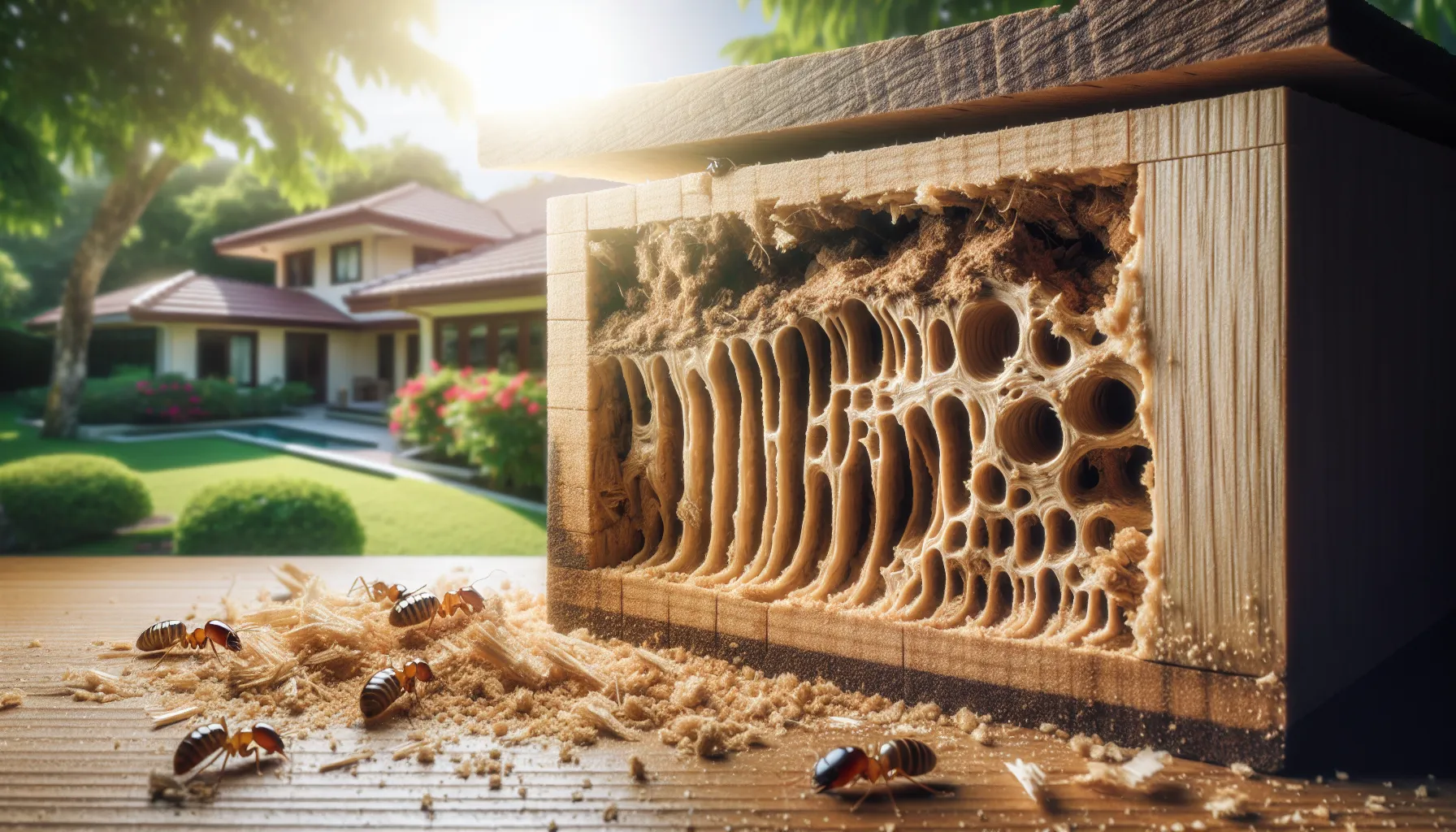
Your home’s structural integrity depends upon understanding and maintaining vigilance against various pests. Among these, termites and carpenter ants are often misidentified but exhibit unique characteristics and behavior patterns that can have significantly different implications for your property. This article will confidently and guide you through understanding these distinctions, enabling you to better protect your home.
Understanding the Basics
Identifying Features of Termites
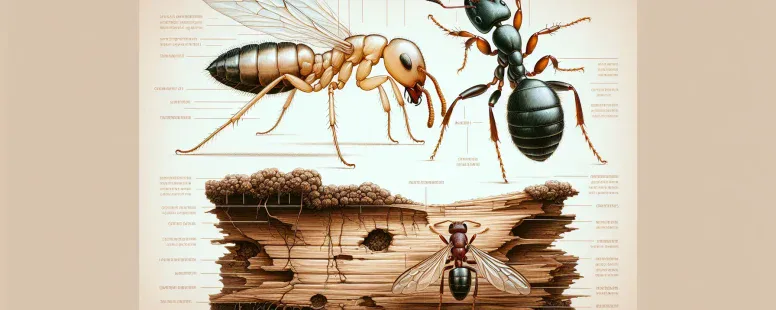
Termites, often mistaken for ants, exhibit unique characteristics such as straight antennae, uniform body shape, and translucent wings of equal size. These differences are vital for proper identification and damage prevention.
Identifying Features of Carpenter Ants
Carpenter ants, on the other hand, possess elbowed antennae, a pronounced segmented waist, and a single pair of wings larger than their hind ones. Their appearance is distinct, setting them apart from termites.
Behavioral Differences
Habitat and Nesting
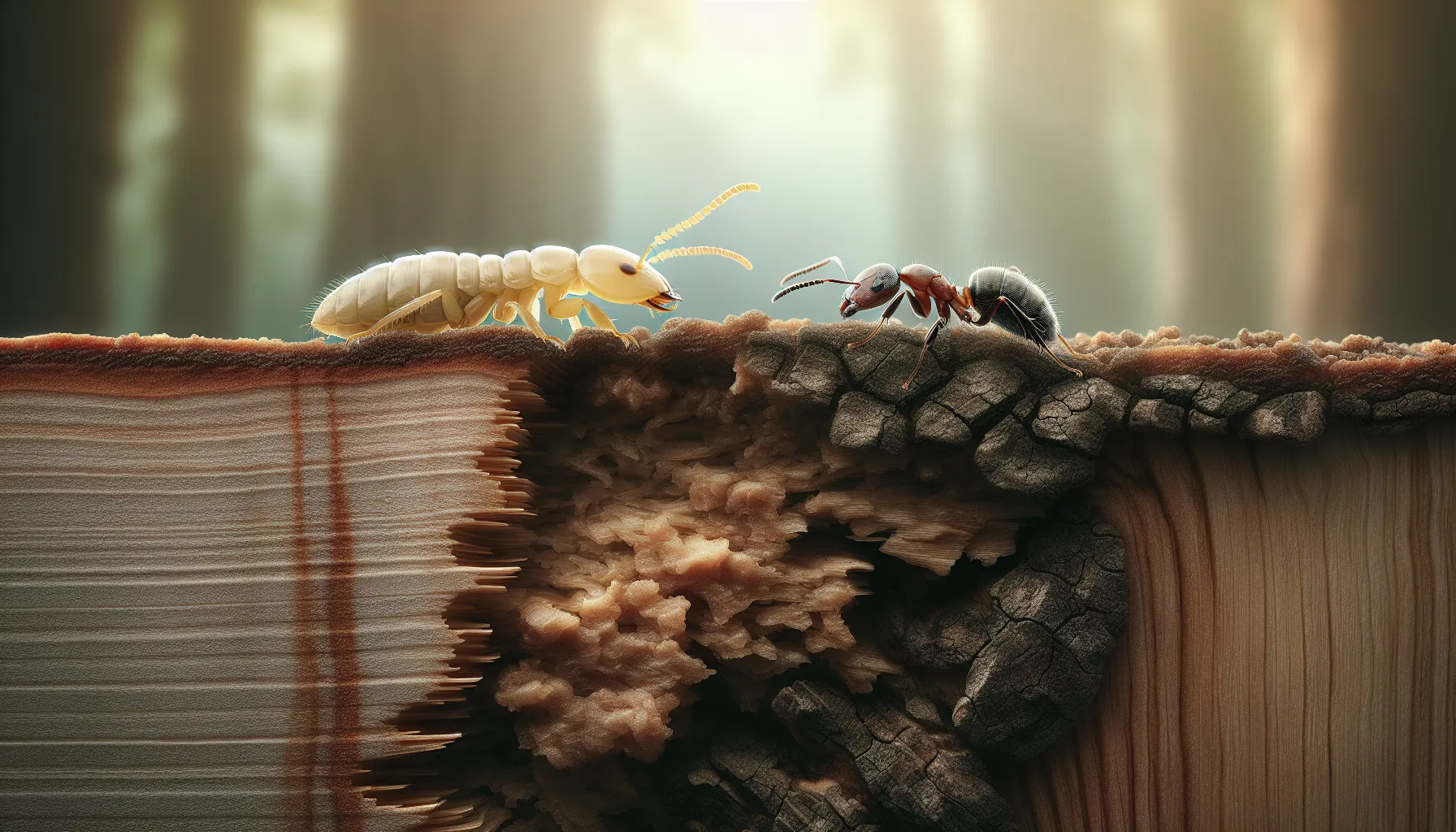
Termites prefer moist environments and construct colonies in wood. Carpenter ants, meanwhile, nest in damp or decayed wood but do not consume it during feeding, a stark contrast to termites’ habits.
Feeding Preferences
While termites feed primarily on cellulose from wood, carpenter ants sustain themselves on honeydew, other insects, and food waste. Recognizing these dietary differences aids in accurate identification and tailored pest control.
Physical Appearance Differences
Comparative Morphology
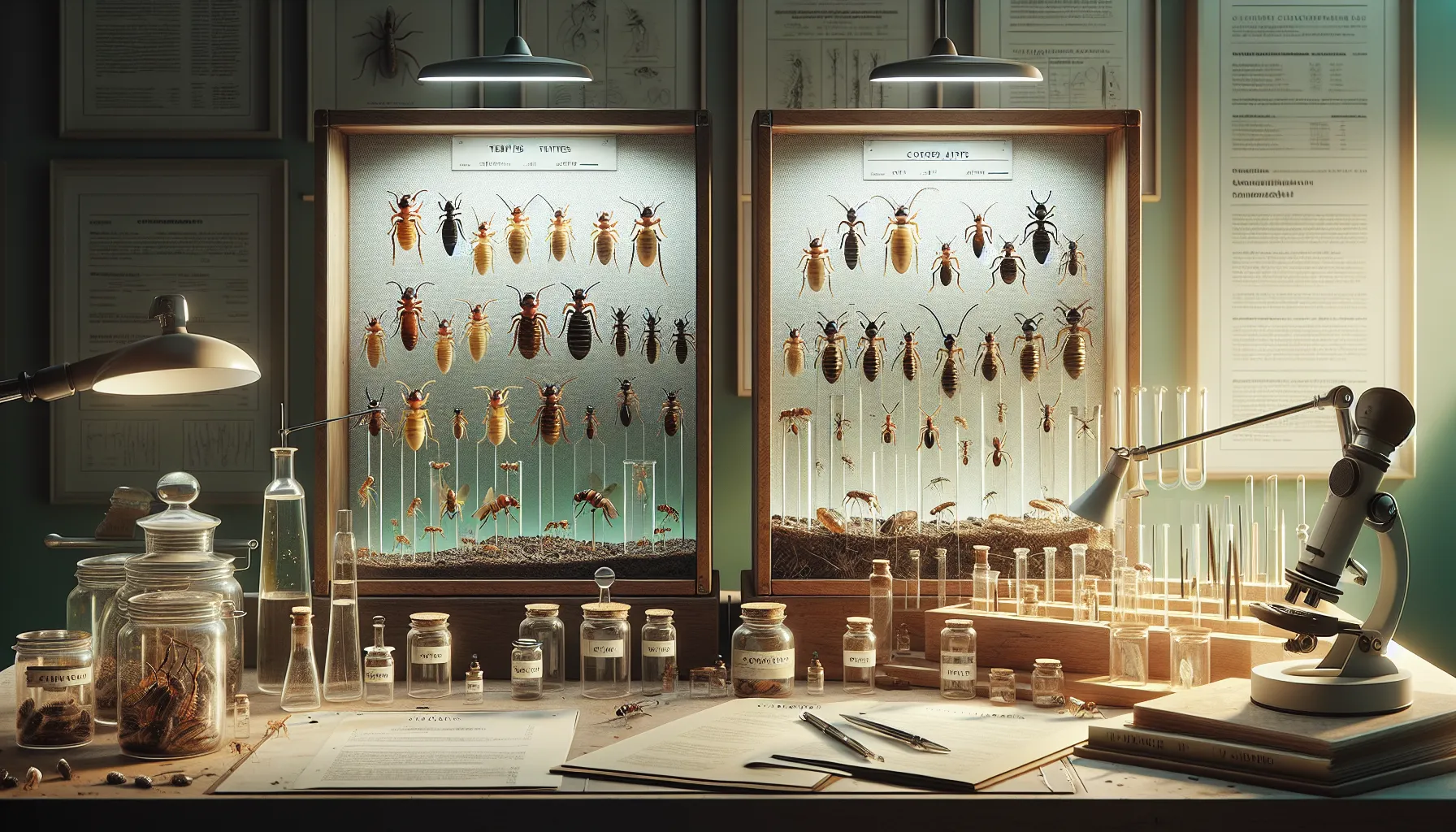
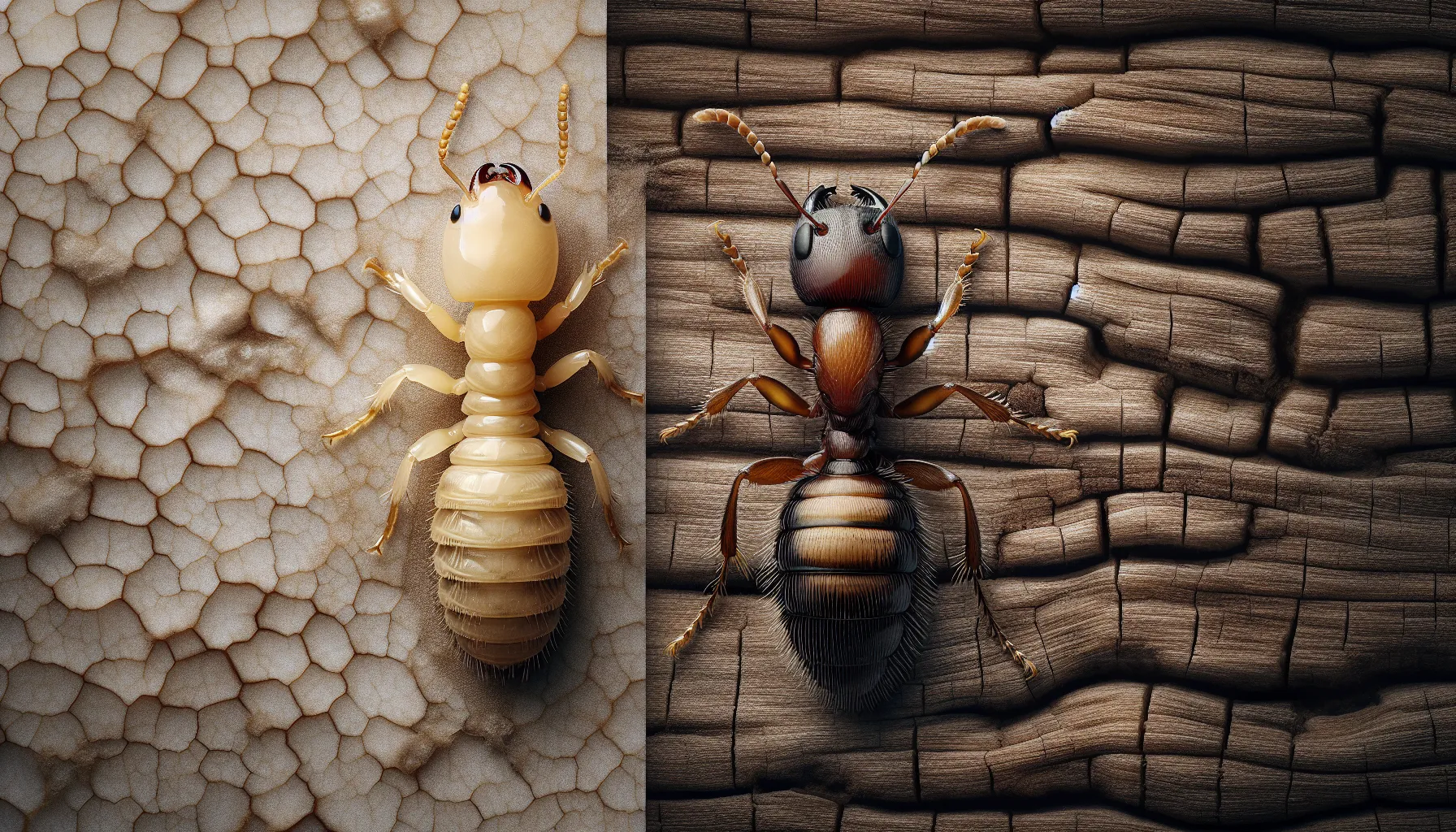
Examining the body structure of these insects reveals termites’ soft, light-colored bodies and carpenter ants’ darker and tougher exteriors. This variation can aid in distinguishing between infestations.
Distinctive Traits
Additional distinctions include the termites’ broadly-joined thorax and abdomen compared to the ant’s pinched waist, as well as behavior differences observable upon close inspection.
Why Identifying the Difference Matters
Threats to Homes
Termites are notorious for their wood-consuming habits, compromising building integrity, while carpenter ants excavate wood to build nests. Diagnosing the correct pest prevention method is critical to protecting your property.
Control and Prevention
Understanding these differences informs appropriate actions, such as professional treatment options for infestations and preventative measures including structural modifications and environmental controls.
To provide the best experiences, we use technologies like cookies to store and/or access device information. Consenting to these technologies will allow us to process data such as browsing behaviour or unique IDs on this site. Not consenting or withdrawing consent, may adversely affect certain features and functions.
Functional
Always active
The technical storage or access is strictly necessary for the legitimate purpose of enabling the use of a specific service explicitly requested by the subscriber or user, or for the sole purpose of carrying out the transmission of a communication over an electronic communications network.
Preferences
The technical storage or access is necessary for the legitimate purpose of storing preferences that are not requested by the subscriber or user.
Statistics
The technical storage or access that is used exclusively for statistical purposes.The technical storage or access that is used exclusively for anonymous statistical purposes. Without a subpoena, voluntary compliance on the part of your Internet Service Provider, or additional records from a third party, information stored or retrieved for this purpose alone cannot usually be used to identify you.
Marketing
The technical storage or access is required to create user profiles to send advertising, or to track the user on a website or across several websites for similar marketing purposes.