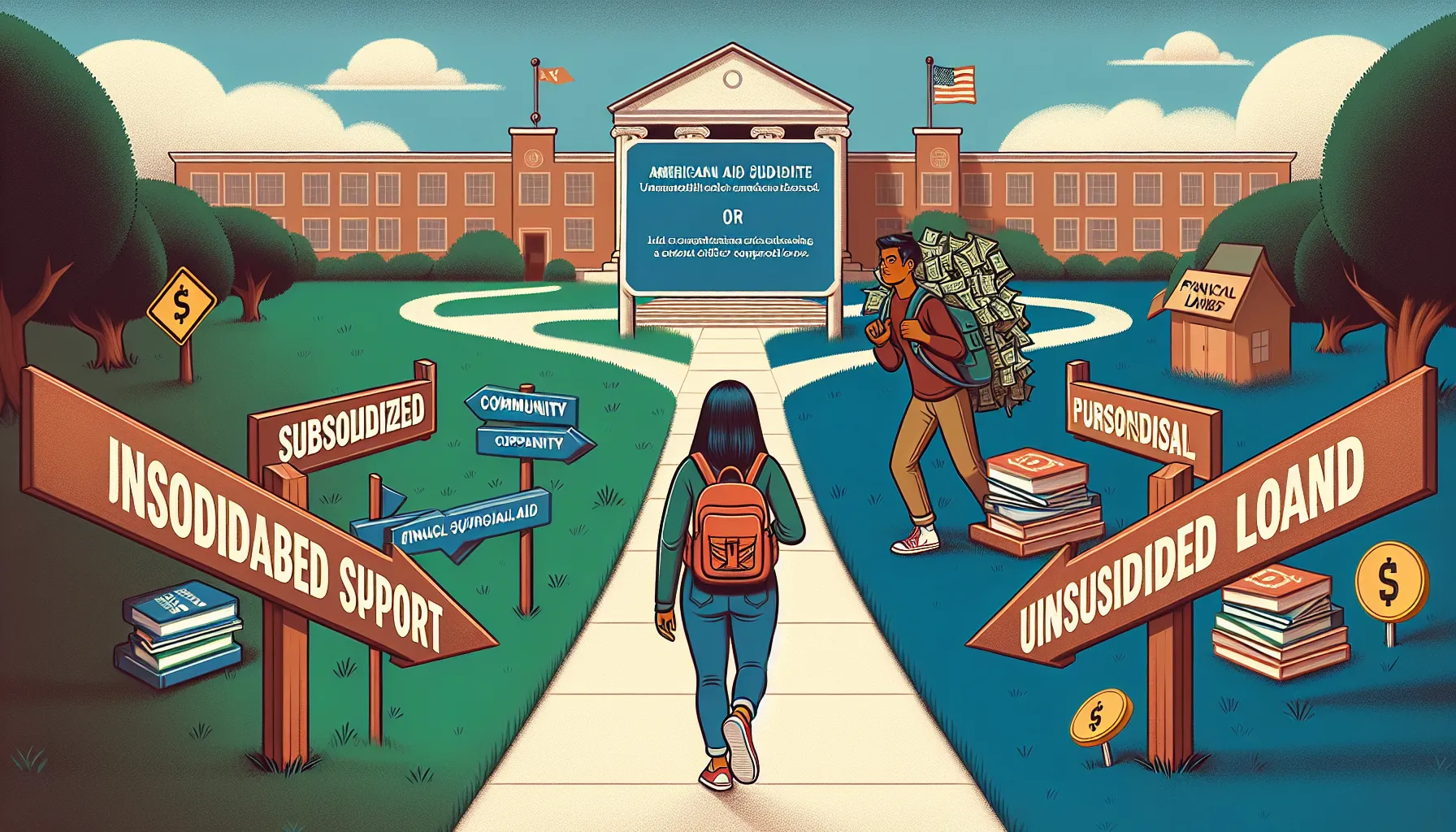
Navigating the financial intricacies of higher education can be a formidable task, particularly funding your academic aspirations. Among the array of available options, student loans often emerge as a pivotal tool for achieving educational goals. But, understanding the differences between subsidized and unsubsidized loans is crucial to ensuring sound financial decisions and effective planning. This article delves into these two loan types, equipping you with the insights necessary to make the most informed choice.
Overview of Student Loans
What Are Student Loans?
Student loans serve as financial assistance provided to individuals seeking higher education, enabling them to cover expenses such as tuition, books, and living costs. These loans bridge the gap between available resources and the overall cost of education.
Importance of Financial Aid for Education
Financial aid, including student loans, ensures that higher education remains accessible to a broader audience, fostering career advancement and personal development for individuals from diverse socioeconomic backgrounds.
Defining Subsidized Loans
Eligibility Criteria for Subsidized Loans
Subsidized loans are designed for undergraduate students with demonstrated financial need, as determined by guidelines such as the Free Application for Federal Student Aid (FAFSA) process.
Benefits and Limitations of Subsidized Loans
A key advantage of subsidized loans is the interest payment covered by the government during certain periods, such as while youre in school, during the grace period, or under deferment. But, borrowing limits are typically lower than for unsubsidized loans.
Defining Unsubsidized Loans
Eligibility and Access to Unsubsidized Loans
Unlike subsidized loans, unsubsidized loans are not dependent on financial need and are available to both undergraduate and graduate students.
Interest Characteristics of Unsubsidized Loans
Interest accrues on unsubsidized loans from the moment the funds are disbursed, potentially leading to higher long-term repayment amounts if unpaid interest accumulates over time.
Key Differences Between Subsidized and Unsubsidized Loans
Comparison Table
Feature
Subsidized Loans
Unsubsidized Loans
Eligibility
Based on financial need
Not based on financial need
Interest Payment During School
Paid by the government
Accrued and added to loan balance
Borrowing Limits
Typically lower
Usually higher compared to subsidized
Choosing the Right Loan for Your Needs
Evaluating your financial situation, career goals, and repayment plans is essential to selecting the loan that best aligns with your circumstances. Consulting with a financial advisor could provide clarity for making this decision.
Repayment Considerations and Strategies
Options and Tips for Effective Loan Management
Strategies such as selecting an appropriate repayment plan, staying informed about your loan details, and considering early payments can significantly alleviate financial stress in managing student loans.
Government Policies Impacting Loan Structures
Policy changes influence interest rates, repayment terms, and forgiveness programs, highlighting the importance of staying updated on current regulations.
To provide the best experiences, we use technologies like cookies to store and/or access device information. Consenting to these technologies will allow us to process data such as browsing behaviour or unique IDs on this site. Not consenting or withdrawing consent, may adversely affect certain features and functions.
Functional
Always active
The technical storage or access is strictly necessary for the legitimate purpose of enabling the use of a specific service explicitly requested by the subscriber or user, or for the sole purpose of carrying out the transmission of a communication over an electronic communications network.
Preferences
The technical storage or access is necessary for the legitimate purpose of storing preferences that are not requested by the subscriber or user.
Statistics
The technical storage or access that is used exclusively for statistical purposes.The technical storage or access that is used exclusively for anonymous statistical purposes. Without a subpoena, voluntary compliance on the part of your Internet Service Provider, or additional records from a third party, information stored or retrieved for this purpose alone cannot usually be used to identify you.
Marketing
The technical storage or access is required to create user profiles to send advertising, or to track the user on a website or across several websites for similar marketing purposes.