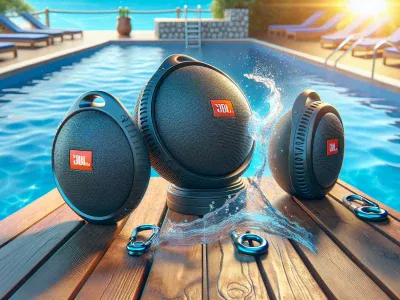
Picture holding two compact speakers in your hands, both promising powerful sound but with subtle differences that could transform your listening experience. The JBL Go 3 and the Go 3 Eco might look similar at first glance, but their unique features set them apart in ways you might not expect. Whether you’re drawn to cutting-edge design or eco-conscious innovation, these portable wonders offer something special.
Choosing between them isn’t just about aesthetics—it’s about understanding how materials, performance, and sustainability align with your lifestyle. Are you looking for vibrant audio packed into a rugged frame or a speaker crafted with an environmentally friendly twist? By exploring what makes each model distinct, you’ll discover which one truly resonates with your needs.
Overview Of JBL Go 3 And Go 3 Eco
The JBL Go 3 and JBL Go 3 Eco are both portable Bluetooth speakers designed for on-the-go use. Both models share a compact size, rugged build, and IP67 water and dust resistance, making them suitable for outdoor activities.
The JBL Go 3 features bold color options like red, black, blue, and teal. It uses durable materials like fabric and rubber to withstand wear during travel or daily use. This model delivers a punchy sound profile with enhanced bass even though its small form factor.
In contrast, the JBL Go 3 Eco focuses on sustainability. It’s made from up to 90% PCR (post-consumer recycled) plastic in its mechanical construction and incorporates recycled fabric for the speaker grille. The eco-friendly design doesn’t compromise durability or performance but appeals more to environmentally conscious users.
Both speakers offer Bluetooth v5.1 connectivity for stable streaming from your devices. Their five-hour battery life supports uninterrupted playback during short trips or casual listening sessions. While similar in core functionality, their distinction lies in material choices and environmental impact considerations.
Design And Build Quality
The JBL Go 3 and Go 3 Eco share a compact, portable design with durable construction. Both models include IP67 water and dust resistance, ensuring suitability for outdoor adventures.
Size And Weight
The dimensions of both speakers are nearly identical at approximately 3.4 x 2.7 x 1.6 inches, making them easy to carry in your hand or bag. The weight difference is minimal; the JBL Go 3 weighs around 209 grams while the Go 3 Eco is slightly lighter due to its recycled materials at approximately 208 grams.
Material And Sustainability
The primary distinction lies in material choice and environmental impact. The JBL Go 3 uses standard durable plastic and fabric mesh for a bold look with vibrant colors such as Red, Blue, Black, and more. In contrast, the JBL Go 3 Eco incorporates up to 90% post-consumer recycled plastic in its casing and 100% recycled fabric on its speaker grille. This eco-conscious design supports sustainability without sacrificing the rugged build quality or aesthetic appeal.
Both designs ensure longevity during regular usage; but, if you’re looking for an environmentally friendly option that contributes to reducing waste while maintaining premium performance, the Go 3 Eco aligns better with those values.
Sound Quality Comparison
Both the JBL Go 3 and Go 3 Eco deliver impressive audio for their size, but subtle differences in sound quality can influence your choice.
Bass And Clarity
The JBL Go 3 produces a punchy bass response that stands out for its size. Its balanced tuning ensures clarity across mids and highs, making it suitable for diverse genres like pop, rock, or electronic music. The Go 3 Eco offers similar performance with crisp highs and solid mids but slightly less pronounced bass due to minor material variations in construction. This distinction might be noticeable when playing bass-heavy tracks like hip-hop or EDM.
For example, listening to Billie Eilish’s “Bad Guy” on the Go 3 emphasizes deeper beats compared to the more neutral tones produced by the Go 3 Eco. If your preference leans towards enhanced bass depth without distortion at higher volumes, the original Go 3 might suit you better.
Volume Levels
Both models achieve comparable maximum volume levels even though their compact sizes. The JBL Go 3 reaches slightly fuller output at peak volume settings, filling small spaces effectively without losing audio fidelity. In contrast, while the Go 3 Eco matches these levels closely, its eco-friendly materials may affect resonance dynamics subtly during playback at high intensities.
Testing them side-by-side during outdoor use highlights these nuances—Go 3 maintains consistent loudness even in noisy environments like parks or beaches; meanwhile, the Go 3 Eco performs adequately indoors but exhibits marginal tonal limitations outdoors under similar conditions.
Battery Life And Charging
Both the JBL Go 3 and Go 3 Eco provide up to 5 hours of playtime on a single charge, ensuring continuous entertainment for short outings or casual listening sessions. Their battery capacities are identical, so you won’t find a difference in longevity between the two models.
Charging these speakers involves a USB-C port, allowing faster and more efficient recharging compared to older micro-USB options. A full recharge typically takes around 2.5 hours under standard conditions. If you’re planning extended outdoor activities, carrying a portable power bank can be helpful since neither model supports quick charging.
The Go 3 and Go 3 Eco aim at convenience with their compact sizes but lack features like wireless charging or battery indicators directly on the device itself. Instead, you rely on your connected device’s Bluetooth menu to monitor battery levels accurately.
While performance remains consistent across both models in this category, sustainability-conscious users may appreciate that the Go 3 Eco’s internal components reflect its eco-friendly ethos without compromising efficiency or functionality during charging cycles.
Key Features And Connectivity
Both the JBL Go 3 and Go 3 Eco share similar core features, ensuring reliable performance in compact designs. Their IP67 rating provides water and dust resistance, allowing you to use them confidently outdoors or near water without worrying about damage. Both models measure approximately 3.4 x 2.7 x 1.6 inches, making them highly portable for travel or casual use.
Bluetooth v5.1 connectivity ensures stable wireless pairing with your devices, delivering a range of up to 10 meters under optimal conditions. This compatibility lets you stream audio seamlessly from smartphones, tablets, or laptops without interruptions. But neither model includes auxiliary input options or multi-device pairing capabilities, limiting their flexibility in certain scenarios.
The USB-C charging port on each speaker supports faster recharging times compared to older micro-USB interfaces—approximately 2.5 hours for a full charge cycle—and offers universal compatibility with modern charging cables and adapters. Both speakers deliver five hours of playback on a single charge when used at moderate volume levels but do not support quick charging or power-sharing functionality.
While sound profiles differ slightly between the two models, their maximum volume output remains comparable at around 84 decibels (dB), suitable for small gatherings or personal listening environments indoors and outdoors alike.
Pricing And Availability
The JBL Go 3 is priced at around $49.95, making it an affordable option for portable audio enthusiasts. It’s widely available through major retailers like Amazon, Best Buy, and Walmart, as well as JBL’s official website. Seasonal discounts or promotional offers can sometimes lower its price, providing added value.
The Go 3 Eco is similarly priced at approximately $49.95 but stands out due to its eco-conscious design. Availability may be slightly limited compared to the standard Go 3 since it’s targeted towards environmentally conscious buyers and promoted more on select platforms emphasizing sustainability-focused products.
Both models often feature in bundle deals during sales events like Black Friday or Cyber Monday. When purchasing either speaker online, check for shipping fees or regional availability restrictions that could impact your buying decision.
Conclusion
Choosing between the JBL Go 3 and Go 3 Eco comes down to your priorities. If bold aesthetics and punchy bass are what you’re after, the JBL Go 3 stands out as a versatile option. On the other hand, if sustainability matters most, the Go 3 Eco offers an eco-friendly design without compromising on durability or sound quality.
Both models deliver impressive performance for their size at an affordable price point. Whether you value vibrant sound or environmentally conscious materials, there’s a portable speaker here to match your lifestyle.
Published: July 25, 2025 at 9:08 am by Ellie B, Site owner & Publisher
To provide the best experiences, we use technologies like cookies to store and/or access device information. Consenting to these technologies will allow us to process data such as browsing behaviour or unique IDs on this site. Not consenting or withdrawing consent, may adversely affect certain features and functions.
Functional
Always active
The technical storage or access is strictly necessary for the legitimate purpose of enabling the use of a specific service explicitly requested by the subscriber or user, or for the sole purpose of carrying out the transmission of a communication over an electronic communications network.
Preferences
The technical storage or access is necessary for the legitimate purpose of storing preferences that are not requested by the subscriber or user.
Statistics
The technical storage or access that is used exclusively for statistical purposes.The technical storage or access that is used exclusively for anonymous statistical purposes. Without a subpoena, voluntary compliance on the part of your Internet Service Provider, or additional records from a third party, information stored or retrieved for this purpose alone cannot usually be used to identify you.
Marketing
The technical storage or access is required to create user profiles to send advertising, or to track the user on a website or across several websites for similar marketing purposes.