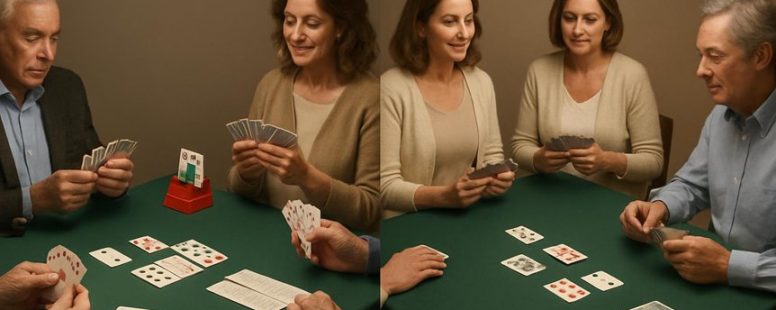
Imagine holding two similar-looking cards in your hand, but knowing exactly which game they belong to just by their feel and subtle cues. That’s the essence of distinguishing Bridge from Whist—like a detective reading clues in a cluttered room.
For parents choosing the right game for their family, understanding these differences can feel like unlocking a secret code. Surprisingly, mastering these quick identifiers not only makes game night smoother but also sharpens your overall card sense.
Ready to learn how to tell them apart in a flash? Let’s dive into what makes each game uniquely captivating.
What Are the Basic Rules of Whist?
Whist is a simple card game where players try to win as many tricks as they can. It started in England during the 1600s and became popular all over the world, especially in the Victorian era. The game is played with a regular deck of 52 cards. The main goal is to take more tricks than the other team.
In Whist, players work in pairs. Each player gets a hand of cards, and players take turns leading and following suit. To win a trick, you need to play the highest card of the suit that was led or a trump card if you have one. Trump cards are special because they beat all other suits. The rules for leading, playing cards, and winning tricks are easy to learn, making it a good game for beginners.
Some people say Whist is all about strategy, while others enjoy the social side of the game. It is a game that can be played casually with friends or more competitively in tournaments. If you want to learn how to play, start by dealing the cards, then follow the simple rules for leading and following suits, and try to win as many tricks as possible.
How Do You Play Bridge?
Bridge is a trick-taking card game played with a standard 52-card deck. It is usually played by four people in two teams of two players each. The goal is to win enough tricks to meet your team’s bid.
To play bridge, you follow several steps. First, players deal the cards evenly so everyone gets 13 cards. Next, players bid to tell their team how many tricks they think they can win and what suit will be trump. The bidding goes around the table, and players try to outbid each other to set the contract. Once the bidding is finished, the play begins. The player to the left of the dealer starts by playing a card. Players take turns playing one card each, and the highest card in the suit led wins the trick unless a trump card is played. The team that wins the most tricks in the round tries to meet their bid. If they succeed, they score points; if not, the opposing team scores.
Many people enjoy bridge because it combines skill, memory, and strategy. The game is popular worldwide and played in clubs, tournaments, and online. Some players find it challenging but fun, as it requires thinking ahead and working with your partner. However, beginners might find the bidding part confusing at first. Still, with practice, most players improve and enjoy the game more.
Some critics say bridge can be slow or complicated for new players. Others love how it keeps their mind sharp. Whether you want to play casually or compete at a high level, bridge can be a rewarding game for all ages. Do you think you would enjoy trying it?
Key Differences in Bidding and Partnership Strategies
Bridge and whist are card games that both involve bidding and working with a partner. But they approach these parts very differently.
In bridge, bidding is very detailed. Players use specific rules called protocols to tell their partners about their hands. They communicate how strong their cards are and which suits they want to play. For example, a player might say a certain bid to show they have many hearts. These signals help both players plan their moves. Because of this, bridge players need to learn lots of conventions and pay close attention to what their partner says.
In contrast, whist’s bidding is simple or sometimes not used at all. Players quickly decide what to do without much talking. They rely more on their instincts and what they see on the table. For example, a player might just play a high card to show strength or make a quick call without complicated signals. The focus is on quick decisions and clear play rather than detailed communication.
Some people say that bridge’s detailed bidding helps players understand each other better, but it can be confusing for new players. Whist is easier to learn, but it also means players need to trust their instincts more. Knowing these differences helps players choose which game fits their style best.
Gameplay Comparison: Trick-Taking and Winning Conditions
Bridge and Whist are both card games that use trick-taking, but they have different ways to decide who wins each hand. In Bridge, the main goal is to make your bid by winning a certain number of tricks. If your team says you will win seven tricks, then you try to do just that. If you succeed, your team scores points. If not, you may lose points. This means players focus on both winning tricks and working with their partner to meet the bid.
In contrast, Whist is simpler. The goal is to win more tricks than the other team overall. There is no bid to fulfill. The team that takes the most tricks in a round wins the game. Because of this, players in Whist mainly try to win as many tricks as possible without worrying about fulfilling a specific bid.
The strategies for playing cards are different too. In Bridge, players need to plan carefully and work closely with their partner to meet their bid. They often try to save their best cards for important tricks. In Whist, players focus on winning as many tricks as they can, sometimes taking risks to beat the other team’s highest cards.
Both games also require good teamwork, but the way partners coordinate varies. In Bridge, communication is more subtle because players cannot directly talk about their cards. Instead, they use signals through their plays. In Whist, players often rely on simple cues like which suit they lead with or how they play their cards.
Some players prefer Bridge because it offers more strategy and challenge. Others like Whist for its fast pace and easy rules. Both games teach important skills like planning and teamwork, but they do so in different ways. Whether you want to aim for specific goals or just try to win the most tricks, these games give you a fun way to test your card skills.
Trick-Taking Mechanics
Trick-taking mechanics are the main way players compete and decide who wins in card games like Bridge and Whist. These rules are different in each game. How the cards are dealt, shuffled, and organized affects how the game plays out.
In Whist, the deal is simple. Each player gets the same number of cards, and the game is played in rounds called tricks. The player who plays the highest card in the suit that was led wins the trick. Shuffle and deal the cards fairly so everyone has an equal chance. The order of play matters because players must follow the suit if they can. If they can’t, they can play any card. Winning tricks depends on which card is the highest in the suit led, making strategy important.
Bridge adds more rules. Before playing, players bid to decide if there is a trump suit—this is a suit that beats all others. The dealer shuffles and deals the cards, then players bid to declare their plans. Once the trump suit is set, players try to win tricks by playing the highest card in the suit led or a trump card if they can. Following the suit is still important, but playing a trump can change who wins the trick. The way the game is organized makes Bridge more complex than Whist, with bidding and declaring trump suits affecting each round.
Both games rely on shuffling to make sure the deal is fair, but the way the deck is organized also impacts how players plan their moves. In Whist, the game is straightforward, and winning depends on playing the highest card in each trick. In Bridge, players need to think about bidding and trump suits, making the game more strategic.
Winning Objectives
Winning objectives in Bridge and Whist show how each game focuses on different ways to succeed.
Bridge is a trick-taking game that started in the 19th century. It was influenced by Victorian social culture and emphasizes teamwork and accurate bidding. The main goal in Bridge is for a team to meet their bid or win more tricks than the other team. To do this, players communicate carefully through bidding and plan their moves strategically. For example, players might bid to show how many tricks they think their team can win. If they succeed, they earn points. If not, the other team may win. Bridge is often played by serious players who enjoy complex strategies and partnership communication.
Whist, on the other hand, comes from 18th-century England. It is simpler and focuses on winning the most tricks in each round. The goal is for an individual or team to take as many tricks as possible. Unlike Bridge, Whist does not have complicated bidding. It is more about skill and luck in playing cards. Players try to remember which cards have been played and plan their moves to beat their opponents. Many people played Whist casually in social gatherings, making it easier to learn and play.
Some might prefer Bridge because it challenges players to think carefully and work with a partner. Others like Whist because it is straightforward and fun for casual play. Both games are about trick-taking but differ in how players work together or compete alone. While Bridge emphasizes partnership and strategy, Whist values simple skill and chance. Understanding these differences helps players choose which game suits their style best.
Card Play Strategies
Bridge and Whist are both trick-taking card games, but they play very differently.
Bridge is a more complex game that focuses on bidding and working with a partner. Before the play begins, players bid to show how strong their hands are and what they want to do. The goal is to win a set number of tricks based on the bid. During the game, players count cards and send signals to their partner through their bids. This helps them plan their moves and try to meet their contract. Think of Bridge as a game of strategy and communication, like a team planning a secret mission.
Whist is simpler and more social. It is played to win as many tricks as possible just by playing the highest card in each round. There is no bidding or partnership communication involved, making it easier for new players to learn. Whist is often played at family gatherings or parties, focusing on fun and social interaction rather than deep strategy.
Both games teach players how to read cards and think ahead, but Bridge requires more skill in counting and signaling. Whist, on the other hand, relies more on luck and playing your cards well. If you want a game that challenges your thinking and teamwork, Bridge is a good choice. If you want to enjoy a simple, friendly game with friends, Whist works great.
Scoring in Bridge vs. Whist: How Do They Compare?
Scoring in Bridge and Whist works in very different ways. In Bridge, players earn points based on the bids they make and whether they complete their contracts successfully. For example, if a team bids to win six tricks and does, they get points for that contract. If they fail, they usually lose points instead. Sometimes, special bonuses are added for winning certain bids or making small slams.
In Whist, the main goal is to win tricks, and players earn points for each trick they take. When a team wins most of the tricks in a round, they get points. Unlike Bridge, there are no bids or contracts—just straight wins and losses.
Understanding these differences helps players know how their choices affect their score. For example, in Bridge, bidding wisely can lead to big scores, but risking too much can backfire. In Whist, focusing on winning tricks without overbidding is key.
Some players prefer Bridge because it offers more opportunities for strategy and higher scores, but it can also be more complicated. Others like Whist for its simplicity and quick scoring. Knowing how each game scores can help you decide which one to play.
Scoring Methods Overview
Scoring in bridge and whist is very different, and this shapes how players play each game. In bridge, the scoring system focuses on bidding skills and completing contracts. Players earn points for each trick they win and get extra bonuses for special achievements. For example, if a team bids and makes a contract, they get points, and if they win enough tricks, they earn more points. This system rewards players for planning and accuracy.
In contrast, whist scores are much simpler. The main goal is to win as many tricks as possible during each hand. Each trick a player wins adds to their score. There are no complex bonuses for contracts like in bridge. This makes whist more about quick, casual play and less about strategy.
The history of these games explains their scoring methods. Bridge started in the 19th century in Europe, and its points system reflects its focus on contracts and bidding. Whist, on the other hand, comes from a social setting where winning tricks was the main goal. Over time, both games changed their scoring rules. For example, bridge added bonuses to encourage certain plays, and penalties to discourage mistakes. These changes affected how players plan their moves.
Some people prefer bridge because its detailed scoring makes the game more competitive. Others like whist for its simplicity and social feel. Both methods show where each game came from. But it’s good to remember that the scoring system in bridge can sometimes be confusing for beginners, and that whist’s straightforward way might not be enough for serious players.
Point Calculation Differences
Bridge and whist are card games that score differently. Bridge’s scoring is more detailed, while whist keeps things simple.
In bridge, points are awarded for making bids and winning tricks. For example, if a team bids to win six tricks and does, they get points. Bonuses are also given for special contracts, like bidding and making a grand slam. This makes scoring in bridge more precise and encourages players to communicate well and plan their moves carefully. How well partners work together affects their score a lot.
In whist, scoring is much easier. Players get one point for each trick they win. There are no bids or contracts. The game is straightforward, so players focus on winning tricks without worrying about detailed scoring rules.
Card shuffling has a different impact on each game. In bridge, shuffling influences how well partners can communicate and plan their bids. If the cards are shuffled differently each time, it can change the game’s outcome. In whist, shuffling is less important because the game is about taking tricks without much strategy involved.
When and Where Do People Play These Card Games?
People usually play Bridge and Whist in many different places and situations. The most common are at home with family, at community centers during social events, or in clubs that host tournaments. Sometimes, players participate in formal championships, which are big, organized competitions. Many people also enjoy playing online with friends, especially during free time or on weekends.
Whist has been played since the 17th century, and it was very popular in Britain as a social game. Today, Whist is less common but still played for fun and tradition. Bridge, on the other hand, started in the early 20th century and became a popular game for both casual players and serious competitors around the world. It is often played at clubs, in tournaments, or even in online communities.
Knowing where and when these games are played helps us understand how they have been part of social life for centuries. For example, family game nights can be a fun way for relatives to spend time together, while tournaments attract serious players looking to compete. Whether played casually or professionally, these card games have a long history of bringing people together across different settings.
Is One Game Easier for Kids to Learn Than the Other?
The easiest game for kids to learn is usually Whist. Many kids find it simpler because it has fewer rules and less focus on tricky strategies. This makes the game more fun and less confusing for beginners. Kids can pick up the basics quickly, which helps them stay interested and feel confident. For example, a child might start playing Whist and soon enjoy chatting with friends while playing.
On the other hand, Bridge is more complicated. It involves detailed bidding and planning, which can be hard for kids just starting out. Some children might find it frustrating or confusing at first. However, if they keep practicing, they can learn the more advanced parts of Bridge later on.
How Do Modern Variations Change the Classic Rules?
Modern variations change the classic rules of Bridge and Whist by adding new bidding strategies and technology. These changes make the game more exciting and sometimes more unpredictable. For example, some players now use electronic devices to keep track of their bids or cards, which can speed up the game. This also means players can join games from anywhere, like playing online with friends or strangers.
One way these changes affect the game is through new bidding rules. Traditional bidding was simple, but now players might use special calls or signals to share more information. This can help teams work better together. However, it can also confuse new players who are used to the old ways. Players should decide if they want to stick to classic rules or explore these new methods.
Another change is the use of electronic tools. Some apps and online platforms let players practice or play with others around the world. While this makes it easier to find opponents and learn faster, it can also take away some of the face-to-face fun of playing with friends in person. Plus, relying on technology might make players less skilled at reading their opponents’ signals without devices.
In short, these modern variations make Bridge and Whist more flexible and accessible. But players should be aware that they also change how the game is played and understood. Whether you prefer the classic rules or these new styles, both have their own benefits and challenges.
New Bidding Strategies
New bidding strategies are ways players change how they communicate their hands during bridge. These new methods make the game more flexible and fun. They build on the old rules but add new ideas to improve how players work together.
One key idea is using conventional bids. These are special signals that tell your partner more about your hand, beyond normal bids. For example, you might bid a certain suit to show you have many cards in that suit. This helps your partner understand your hand better.
Another common strategy is the Stayman and Blackwood conventions. Stayman helps find a good fit in a suit, while Blackwood shows if you have key cards like aces. These tools help players plan their moves better, especially in tricky situations.
Negative doubles are used to show that you have a good hand with a certain distribution of cards. They can make your team stronger by giving more information to your partner. Preemptive bids are aggressive moves that make it harder for opponents to communicate. They can confuse your rivals and help your team set the tone early. Cuebids are bids used to clarify or challenge a partner’s hand, helping both players understand each other’s strength.
These strategies reflect how different cultures and times have shaped bridge. They make the game more interesting by adding new ways to talk about your hand. However, some players may find these new bids confusing at first. Also, overusing certain bids can lead to misunderstandings.
Electronic Gameplay Impact
Electronic gameplay has changed how people play bridge. It is a way to play the game using computers, apps, and online sites. This makes it easier for players to practice and join games from anywhere. Online tournaments are now common, giving players around the world a chance to compete in real time.
Digital tools often include features like automatic scoring and real-time bidding analysis. These tools can help players make better decisions during the game. For example, a player can see how their bids compare with others instantly. This can make the game faster and more exciting. But some critics say it might make the game less about memory and intuition.
Playing bridge on computers or apps can also help players learn new strategies. They can practice more often and try different approaches without needing a partner in person. However, some players worry that too much reliance on technology might hurt traditional skills.
Tips for Parents: Teaching Kids the Differences Between Bridge and Whist
Teaching kids the differences between Bridge and Whist is easier when you start with what makes each game special. Here is what you should know:
What is Bridge?
Bridge is a card game that focuses on bidding and working with a partner. Players try to win tricks based on the bids they make. This game has a modern history and is popular in clubs and tournaments. When teaching kids, explain that Bridge uses a lot of talking and planning, which makes it more complex. For example, players bid to tell their partners how many tricks they think they can win together.
What is Whist?
Whist is an older and simpler game. It does not have much bidding, and players try to win tricks with the cards they are dealt. Whist is easier for beginners and is good for kids learning the basics of card play. Think of Whist as a straightforward game where everyone just focuses on winning tricks without much planning or talking.
How to Teach the Differences:
Show kids the different rules. Use pictures or diagrams of the game setups. For example, point out how in Bridge, players bid, but in Whist, they just play their cards.
Explain the history. Tell fun stories about how Whist was played a long time ago and how Bridge became popular in the 20th century.
Play both games. Let kids try them out so they can see how Bridge’s bidding and teamwork differ from Whist’s simple trick-taking.
Use visual aids to compare the card arrangements. For instance, show how the cards are dealt in each game and what the objectives are.
Tips for Success:
Remember, kids learn best when they get to try things out. Start with simple rules and gradually introduce more details. Be patient, because mastering these games takes time. You can even turn learning into fun by telling stories about famous players or sharing interesting facts about the games’ origins.
Both games are great for developing thinking skills and learning to work with others. Just keep the lessons simple, and your kids will soon see the differences and enjoy playing both!
Which Card Game Is Right for Your Family?
Choosing the right card game for your family depends on your kids’ ages, interests, and experience levels. If you want a game that is easy for beginners, Whist might be the best choice. It started in 17th-century England and is simple to learn. It is great for younger children or those new to card games because it focuses on basic rules and less strategy. On the other hand, Bridge was created in the early 20th century and has more strategy and skill involved. It is influenced by modern social trends and offers a more challenging experience for older kids or adults who enjoy thinking ahead and planning their moves.
Knowing the history of these games can also make playing more interesting. For example, Whist was played in England hundreds of years ago, and it was very popular among the upper classes. Bridge, however, grew in popularity later and became a social activity in clubs and tournaments. If your family loves history or tradition, learning about these origins can turn playing into a fun learning moment.
Another thing to think about is how patient your kids are and whether they want a game with lots of rules or something more straightforward. If your children are young or just want a quick, fun game, Whist is a good pick. But if they are older and like a challenge, Bridge can be very rewarding and keeps players thinking.
Some families might worry that Bridge is too complicated or takes too long to learn. It does require more practice and understanding of bidding and strategies. Meanwhile, Whist is faster and easier, making it perfect for casual play or for kids learning the basics of card games.
In the end, both games have their strengths. Whist is simple, quick, and great for beginners. Bridge is richer in strategy and better for players who want a deeper challenge. Choosing the right game depends on your family’s interests and what kind of fun you want to have together.
To provide the best experiences, we use technologies like cookies to store and/or access device information. Consenting to these technologies will allow us to process data such as browsing behaviour or unique IDs on this site. Not consenting or withdrawing consent, may adversely affect certain features and functions.
Functional
Always active
The technical storage or access is strictly necessary for the legitimate purpose of enabling the use of a specific service explicitly requested by the subscriber or user, or for the sole purpose of carrying out the transmission of a communication over an electronic communications network.
Preferences
The technical storage or access is necessary for the legitimate purpose of storing preferences that are not requested by the subscriber or user.
Statistics
The technical storage or access that is used exclusively for statistical purposes.The technical storage or access that is used exclusively for anonymous statistical purposes. Without a subpoena, voluntary compliance on the part of your Internet Service Provider, or additional records from a third party, information stored or retrieved for this purpose alone cannot usually be used to identify you.
Marketing
The technical storage or access is required to create user profiles to send advertising, or to track the user on a website or across several websites for similar marketing purposes.