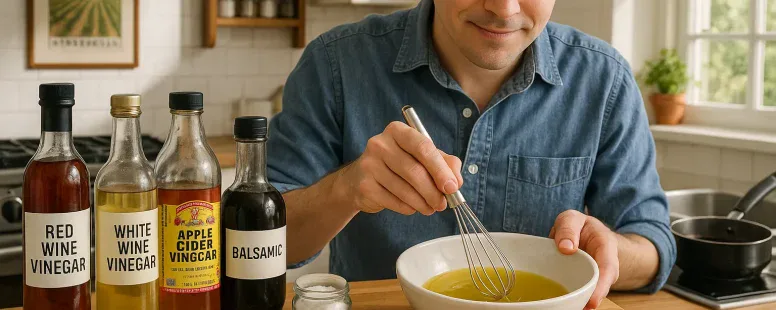
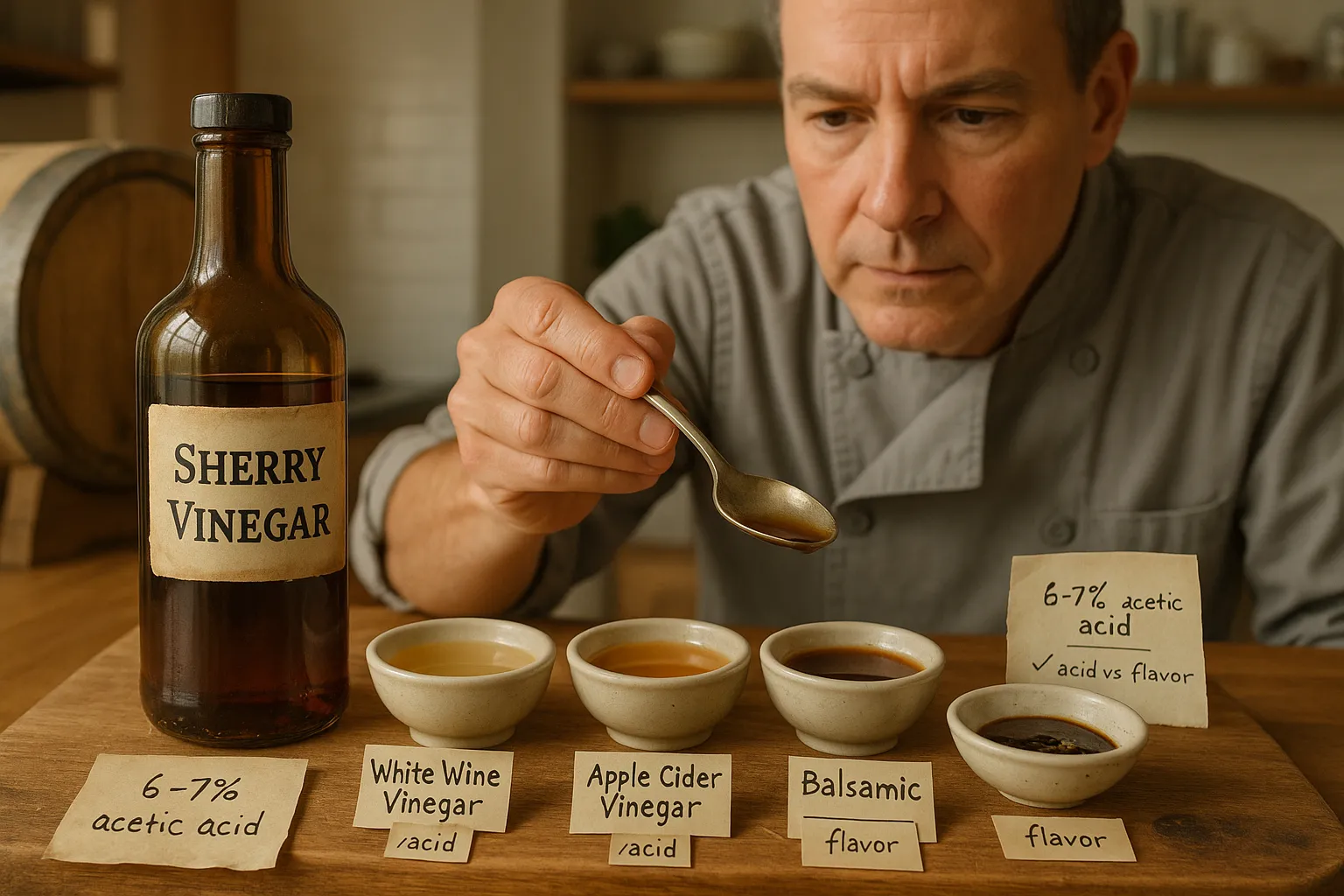
Sherry vinegar brings a nutty, toasted tang that can lift a simple salad or sharpen a rich sauce. You know the taste: a warm, slightly sweet acidity with a savory, almost umami finish, like a whispered note of toasted almonds and old oak. When a recipe calls for sherry vinegar and your bottle sits empty, you don’t need to stop cooking. This guide shows you the best substitute for sherry vinegar, with clear swaps, exact ratios, and when to choose non‑vinegar blends. You’ll learn how to match acidity, sweetness, and savory depth so your dish keeps its intended character.
What Makes Sherry Vinegar Unique
Fact: Sherry vinegar comes from fortified wine made in Jerez, Spain, and it ages in oak, which gives it toasted, nutty notes and moderate acidity. Sherry vinegar has about 6–7% acetic acid, similar to most culinary vinegars, but its flavor contains more complex esters and aged wood compounds. In short, you get acid + sweet + toasted umami.
Sherry vinegar often tastes less sharp than white vinegar and less sweet than balsamic. Picture tasting a dry sherry, that savory backbone and dried-fruit hint carries into the vinegar. Use this as your reference point when you look for substitutes.
Quick practical note: If a recipe relies on sherry vinegar for acidity only (a deglaze, for example), you can prioritize matching acid strength. If it relies on flavor (a dressing or gastrique), you must mimic sweetness and umami as well. Anticipate this choice before you pick a swap.
Quick Replacement Guide: Ratios and Immediate Swaps
Fact: Use a direct ratio and adjust for taste, start conservative. For most recipes you can substitute another vinegar 1:1, then tweak.
1:1 swap: Red wine vinegar or white wine vinegar usually: start equal parts and taste.
If the substitute is sweeter (balsamic), use 3/4 the amount and add a teaspoon of lemon or a pinch of salt per tablespoon to counterbalance.
If the substitute is sharper (apple cider or plain white vinegar), use 3/4 the amount and add a small teaspoon of honey or maple syrup per tablespoon to soften.
Examples you can use right now:
Salad dressing: start with 3/4 red wine vinegar + 1/8 tsp honey per tablespoon to mimic sherry’s softness.
Sauce deglaze: white wine vinegar 1:1 works: finish with a knob of butter for richness.
Marinade: apple cider vinegar 3/4 + 1/8 tsp soy sauce per tablespoon adds fruity acid and umami.
Anticipate adjustments: Always taste after mixing. Vinegars vary by brand (Heinz, Colavita, Bragg), so you must adjust acidity and sweetness based on the bottle you hold.
Top Vinegar Substitutes (Practical Choices and How They Compare)
Fact: Some vinegars match sherry vinegar more closely than others because of similar tannin and aging notes. Below are practical options with strengths and limits.
Red Wine Vinegar, The Closest All-Purpose Swap
Red wine vinegar delivers bright acidity and a light tannic bitterness that often stands in for sherry vinegar. It keeps savory balance and works in dressings, pan sauces, and vinaigrettes. Use 1:1 to start, then add 1/8–1/4 teaspoon honey per tablespoon if you want more sweetness. Red wine vinegar from brands like Colavita or Pompeian will vary: taste first.
Balsamic Vinegar, Sweetness With Depth (When It Works)
Balsamic brings sweetness and molasses-like depth. It can mimic the aged notes of sherry vinegar but often adds too much sugar. Use 3/4 the amount called for and reduce added sweeteners in the recipe. Balsamic works well in slow-roasted vegetable glazes, some dressings, and reductions, but it can overwhelm light seafood or delicate vinaigrettes.
White Wine Vinegar, Bright and Neutral Alternative
White wine vinegar gives clean acidity without the red-wine tannins. It suits sauces, pickles, and recipes where color matters. Use 1:1 and add a small pinch of sugar or a few drops of soy sauce if you need extra depth. This is a safe pantry swap for most cooked applications.
Apple Cider Vinegar, Fruity and Accessible Option
Apple cider vinegar (ACV) has a fruity backbone and a slightly milder acidity than plain white vinegar. It’s common in home pantries (Bragg is popular). Use ACV at 3/4 to 1:1 and add a dash of Worcestershire or soy sauce for umami when making marinades or hearty dressings. Avoid ACV in delicate seafood ceviche or where a dry, nutty note is essential.
Rice Vinegar, Milder, Cleaner Acid for Delicate Dishes
Rice vinegar is milder and less aggressive. Use it in light dressings, sushi rice, and when you don’t want to mask subtle flavors. It lacks oak-aged depth, so add 1/8 teaspoon of toasted sesame oil or a few drops of dark soy per tablespoon to hint at the aged character. Rice vinegar suits salads and seafood best.
Non‑Vinegar Alternatives and Blends (When Vinegar Isn’t Available)
Fact: You can recreate sherry vinegar’s profile using blends of other pantry items when vinegar is absent.
Wine reduction: Simmer 1/2 cup dry sherry or dry white wine until syrupy to concentrate flavor: add 1–2 tablespoons of apple cider or white wine vinegar per cup of reduced wine to add acid. This gives authentic sherry notes if you have the wine.
Lemon juice + soy + sugar: Mix 3/4 lemon juice, 1/8 soy sauce, and 1/16 honey per tablespoon to add acid, salt, and slight sweetness. This blend works for dressings in a pinch.
Balsamic + white wine vinegar: Combine 2 parts white wine vinegar with 1 part aged balsamic to balance sharp acid and aged sweetness. Use 3/4 of the resulting mix compared to the sherry vinegar amount.
Real-life example: A chef I worked with once used a reduced Pedro Ximénez (PX) sherry and a splash of white wine vinegar to finish a pan sauce: the result echoed sherry vinegar closely. If you have sherry wine, use it, it yields the most faithful substitute.
How To Adjust Flavor: Balancing Acidity, Sweetness, and Umami
Fact: Adjust three axes, acidity, sweetness, and umami, to approximate sherry vinegar.
Start with acidity: taste for brightness first. If the substitute feels flat, add a 1/4 teaspoon of vinegar or lemon juice per tablespoon.
Add sweetness sparingly: sherry vinegar often has a faint sweetness. Use honey, maple syrup, or a pinch of sugar. A little goes far: add small increments and retaste.
Introduce umami for depth: a drop of soy sauce, fish sauce, or a pinch of miso can create the savory finish that aged sherry provides. Use 1/8 teaspoon soy sauce per tablespoon as a guide.
Practical tweak examples:
For dressings: start with red wine vinegar 1:1, add 1/8 tsp honey and 1/16 tsp soy sauce per tablespoon, whisk, taste.
For sauces: deglaze with white wine vinegar 1:1, finish with a small knob of butter and 1/4 tsp Worcestershire to round flavors.
Warning: Overuse of soy or fish sauce will color the dish and may overpower delicate ingredients. Add slowly and taste as you go. These adjustments mimic aging compounds and toasted notes that sherry vinegar contains.
Choosing the Right Substitute by Dish: Salads, Sauces, Marinades, and Baking
Fact: The best substitute depends on the dish category. Match function first, flavor second.
Salads and vinaigrettes: Red wine vinegar is your go-to. It provides structure and pairs well with olive oil and mustard. If you want a softer note, use 3/4 red wine vinegar plus a touch of honey.
Sauces and pan reductions: White wine vinegar or a wine reduction (see blends) works best. These provide clean acid that reduces well and carries other flavors. Add butter or a splash of soy for depth when finishing.
Marinades: Apple cider vinegar or a 1:1 mix of ACV and red wine vinegar gives fruit-forward acid and mild tannin to tenderize proteins. Add garlic, soy, and oil. Use less acid if marinating long: too much will mush the meat.
Baking and desserts: Use balsamic sparingly in fruit compotes or glazes: its sweetness enhances berries and roasted fruit. Use 1/2–3/4 the amount called for and reduce added sugars slightly. Avoid sharp vinegars in delicate cakes.
Seafood and light dishes: Rice vinegar and white wine vinegar are safest. They keep the seafood bright and don’t mask the natural flavors.
Final tip: When in doubt, start with less. You can always add more acid or sweetener. Taste at each step, and you’ll keep control of the final flavor profile.
To provide the best experiences, we use technologies like cookies to store and/or access device information. Consenting to these technologies will allow us to process data such as browsing behaviour or unique IDs on this site. Not consenting or withdrawing consent, may adversely affect certain features and functions.
Functional
Always active
The technical storage or access is strictly necessary for the legitimate purpose of enabling the use of a specific service explicitly requested by the subscriber or user, or for the sole purpose of carrying out the transmission of a communication over an electronic communications network.
Preferences
The technical storage or access is necessary for the legitimate purpose of storing preferences that are not requested by the subscriber or user.
Statistics
The technical storage or access that is used exclusively for statistical purposes.The technical storage or access that is used exclusively for anonymous statistical purposes. Without a subpoena, voluntary compliance on the part of your Internet Service Provider, or additional records from a third party, information stored or retrieved for this purpose alone cannot usually be used to identify you.
Marketing
The technical storage or access is required to create user profiles to send advertising, or to track the user on a website or across several websites for similar marketing purposes.