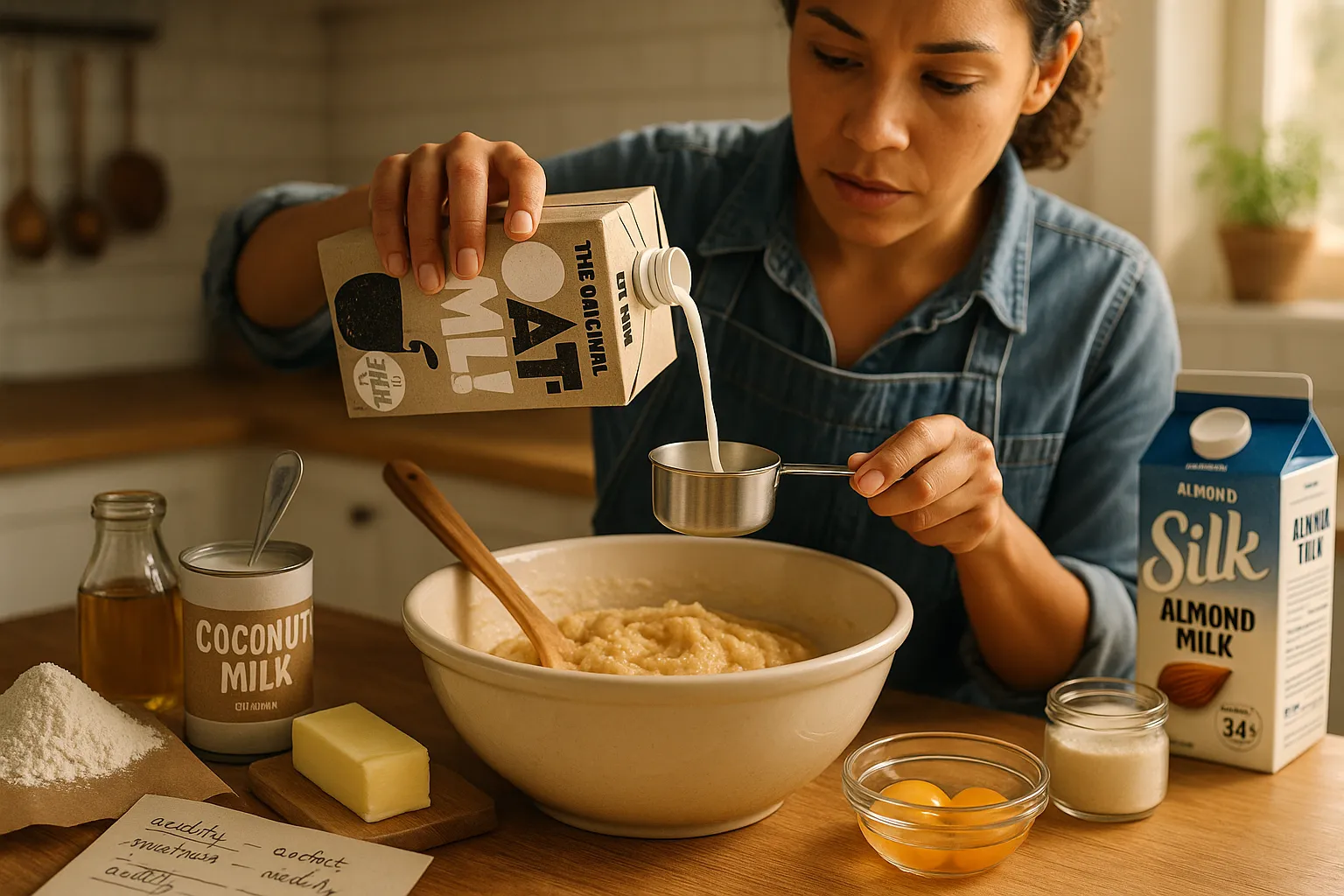
You can swap milk in most baking recipes without wrecking texture or flavor. When you reach for a milk substitute, you want predictable results: the right moisture, enough fat, and a flavor that fits the bake. This guide shows practical, tested swaps, plant milks, cultured dairy alternatives, and concentrated creams, so you can choose the best substitute for milk in baking whether you’re dairy-free, out of milk, or chasing a specific texture. Expect clear rules, quick conversions, and honest trade-offs that help you make confident changes at the mixing bowl.
Why You Might Need a Milk Substitute
Fact: people choose milk substitutes for health, allergy, diet, taste, or convenience. You might run out of milk mid-recipe. You might avoid dairy for lactose intolerance or a vegan diet. Or you might want to alter fat and flavor, use coconut milk for richness or oat milk for milder taste.
Context: Milk adds liquid, protein, fat, and sugar (lactose) to baked goods. Each element affects structure and browning. When you change milk, you change all those variables. Think of milk as a multi-part ingredient: a bottle that carries both chemistry and flavor. If you swap it, match the most important property for your recipe. For a rich custard, match fat and proteins. For a loaf of bread, match hydration and gluten support.
Follow-up: If you wonder whether a substitute will make cookies spread or cakes sink, this article answers those questions in each section below. We’ll name brands like Oatly and Silk as examples, and show how to alter measurements, acidity, and sweetness so your bake still shines.
Key Considerations When Choosing a Substitute
Insight: pick a substitute by prioritizing the recipe’s functional need. Cakes need tenderness, breads need hydration, custards need proteins and fat.
Start with a checklist: liquid volume, fat content, protein level, sweetness, acidity, and flavor. Almond milk is low-fat and low-protein: it keeps crumb light but can thin batter. Soy milk provides protein similar to cow’s milk: it helps structure in cakes. Coconut milk gives fat and richness: it adds coconut aroma. Evaporated milk concentrates milk solids: it boosts body. Sweetened plant milks change sugar calculations.
Practical rule: when in doubt, replace milk 1:1, then tweak. Make small adjustments: reduce oil if your substitute is richer, add a tablespoon of oil or melted butter if your substitute is thinner. If your substitute is sweetened, reduce recipe sugar by one to two tablespoons per cup used.
Named entities: Oatly (oat milk), Silk (soy/almond blends), Thai kitchen (canned coconut milk) often come up in tests. Baker resources like King Arthur Flour recommend matching fat and protein for sensitive recipes like custards and chiffon cakes.
Top Dairy-Free Milk Alternatives and When To Use Them
Fact: plant milks vary widely: each suits different bakes. Below you’ll find the best match for common baking tasks and exactly when to use them.
Almond Milk: Best Uses, Texture, And Flavor Adjustments
Insight: almond milk works well in cakes, muffins, and quick breads where you want a light crumb. It has low fat and low protein.
Use: Replace 1:1 for milk in cakes, pancakes, and muffins. For richer custards or crème brûlée, add 1–2 tablespoons of melted butter per cup to compensate for missing fat. Expect a subtle nutty note: for delicate cakes that require neutral flavor, choose blanched almond milk or a neutral plant milk.
Tip: unsweetened almond milk keeps sugar predictable. Sweetened almond milk will make batters sweeter and can cause faster browning.
Soy Milk: Protein, Structure, And When It Mimics Cow’s Milk
Insight: soy milk most closely matches cow’s milk in protein and behavior. Use it when structure matters, like in yeast breads and custards.
Use: Replace 1:1 in most recipes. For custards and puddings, soy milk sets more like dairy because of its protein. For bread, it supports gluten and crumb. Choose unsweetened soy milk to avoid adding sugar.
Warning: some soy brands (Silk) add emulsifiers or stabilizers that slightly change texture: test first if you bake often. Flavor is mild but can be beany in some low-quality brands, opt for a neutral, barista-style soy if flavor matters.
Oat Milk: Moisture Retention And Browning Benefits
Insight: oat milk boosts browning and moisture retention thanks to natural sugars and beta-glucans. It often yields a nice crust on breads and caramelized edges on cookies.
Use: Replace 1:1 for most bakes, especially in breads, muffins, and cookies. Oat milk helps retain crumb moisture for days. Oatly’s barista versions have added fats and emulsifiers that mimic milk even better.
Note: oat milk is slightly sweeter. Reduce sugar a touch in delicate cakes. For gluten-free baking, check that the oat milk is certified gluten-free if needed.
Coconut Milk: Fat Content, Coconut Flavor, And Suitable Recipes
Insight: canned coconut milk (full-fat) adds significant fat and richness: carton coconut milk is lighter and behaves more like skim milk.
Use: Use full-fat canned coconut milk in custards, pies, and rich quick breads for silkier texture. Use carton coconut milk 1:1 in cakes and muffins when you want mild coconut flavor. Expect coconut aroma. In chocolate bakes, coconut often enhances flavor.
Adjustment: when using canned coconut milk, reduce other fats by 1–2 tablespoons per cup, and stir well, canned milk separates into cream and water.
Rice Milk And Other Light Plant Milks: When To Avoid Or Use Them
Insight: rice milk and other very light plant milks give thin texture and low protein: they suit thin batters but can make some bakes fragile.
Use: Replace 1:1 in pancakes, waffles, and thin batters where you want a delicate crumb. Avoid in custards, cheesecakes, and dense breads that need protein and fat. Rice milk browns less and can make cookies spread more because of lower protein.
Other light milks: hemp, pea milk (unless high-protein), and cashew varieties vary, check labels for protein and fat if you rely on their structure.
Buttermilk, Yogurt, and Sour Cream Substitutes for Tang and Tenderness
Insight: cultured dairy adds acidity that affects tender crumb and leavening. Use acid when recipe calls for buttermilk or sour cream to react with baking soda.
If a recipe uses buttermilk, replacing it with plain plant milk plus acid preserves rise. For yogurt or sour cream, choose swaps that match thickness and acidity. Below are practical swaps and the chemistry behind them.
Using Acidified Milk Substitutes (Vinegar or Lemon + Milk Alternative)
Insight: acidified milk substitutes mimic buttermilk acidity and produce lift with baking soda.
Method: Mix 1 tablespoon white vinegar or lemon juice into 1 cup of plant milk or soy milk. Let sit 5 minutes. Use 1:1 for buttermilk. This creates a tang and slightly thickens the liquid: it reacts with baking soda to produce carbon dioxide.
Tip: use soy or oat milk for better curdling: almond milk sometimes stays too thin. If you lack baking soda, add baking powder but expect slightly different results.
Yogurt Or Sour Cream Swaps: Plain Dairy Or Non-Dairy Options
Insight: yogurt and sour cream provide fat, acidity, and body. They tenderize crumb and add moistness.
Swap: Use plain yogurt or kefir 1:1 for sour cream in cakes. For non-dairy, use plain soy or coconut yogurt. If plant yogurt is thinner, strain it through cheesecloth for 30–60 minutes to thicken. For baked goods that rely on the tang (coffee cake, muffins), keep the acid by adding a teaspoon of lemon juice per cup of yogurt.
Evaporated, Condensed, And Heavy Cream Substitutes
Insight: concentrated and high-fat dairy products change viscosity and sweetness: match concentration or fat to preserve texture. Below you’ll find swaps for each.
Replacing Evaporated Or Condensed Milk: Concentration And Sweetness Tips
Insight: evaporated milk is milk with water removed: condensed milk is evaporated milk plus sugar. Both add body.
Evaporated swap: Use whole milk simmered until reduced by one-third (about 25–30 minutes) or mix ½ cup whole milk with ½ cup heavy cream per cup needed. Use 1:1.
Condensed swap: Combine 1 cup powdered milk, 1/2 cup sugar, and 1/3 cup hot water: whisk until smooth, or simmer whole milk with sugar until thick. Condensed milk adds sweetness: reduce recipe sugar accordingly.
Replacing Heavy Cream Or Half-And-Half: Fat And Stability Considerations
Insight: heavy cream stabilizes batters and adds richness: half-and-half is lighter.
Swap: For heavy cream, mix 2/3 cup whole milk with 1/3 cup melted butter per cup. For whipping needs, use refrigerated coconut cream or real heavy cream: plant blends rarely whip to stiff peaks. For half-and-half, use 50/50 whole milk and light cream or use high-fat oat milk for similar mouthfeel.
Practical Tips For Adjusting Recipes When Swapping Milk
Insight: always balance fat, protein, and liquid volume after a swap. Small tweaks make a big difference.
Accounting: If your substitute is lower in fat, add 1–2 tablespoons oil or butter per cup. If it is lower in protein, expect a looser crumb: add an extra egg or a tablespoon of vital wheat gluten in bread. If it is sweeter, reduce sugar by 1–2 tablespoons per cup.
Balancing: mix in extracts (vanilla, almond) when plant milk carries a noticeable flavor. If using sweetened plant milk, taste batter before baking to avoid over-sweetness.
Acidity: when replacing buttermilk, keep acid for leavening. If you use a neutral plant milk without acid, add 1 tablespoon lemon juice or vinegar per cup when recipe calls for baking soda.
Accounting For Fat, Protein, And Liquid Volume
Insight: fat adds tenderness, protein adds structure, and liquid controls density.
Example: You replace 1 cup milk with 1 cup almond milk. Almond milk lacks fat and protein so your cake may be drier or crumbly. Fix: add 1–2 tbsp oil and an extra egg yolk for richness. For breads, if crumb feels gummy after using oat milk, reduce liquid by a tablespoon next batch.
Balancing Sweetness And Flavor When Using Sweetened Plant Milks
Insight: sweetened plant milks can mask flavors and accelerate browning.
Tip: reduce sugar by 1–2 tbsp per cup of sweetened milk. Watch baking time: items may brown faster. Use unsweetened versions when precise sugar and browning matter.
Acidity And Leavening: How Substitutes Affect Rise And Texture
Insight: acidity reacts with baking soda: removing acid can flatten your bake.
Rule: if recipe uses baking soda and buttermilk, always replace with an acidified substitute or add 1/4–1/2 teaspoon baking powder per teaspoon baking soda to maintain rise. Test small batches when converting sensitive recipes.
Quick Conversion Guidelines And Simple Swap Chart
Insight: common swaps work reliably when you match the recipe’s primary need. Below are fast-reference rules.
1 cup milk = 1 cup soy milk (best all-purpose)
1 cup milk = 1 cup oat milk (best for browning and moisture)
1 cup milk = 1 cup almond milk + 1 tbsp melted butter (for fat)
1 cup buttermilk = 1 cup plant milk + 1 tbsp vinegar
1 cup heavy cream = 2/3 cup milk + 1/3 cup melted butter
Use these as starting points. Adjust sugar, fat, and acid after the first test bake.
Common Baking Scenarios: Best Substitute Choices (Cakes, Cookies, Breads, Custards)
Insight: choose substitutes by bake type.
Cakes: use soy or whole oat milk for structure and moisture. Add extra fat for richness.
Cookies: oat milk or almond milk works: reduce liquid slightly if dough feels loose. For crisp edges, prefer oat milk.
Breads: soy milk or oat milk supports crumb: avoid rice milk for enriched doughs.
Custards/Puddings: use whole milk alternatives like canned coconut milk or soy milk: protein matters here.
Real example: when I substituted oat milk in a banana bread recipe, the crumb stayed moist for three days but I reduced sugar by a tablespoon to control browning.
Troubleshooting Common Problems After Swapping Milk
Insight: many swap issues have simple fixes: tweak fat, sugar, or acid rather than abandon the substitute. Below are common problems and solutions.
Soggy Or Dense Bakes: Fixes And Prevention
Insight: soggy or dense bakes usually mean too much liquid or too little protein/fat.
Fixes: reduce liquid by 1–2 tablespoons per cup if batter seems too thin. Add an extra egg or egg white to increase structure. For breads, let dough rest longer to hydrate flour fully: then bake at a slightly higher temperature for a few minutes to set crumb.
Prevention: measure liquids by weight when possible. Use unsweetened, higher-protein plant milks for structure.
Flavor Or Browning Issues: Fixes And Enhancements
Insight: weak flavor or pale crusts mean low sugars or mild milk flavor.
Fixes: add 1–2 tablespoons of brown sugar or honey per cup to help browning. Use a dash of extra salt or a teaspoon of vanilla to boost flavor. If a substitute adds an unwanted flavor (beany soy or coconut), mask it with complementary spices (cinnamon, cocoa) or swap to a more neutral milk.
Warning: sweetened plant milks brown faster, lower oven a bit or tent with foil if edges darken before center cooks.
To provide the best experiences, we use technologies like cookies to store and/or access device information. Consenting to these technologies will allow us to process data such as browsing behaviour or unique IDs on this site. Not consenting or withdrawing consent, may adversely affect certain features and functions.
Functional
Always active
The technical storage or access is strictly necessary for the legitimate purpose of enabling the use of a specific service explicitly requested by the subscriber or user, or for the sole purpose of carrying out the transmission of a communication over an electronic communications network.
Preferences
The technical storage or access is necessary for the legitimate purpose of storing preferences that are not requested by the subscriber or user.
Statistics
The technical storage or access that is used exclusively for statistical purposes.The technical storage or access that is used exclusively for anonymous statistical purposes. Without a subpoena, voluntary compliance on the part of your Internet Service Provider, or additional records from a third party, information stored or retrieved for this purpose alone cannot usually be used to identify you.
Marketing
The technical storage or access is required to create user profiles to send advertising, or to track the user on a website or across several websites for similar marketing purposes.