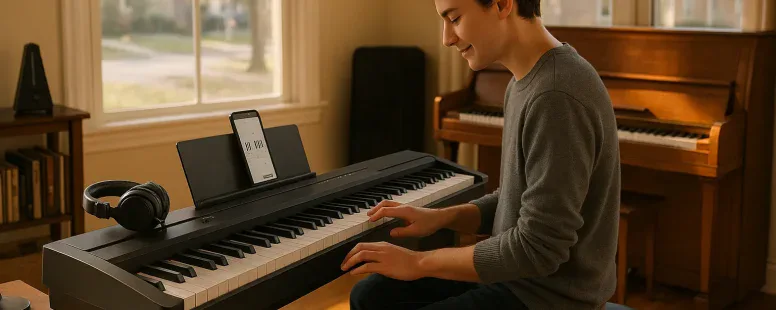
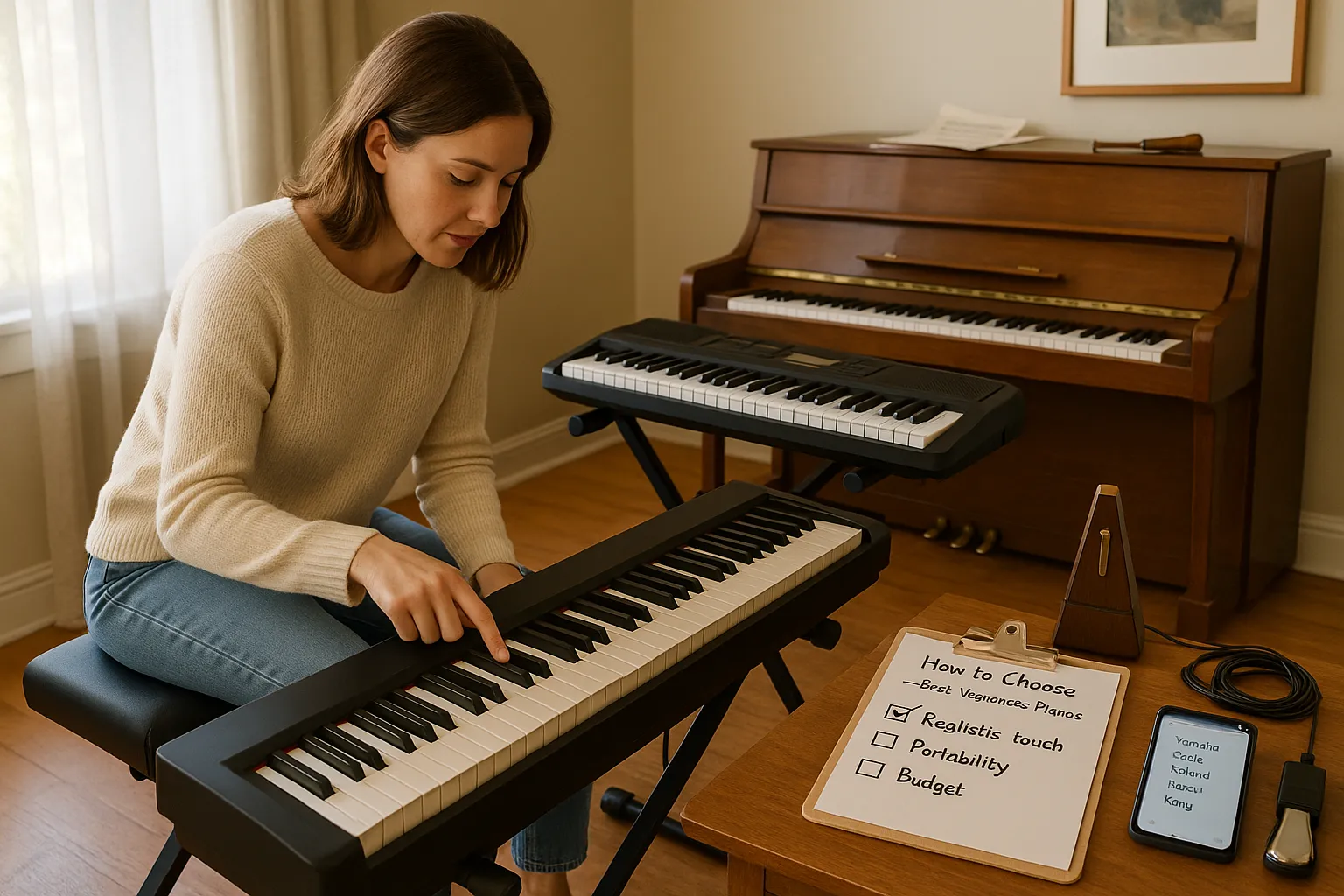
If you want a first piano that feels good under your fingers and makes practice enjoyable, picking the right instrument matters more than brand hype. The best beginners piano gives you realistic touch, a satisfying sound, and features that keep you learning, without wasting money on bells you won’t use. This guide helps you sort clear choices fast: acoustic or digital, compact or full-size, cheap now or smart long-term buy. Read on to find the instrument that will get you playing confidently and sticking with it.
Who This Guide Is For And How To Use It
Fact: This guide is for new players and buyers who need a practical, reliable first instrument. If you are a parent shopping for a child, an adult starting lessons, or a teacher sourcing student gear, this guide fits.
Start by deciding what you value: realistic touch, portability, or lowest upfront cost. Use the “How To Choose” section to make that call. Then move to the acoustic or digital sections depending on your decision. Finally, check budget picks and setup tips so you don’t overlook bench, pedals, or tuning.
I assume you want clear tradeoffs and brand examples. You’ll find brand names like Yamaha, Casio, Roland, Kawai, and Korg used as concrete entities to guide choices. Use this guide like a checklist: pick three must-haves, scan the recommendations, then test in person if you can.
How To Choose The Right Beginner Piano
Fact: The right piano balances touch, sound, space, and cost. Below are focused criteria to weigh when you choose.
Acoustic Vs. Digital: Pros And Cons
Fact: Acoustic pianos offer organic harmonic richness: digital pianos offer convenience and consistency.
Acoustic (uprights/grands): you get real strings and hammers, sympathetic resonance, and long-term resale value. Downsides: tuning, humidity sensitivity, size. Brands: Yamaha U1, Kawai uprights.
Digital: you get headphone practice, volume control, and built-in lessons. Downsides: samples can feel artificial at low price points: cheaper models have weak key action. Brands: Yamaha P-125, Casio Privia, Roland FP series.
Think about noise limits and whether you need headphones. If noise matters, digital wins.
Key Action, Touch Sensitivity, And Hammer Response
Fact: Weighted, graded action best mimics acoustic feel and builds technique.
Try to find fully weighted 88-key action if you plan on serious study. Hammer-action and graded-weight keys make the low end heavier than the treble. If you can’t test in person, read reviews emphasizing “graded hammer action” or “weighted keys.” Note: cheaper synth-style keys will not build finger strength properly.
Size, Portability, And Room Considerations
Fact: Uprights occupy floor space: portables require stands and cases.
Measure your doorways and room. A full 88-key console or upright needs space. If you move often, choose a portable digital with a padded gig bag. For small apartments, slim digital consoles or 61–76 key weighted keyboards can work short-term.
Sound Quality, Polyphony, And Pedals
Fact: Polyphony affects how many notes can sound at once: higher is better for layered sounds.
Look for at least 128-note polyphony on digital pianos if you plan to use sustain pedal or layer sounds. Check pedal count: acoustic pianos have three pedals: many beginners only need sustain (right) but a full sustain-damper setup matters if you study classical repertoire.
Connectivity, Features, And Learning Aids
Fact: MIDI/USB lets you connect to apps and teachers.
If you plan to use apps like Flowkey, Simply Piano, or GarageBand, ensure USB-MIDI support. Some models include built-in lessons, metronomes, and split/dual modes, useful for practice. Smart pianos (like those with Bluetooth or app integration) can speed learning but may add cost.
Budget And Long‑Term Value
Fact: Spend to match your commitment. Don’t overspend if you’re unsure, but avoid models that will block progress.
For a long-term beginner planning serious study: aim for $700–$2,000 for a quality digital or entry-level acoustic. For casual learners, $300–$700 buys a decent starter digital. Used acoustics often offer the best sound-per-dollar if inspected properly.
Best Acoustic Pianos For Beginners
Fact: Acoustic uprights remain the most respected entry acoustic for students.
Entry‑Level Upright Picks (New And Used)
Fact: Yamaha U1 and Kawai K series are top new entry options.
Yamaha U1 (new/used): reliable action, stable tuning, strong resale. Great for schools and serious students.
Kawai K-series uprights: slightly darker tone and refined action: good for touch development.
Used older uprights from Mason & Hamlin, Baldwin, or Steinway knockoffs can be bargains. But watch for string corrosion and warped soundboards.
Mid‑Range Upright Options For Serious Beginners
Fact: Mid-range uprights give better action and tonal depth for dedicated students.
Look at refurbished Yamaha U3s, larger Kawai uprights, or higher-end Blüthner and Baldwin models. These instruments respond more evenly across registers and sustain longer, useful if you study Romantic repertoire.
Buying Used Acoustic Pianos: What To Inspect
Fact: Inspect hammers, soundboard, pinblock, and action regulation.
Checklist: press each key slowly and quickly, listen for buzzing, check that all pedals work, inspect strings for rust, and ask about last tuning date. If possible, bring a technician or hire a one-time inspection. Avoid pianos with cracked soundboards or loose tuning pins: repairs cost more than many beginners expect.
Best Digital Pianos For Beginners
Fact: Digital pianos offer the best practice tools per dollar for most beginners.
Affordable Portable And Home Console Models
Fact: Casio Privia and Yamaha Arius/P-series offer reliable budget options.
Casio Privia PX-S series: slim, good sound, Bluetooth on some models.
Yamaha P-series: durable, clear piano samples, good weighted action.
These models fit small spaces and budgets while keeping decent key feel.
Weighted 88‑Key Keyboards For Realistic Touch
Fact: Graded hammer action on 88 keys builds proper technique.
Consider Roland FP-30, Kawai ES110, or Yamaha P-125 equivalents. They give a convincing touch and are commonly recommended by teachers.
Smart/Hybrid Pianos And App‑Integrated Options
Fact: Hybrid pianos combine acoustic action with digital sound or learning features.
Examples: Yamaha AvantGrand (hybrid), Roland LX series, and smart models like the Yamaha Clavinova with app integration. These can be pricey but lower the friction for learning with apps and recording.
Stage Keyboards For Flexible Practice And Performance
Fact: Stage keyboards focus on live use but can be fine for practice.
Look at Nord Electro, Roland RD, or Korg Stage models if you plan to gig. They provide durable keybeds and varied sounds, but may lack full acoustic nuance.
Top Picks By Budget And Use Case
Fact: Matching price to purpose prevents regret.
Best Options Under $500
Fact: Under $500, aim for a compact, weighted or semi-weighted keyboard.
Casio CT-S300 (61 keys) for casual learners.
Alesis Recital Pro (88 keys, semi-weighted) for practice with limited budget.
These fit absolute beginners who want low cost and basic lessons.
Best Options $500–$1,500
Fact: This range offers well-rounded value and longevity.
Yamaha P-125, Roland FP-30, Kawai ES110: realistic feel and good samples.
Entry-level uprights used or refurbished often fall here and can be better than new cheap digitals.
Best Options $1,500+ And Long‑Term Investments
Fact: Over $1,500, you buy instruments that last and feel like studio tools.
Yamaha Clavinova, Kawai digital consoles, Roland LX or top Kawai uprights. These have premium actions and rich sound engines.
Best Pianos For Kids, Small Apartments, And Classrooms
Fact: For kids choose compact, durable, and adjustable height options.
For kids: Yamaha PSS or smaller 61-key Casio models for starters: then move to 88-key weighted within a year. For apartments: slim digital consoles with headphone jacks. For classrooms: sturdy uprights or multiple portable digitals with headphone splitters.
Setup, Maintenance, And Making The Most Of Your Piano
Fact: Proper setup and simple routines keep your instrument playable and your practice effective.
Fact: A stable bench, decent headphones, and a sustain pedal matter.
Buy an adjustable bench to set proper posture. Choose studio headphones for clear tone and a real sustain pedal (not a tiny plastic switch). If you have a portable keyboard, get a sturdy X-stand or furniture-style stand.
Tuning, Servicing, And Care For Acoustic Pianos
Fact: Acoustic pianos need tuning twice a year in most climates.
Control humidity with a room humidifier/dehumidifier or a piano-specific system. Hire a technician for regulation and voicing every few years. Small cosmetic scuffs won’t hurt sound, but structural issues will.
Maintenance And Firmware Tips For Digital Pianos
Fact: Keep firmware updated and backup settings.
Check the manufacturer’s site for firmware updates that fix bugs or add sounds. Clean contacts, avoid liquid spills, and keep the unit dusted. Store sample banks and custom patches if the model allows.
Practice Strategies, Learning Resources, And Apps
Fact: Short, daily practice beats long, rare sessions.
Practice 20–40 minutes daily with focused goals: scales, pieces, sight reading, and ear training. Use apps like Flowkey, Simply Piano, or Pianote for guided lessons. Pair app work with a real teacher when possible: teacher feedback accelerates progress and prevents bad habits. Be honest: you will make ugly mistakes early, that’s how you learn.
When To Upgrade Or Trade Up Your Instrument
Fact: Upgrade when your technique or repertoire outgrows the instrument.
You should consider upgrading if: keys feel uneven, action limits control, or sound quality frustrates you. Trade-in programs at music stores can offset cost. If you’re practicing advanced conservatory pieces, move toward an acoustic or high-end digital with full pedals and 88 graded keys.
To provide the best experiences, we use technologies like cookies to store and/or access device information. Consenting to these technologies will allow us to process data such as browsing behaviour or unique IDs on this site. Not consenting or withdrawing consent, may adversely affect certain features and functions.
Functional
Always active
The technical storage or access is strictly necessary for the legitimate purpose of enabling the use of a specific service explicitly requested by the subscriber or user, or for the sole purpose of carrying out the transmission of a communication over an electronic communications network.
Preferences
The technical storage or access is necessary for the legitimate purpose of storing preferences that are not requested by the subscriber or user.
Statistics
The technical storage or access that is used exclusively for statistical purposes.The technical storage or access that is used exclusively for anonymous statistical purposes. Without a subpoena, voluntary compliance on the part of your Internet Service Provider, or additional records from a third party, information stored or retrieved for this purpose alone cannot usually be used to identify you.
Marketing
The technical storage or access is required to create user profiles to send advertising, or to track the user on a website or across several websites for similar marketing purposes.