You can get a green, low-maintenance yard without laying down plastic turf. Picture a yard that cools under your feet, supports bees, soaks up rain, and still looks neat on busy mornings. That’s the promise of the best alternative to plastic grass: living surfaces and low-impact materials that behave like real landscapes rather than heat-trapping carpets. This article shows clear options, trade-offs, and step-by-step choices so you can pick the right substitute for your climate, budget, and daily use.
Why Choose Alternatives to Plastic Grass
Fact: Plastic grass increases surface temperature and offers zero habitat value. Many cities report synthetic turf surfaces reaching 50–60°F higher than nearby natural lawns on hot days. That raises health concerns for kids and pets and raises local heat-island effects.
Environmental And Health Considerations
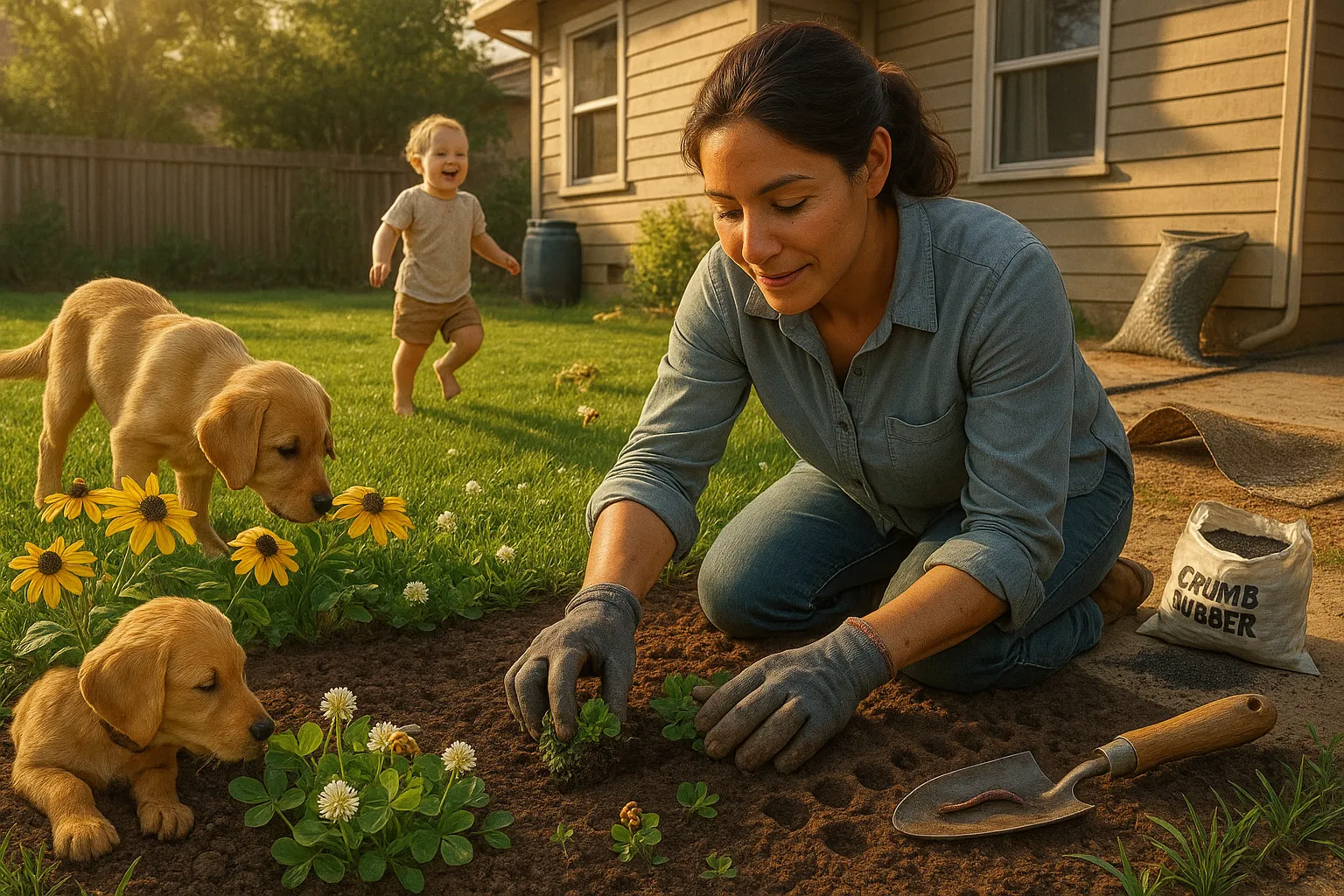
Start with the obvious: plastic turf is made from petroleum-derived polymers and often contains infill (crumb rubber, sand) that can break down and shed microplastics. You breathe the dust, pets pick it up on their fur, and runoff carries tiny particles into storm drains. The Xerces Society and journals in urban ecology note reduced insect and soil microbe populations where plastics replace soil. You also get higher surface heat and less natural cooling from evapotranspiration. That means more energy use for cooling nearby buildings, and higher stress on children playing barefoot.
Durability, Cost, And Maintenance Tradeoffs
Fact: Synthetic turf lowers weekly mowing chores but raises long-term replacement and disposal costs. Installation can be expensive, often $8–$15 per square foot for quality turf, and the product usually lasts 8–15 years before needing replacement. You trade recurring mowing for occasional sanitizing, brushing, and eventual landfill disposal. Natural alternatives vary: some need seasonal mowing, others need almost none. Evaluate total cost: upfront installation, water and fertilizer for living lawns, and long-term replacement or restoration. You will save time but might spend money and cause waste if you choose plastic.
Top Natural And Synthetic Alternatives Compared
Fact: There is no single best solution, choices depend on your priorities: ecology, playability, or lowest upkeep.
Native Meadow Lawns (No-Mow Mixes)
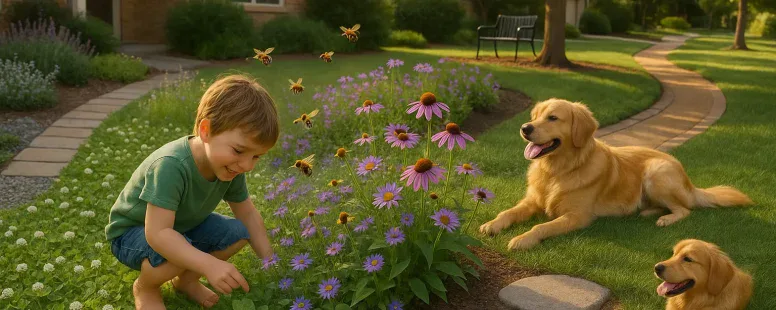
Start with a clear benefit: native meadow mixes reduce mowing and support pollinators. No-mow seed mixes (often containing low-growing grasses, native asters, and clovers) cut mowing to once or twice a year. In places like the Midwest or California, species such as Bouteloua gracilis (blue grama) or native fescues (Festuca spp.) create fine-textured lawns that need less water. They also increase biodiversity: local bird and insect populations rebound. Installation: seed in fall or spring, remove existing turf, and monitor early weeds.
Clover And Low-Growing Groundcovers
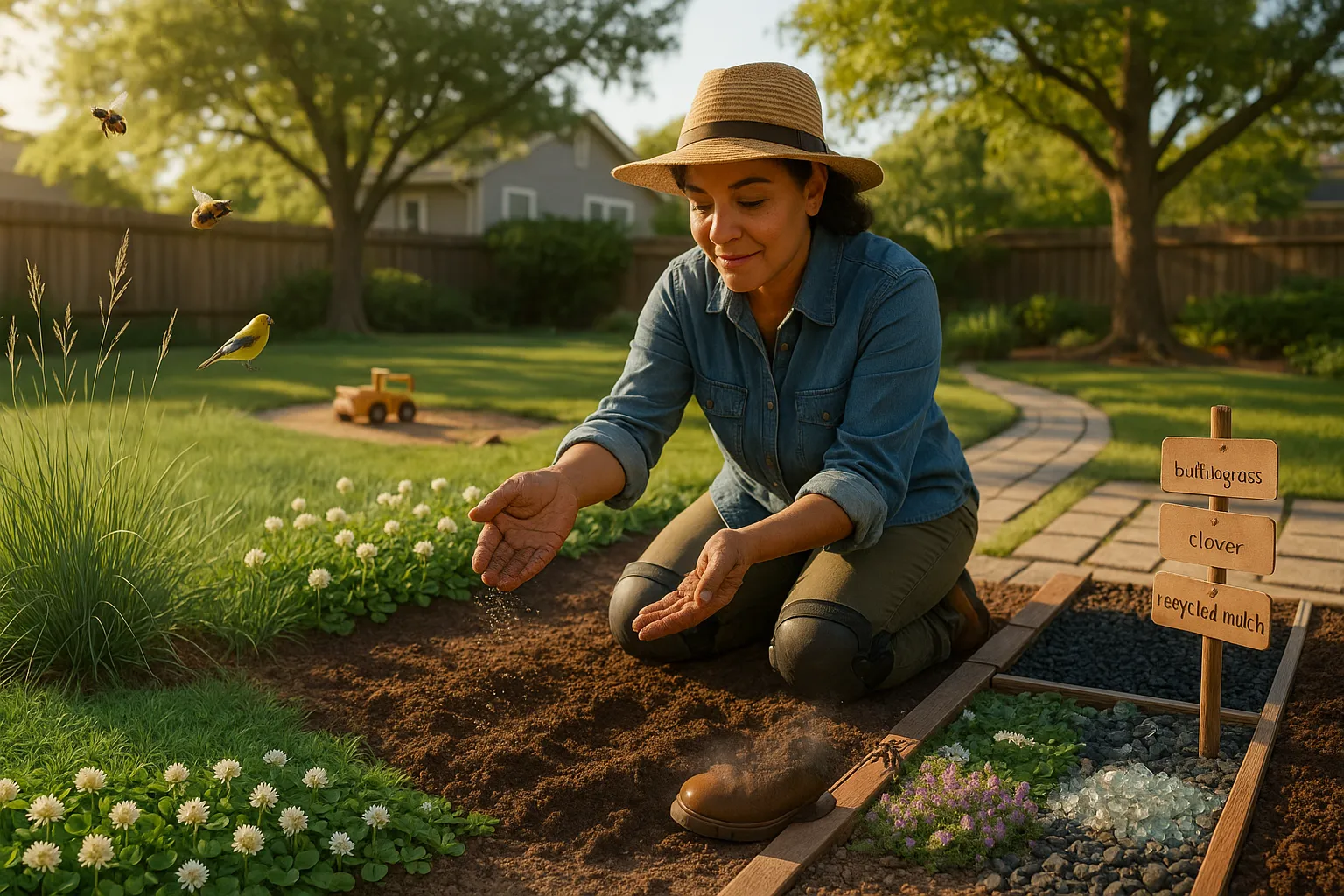
Start with the clear fact: clover fixes nitrogen and stays green with less fertilizer. White clover (Trifolium repens) mixes with fine fescue produce soft, resilient lawns that tolerate light play. Clover resists drought and keeps soil healthier. Groundcovers like Mazus, Ajuga, or creeping thyme provide dense green cover and fragrant walks, and some like thyme release scent when you step on them, a small, joyful sensory return that plastic never gives.
Start with the clear fact: specific grass species need far less water than traditional turf. Buffalograss (Buchloe dactyloides), hard fescue, and tall fescue cultivars bred for drought handle summer with less irrigation. These grasses can look like a conventional lawn while cutting water use by 30–70% depending on species and climate. Check USDA plant hardiness and local extension service recommendations.
Mulch, Pea Gravel, And Hardscape Options
Start with the clear fact: replacing lawn with low-impact hardscape reduces water needs dramatically. Mulch beds, pea gravel paths, and permeable pavers create practical play and lounging areas that drain well. Use decomposed granite for play zones and expanded clay or recycled glass as decorative mulch. Hardscape requires planning for proper drainage and heat management: shade and tree canopy help reduce surface temperature.
Recycled-Rubber Or Composite Mulch (Lower-Impact Synthetic)
Start with the clear fact: not all synthetics are equal, some lower-impact options reuse materials. Recycled-rubber mulch (from tires) and composite mulches made from recycled plastics reduce virgin material use and provide soft surfaces for play. But you must weigh potential chemical leaching and microplastic shedding. Choose certified products and install barriers to prevent migration into soils, and ask suppliers about product testing.
How To Choose The Right Alternative For Your Site
Fact: Match your choice to climate, intended use, and budget, that makes success likely.
Assess Climate, Soil, And Sun Exposure
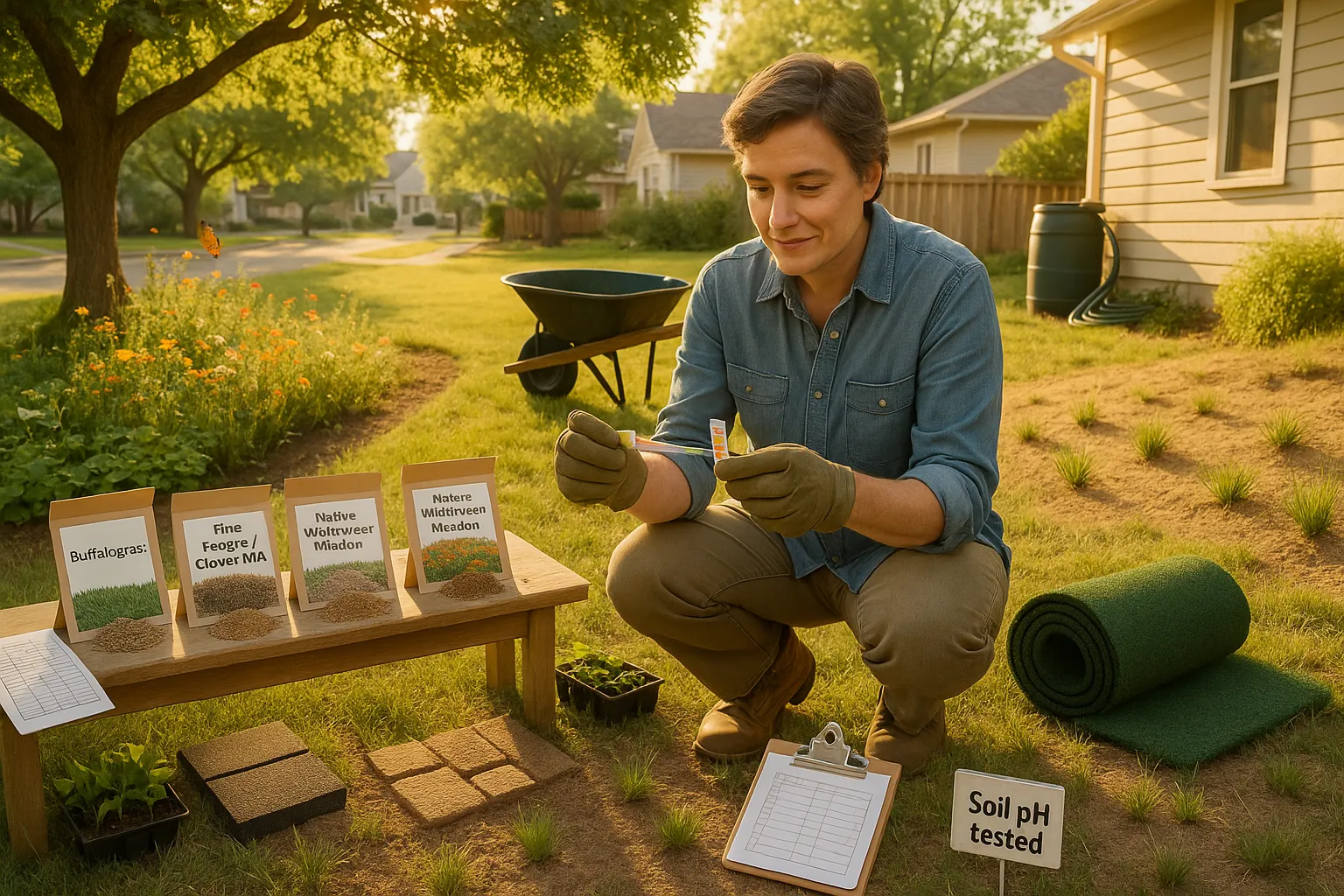
Start with the clear fact: climate and soil dictate plant survival. Test your soil pH and texture through your local extension service. In hot, dry climates choose buffalograss or native fescues: in cool, moist areas consider clover mixes and fine fescues. Shade means you should favor groundcovers and shade-tolerant grasses: full sun gives you more species choices. Microclimates matter, south-facing slopes heat more, low spots retain moisture.
Define Use Case: Play, Aesthetics, Or Habitat
Start with the clear fact: what you do on the space determines acceptable tradeoffs. If kids play often you might prefer a resilient groundcover or recycled-rubber play surface. For aesthetic curb appeal, fine fescue lawns or manicured clover blends fit. If habitat and pollinators matter choose native meadows and flowering mixes. Be honest about wear patterns, a worn path suggests adding stepping stones or a durable mulch route.
Budgeting For Installation And Long-Term Care
Start with the clear fact: short-term savings may lead to long-term costs. Estimate installation (seed, sod, or hardscape), first-year care (watering, weed control), and multi-year maintenance (mowing, overseeding, mulch replacement). Natural conversions often cost less upfront than synthetic turf but may need more seasonal attention at first. Consider lifecycle costs: synthetic turf can look cheap initially but disposal and replacement push total up.
Practical Installation And Maintenance Guidance
Fact: Proper preparation prevents most failures. Remove invasive sod, improve topsoil, and follow staging steps.
Establishing Native Meadows And No-Mow Lawns
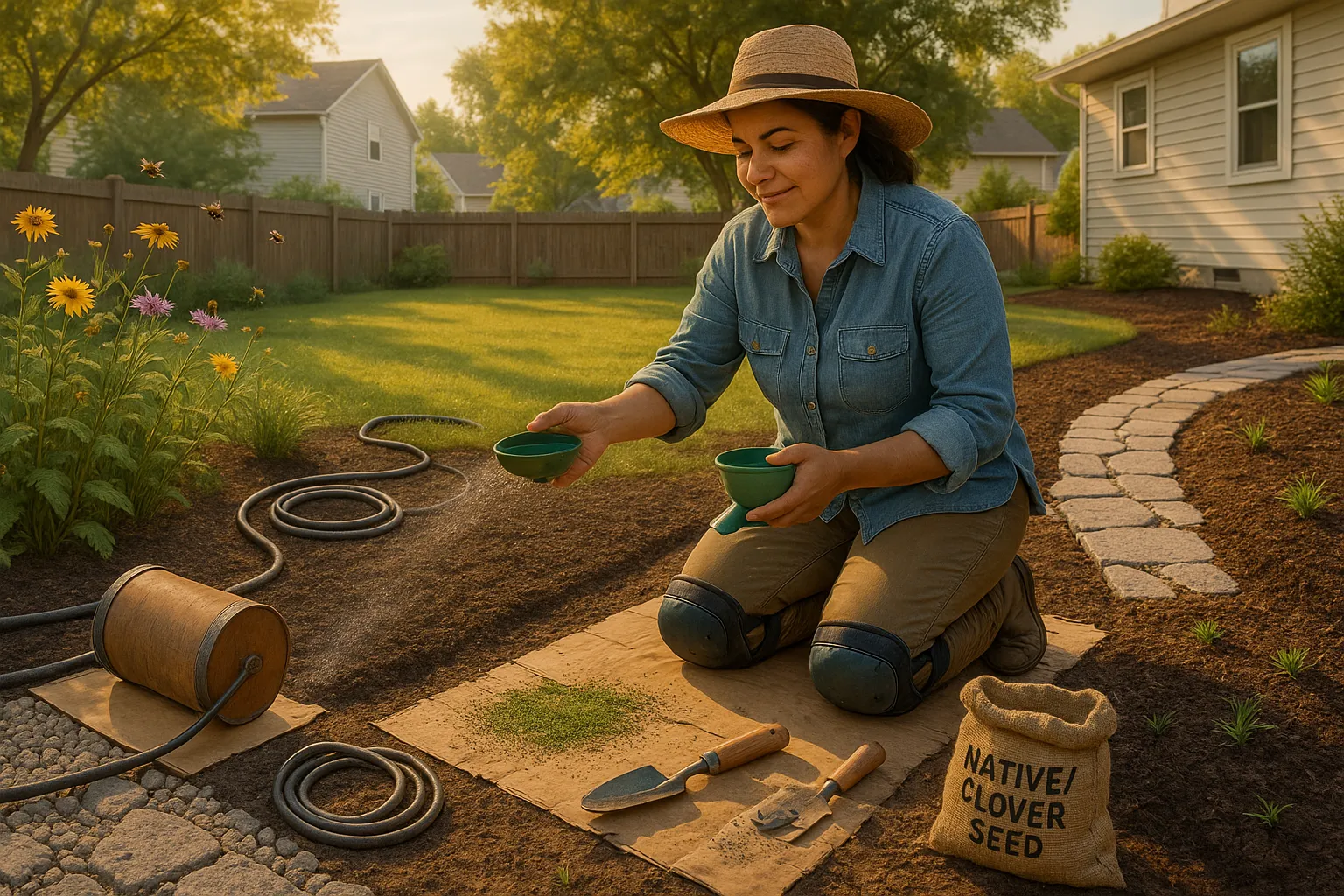
Start with the clear fact: seed when conditions favor germination. For cool-season mixes seed in early fall: for warm-season natives seed in late spring. Prepare by killing existing grass or smothering it with a tarp or layered cardboard for several weeks. Lightly rake, spread seed at recommended rates, and use a roller or press to ensure seed-to-soil contact. Water gently until established. Expect a two-year establishment window: be patient: the first year looks patchy but will fill in. I once replaced a small suburban lawn with a native meadow and saw bees return in a single season, you will notice the change.
Planting And Caring For Clover Or Groundcover Lawns
Start with the clear fact: clover tolerates low fertility and demands less mowing. Broadcast seed in spring or early fall on a prepared seedbed. Keep moisture consistent for germination. Mow higher to encourage spreading and trim borders to prevent encroachment. For groundcovers, plant plugs at recommended spacing, water until roots set, then taper off. Expect occasional weed competition in year one: pull by hand to protect shallow roots.
Installing Low-Impact Hardscape And Mulch Areas
Start with the clear fact: good drainage prevents future problems. Grade the area to move water away from foundations. Use permeable pavers and crushed stone to allow infiltration. Install a weed barrier under mulch only where you want a long-term barrier: otherwise, use landscape fabric sparingly, it can trap moisture and inhibit soil life. Replenish organic mulch yearly to maintain appearance and weed suppression.
Design Ideas And Landscaping Combinations
Fact: mixing materials yields the best balance of function and ecology.
Mixed-Use Yards: Paths, Planting Beds, And Living Lawns
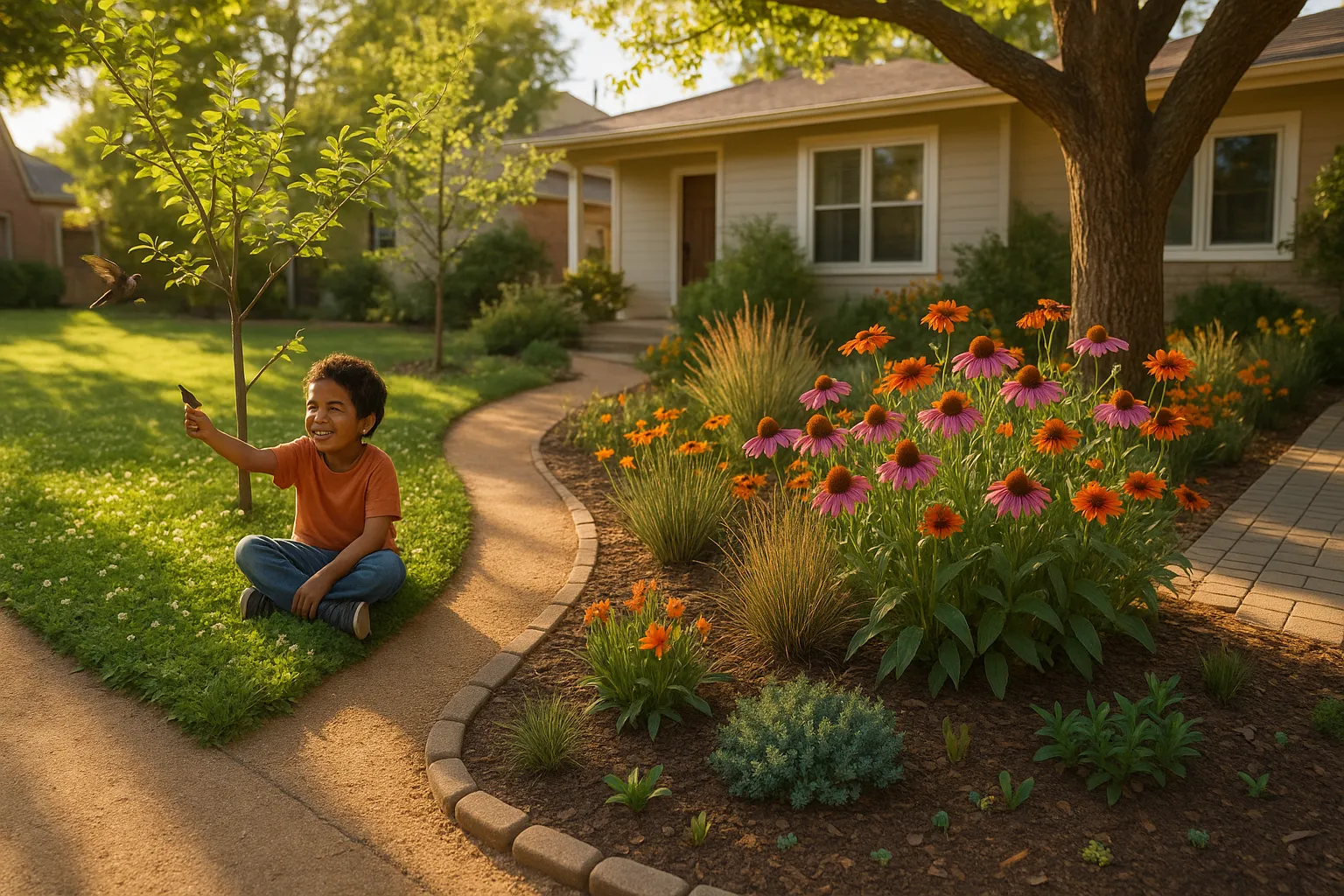
Start with the clear fact: combine surfaces to focus wear away from living plants. Lay durable paths of decomposed granite or permeable pavers along high-traffic routes. Frame these with low groundcovers and flowering native perennials like Echinacea or Gaillardia. Create small lawn pockets of clover or fine fescue for play. This reduces total lawn area while keeping places for running and lounging.
Using Trees, Shrubs, And Perennials To Reduce Lawn Area
Start with the clear fact: increasing woody plants cuts lawn needs and adds shade. Plant native trees such as Quercus (oak) or Acer (maple) appropriate to your zone to shade and cool surfaces. Underplant with shrubs like Ceanothus or serviceberry and perennial grasses like Schizachyrium scoparium (little bluestem). Over time you will mow less, enjoy more seasonal interest, and support birds. I once replaced half of my front lawn with a shrub and bulb mix: maintenance dropped and neighbors complimented the flowers, it surprised me, and you may find the same.
Cost, Performance, And Environmental Comparison Table (What To Expect)
Fact: costs and impacts vary widely: plan with realistic ranges.
Estimated Installation And Annual Maintenance Costs
Start with the clear fact: expect a wide cost range depending on choice. Rough per-square-foot estimates:
Native meadow/no-mow seed: $0.50–$2 install: $0.10–$0.50/yr maintenance (mowing once a year, spot weeds).
Start with the clear fact: living systems improve biodiversity and reduce water use in many climates. Typical lifespans and impacts:
Native meadow: lifespan indefinite with annual care: water use low after establishment: high biodiversity benefits.
Clover lawn: long-lived with reseeding: moderate to low water use: high soil health benefits.
Drought-tolerant grasses: 10–20 years with proper care: low water use: moderate biodiversity.
Mulch/hardscape: long lifespan for stone: minimal water use: low biodiversity unless combined with plantings.
Recycled-rubber mulch: 5–10 years before top-up or replacement: minimal water use: low biodiversity and potential chemical concerns.
Synthetic turf: 8–15 years lifespan, high embedded carbon, low biodiversity, and potential microplastic pollution.
You can make an informed choice by weighing these numbers against your needs and values. If you want to reduce heat, cut runoff, and support life, pick a living alternative, you will feel the difference in summer and the yard will breathe.
To provide the best experiences, we use technologies like cookies to store and/or access device information. Consenting to these technologies will allow us to process data such as browsing behaviour or unique IDs on this site. Not consenting or withdrawing consent, may adversely affect certain features and functions.
Functional
Always active
The technical storage or access is strictly necessary for the legitimate purpose of enabling the use of a specific service explicitly requested by the subscriber or user, or for the sole purpose of carrying out the transmission of a communication over an electronic communications network.
Preferences
The technical storage or access is necessary for the legitimate purpose of storing preferences that are not requested by the subscriber or user.
Statistics
The technical storage or access that is used exclusively for statistical purposes.The technical storage or access that is used exclusively for anonymous statistical purposes. Without a subpoena, voluntary compliance on the part of your Internet Service Provider, or additional records from a third party, information stored or retrieved for this purpose alone cannot usually be used to identify you.
Marketing
The technical storage or access is required to create user profiles to send advertising, or to track the user on a website or across several websites for similar marketing purposes.